

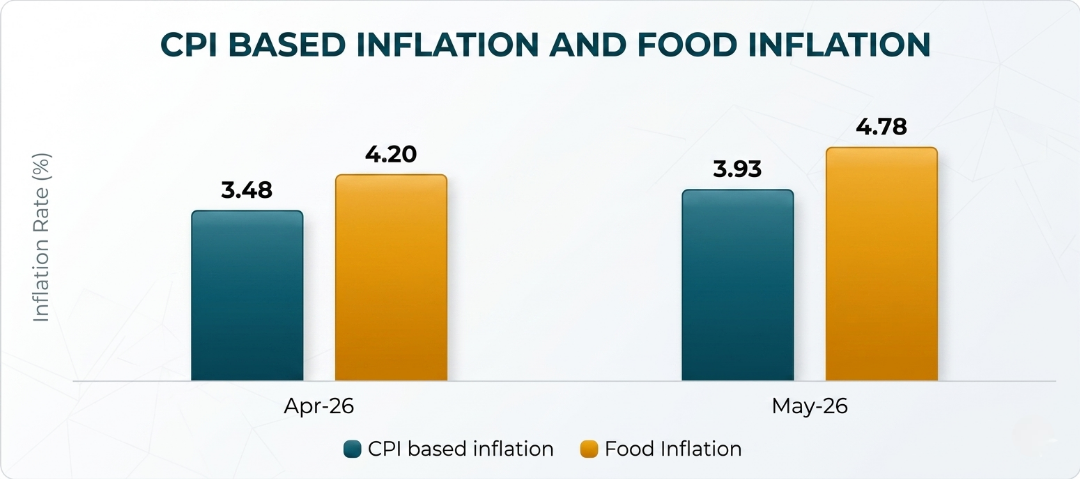
New Delhi: India’s retail inflation moved higher in May, reversing the moderation seen in the previous month as rising food prices and higher fuel costs exerted fresh pressure on household budgets. Data released by the Ministry of Statistics and Programme Implementation (MoSPI) showed Consumer Price Index (CPI)-based inflation rising to 3.93% in May from 3.48% in April, although the reading remained below the medium-term threshold set by the Reserve Bank of India. A renewed spike in essential commodities, particularly vegetables and select agricultural products, emerged as the principal driver of the uptick, underscoring the continuing vulnerability of inflation to supply-side disruptions.
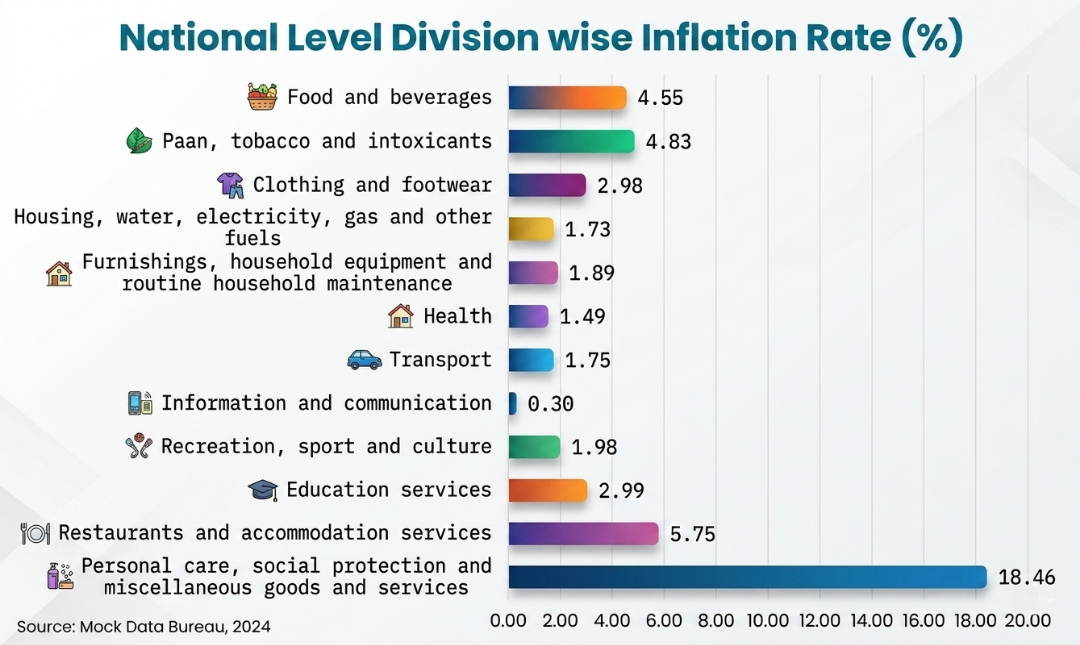
Food inflation climbed to 4.78% from 4.20% a month earlier, while the broader food and beverages category recorded inflation of 4.55%. Tomato prices remained the biggest contributor to the increase, registering inflation of 48.43%, sharply higher than April's 35.26%. Ginger prices also witnessed significant escalation with inflation at 32.49%. Precious metals and related products added to the pressure, with silver jewellery recording inflation of 155.23%, making it one of the steepest price increases across key consumption categories. However, not all food items followed the upward trend. Potato prices remained firmly in deflationary territory with inflation at -23.71%, while peas posted a contraction of -11.47%, partly cushioning the overall food basket.
Rural Urban Divide
The latest inflation data highlighted a widening gap between rural and urban India, with villages continuing to experience stronger price pressures. Rural CPI inflation accelerated to 4.25% in May from 3.74% in April, while urban inflation rose to 3.53% from 3.16%. Food inflation followed a similar pattern, reaching 4.85% in rural regions compared with 4.66% in urban centres, reflecting differences in supply chains, distribution costs and local market dynamics.
Housing-related inflation remained relatively moderate across the economy. The housing, water, electricity, gas and other fuels category recorded inflation of 1.73%, with the index inching up during the month. Rural housing inflation stood at 2.73%, outpacing the urban rate of 1.91%. Healthcare costs also remained contained, with inflation at 1.49%, suggesting that the broader inflation environment outside food and selected discretionary categories continues to be manageable.
Fuel Transport Impact
Higher fuel prices emerged as another factor contributing to the inflation trajectory during May. State-owned oil marketing companies revised petrol and diesel prices upward four times during the month, marking the first such increase in four years as they sought to address mounting under-recoveries. The revisions filtered into transportation costs, pushing transport inflation to 1.75% from a marginal contraction of 0.01% in April. The transport index also climbed to 102.73 from 100.84.
Fuel-related inflation itself remained relatively restrained despite the price adjustments. The housing, water, electricity, gas and other fuels index increased modestly, while inflation in the category edged up only marginally. By the end of May, petrol and diesel prices had risen sharply over a two-week period, with cumulative increases of more than ₹7 per litre since the middle of the month. In Delhi, non-branded petrol crossed the ₹100-per-litre mark, while diesel prices moved closer to ₹100, raising concerns about the potential for second-round inflationary effects on logistics and supply chains.
Meanwhile, inflation in personal care and miscellaneous goods and services surged to 18.46%, driven largely by higher prices of jewellery and related products, making it one of the standout components in the latest inflation basket.
States Show Divergence
Inflationary pressures varied considerably across states and Union Territories, reflecting differences in local demand conditions, commodity prices and supply factors. Telangana recorded the highest inflation among regions with populations above five million, at 6.15%, followed by Tamil Nadu at 5.11% and Puducherry at 5%. Andhra Pradesh also remained above the national average with inflation of 4.9%.
Other major states reporting elevated inflation included Karnataka at 4.59% and Odisha at 4.54%, both exceeding the national headline figure of 3.93%. In contrast, Delhi remained among the lowest inflation jurisdictions with a reading of 2.5%, while Tripura posted an even lower rate of 2.02%.
The latest CPI data indicate that while India’s headline inflation remains within a relatively comfortable range, food prices continue to be the dominant source of volatility. The simultaneous impact of higher fuel costs and regional disparities in price movements suggests that inflation risks remain uneven across the economy.
With rural households bearing a larger share of the burden and supply-side pressures persisting in key commodities, the inflation trajectory over the coming months will depend heavily on agricultural output, monsoon performance and energy price trends.