
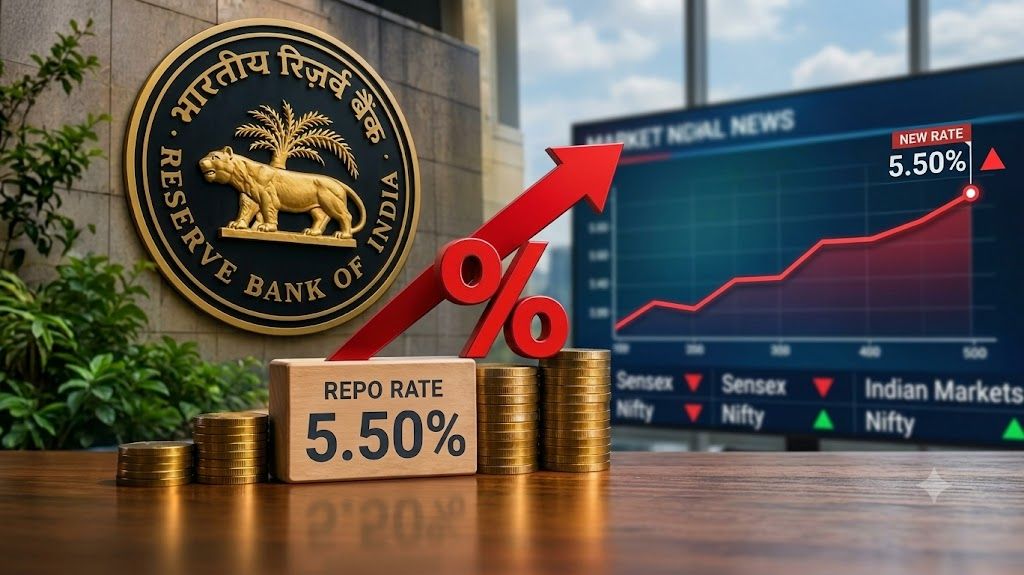

In a decisive move that marks a turning point in monetary policy, the Reserve Bank of India's (RBI) Monetary Policy Committee has raised the repo rate by 25 basis points to 5.5%. As per reports, this development breaks a nearly four-year pause, representing the first repo rate hike since February 2023. Alongside the rate increase, the central bank has officially shifted its policy stance to "calibrated tightening," signaling a decisive pivot away from accommodative measures as inflationary pressures take center stage.
Inflation Projections Revised Upward
The decision to tighten monetary conditions is heavily underpinned by shifting macroeconomic projections. According to reports, the RBI has raised its retail inflation forecast for the 2027 financial year (FY27) to 5.2%. With pricing pressures proving more resilient than anticipated, policymakers have opted to take preemptive action. As noted by market analysts and trading platforms like NiftyTrader, rate cuts are now firmly off the table for the immediate future, replacing earlier market expectations of monetary easing with a defensive posture aimed at price stability.
Impact on Borrowers and Consumer Credit
The transition to a tightening cycle carries direct implications for retail consumers across India. With the repo rate moving up to 5.5%, banking sector observers, indicate that home loans, car loans, and personal loans are set to become costlier. Borrowers whose EMIs are pegged to external benchmarks will likely see their monthly debt servicing costs rise as financial institutions transmit the central bank's policy adjustment to retail lending rates.
A Shift in Monetary Strategy
This policy shift concludes a prolonged period of monetary stability that began following the post-pandemic recovery cycles. By executing a 25 bps hike and formally introducing the "calibrated tightening" stance, the RBI is demonstrating a willingness to use its policy levers to anchor inflation expectations. As financial markets digest the updated FY27 retail inflation forecast of 5.2% and the reality of higher borrowing costs, all eyes will remain on upcoming liquidity management operations to gauge the depth of this new tightening cycle.