
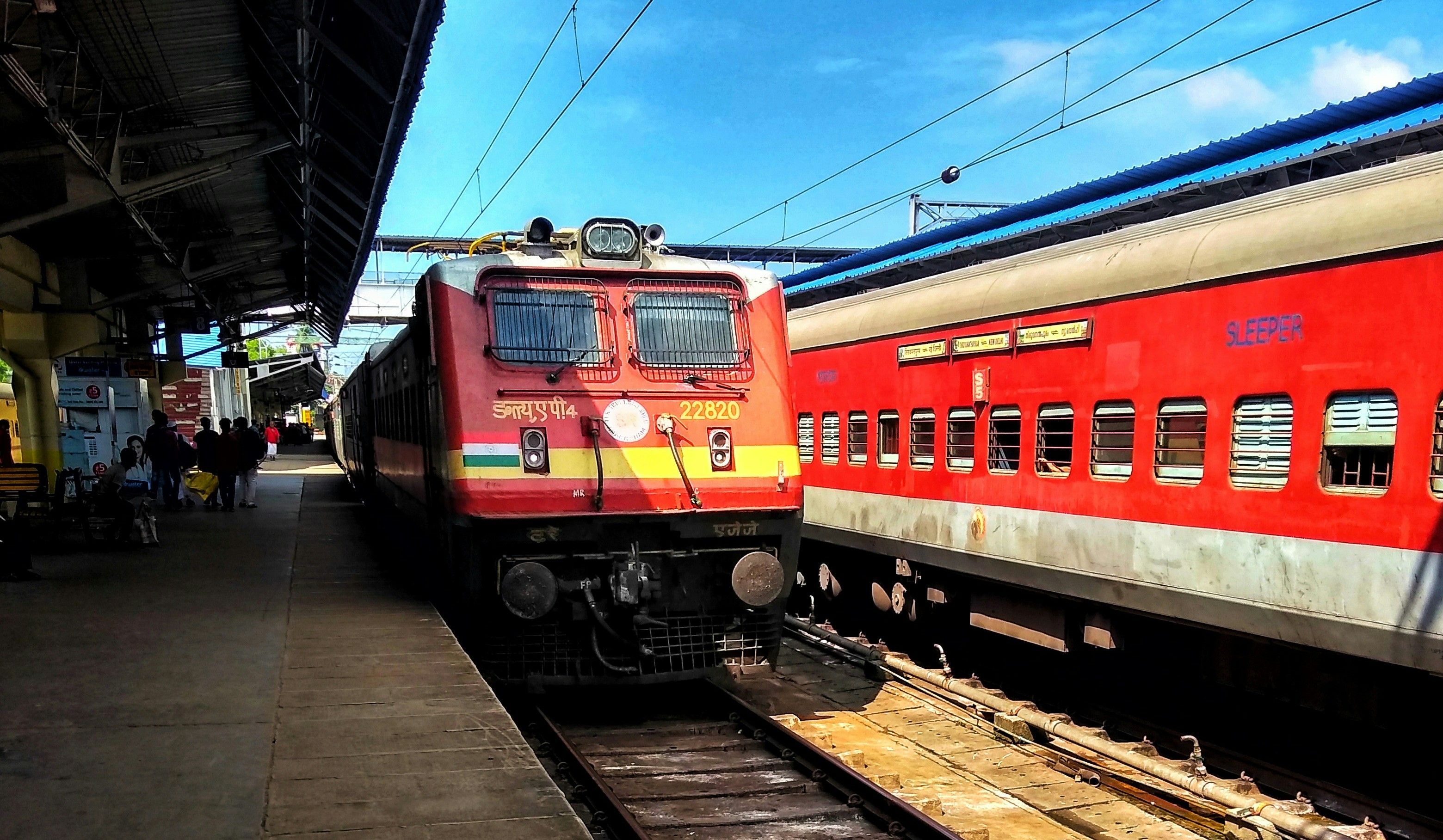

New Delhi: Indian Railways on Friday announced a major capacity enhancement initiative aimed at meeting the rapidly growing demand for passenger travel across the country. Under this plan, the ability of 48 major Indian cities to originate trains will be doubled by 2030. While the long-term goal is set for the end of the decade, the Railways intends to implement capacity additions progressively over the next five years so that congestion at busy stations can be reduced at the earliest.
The need for this expansion arises from the sustained increase in rail travel, which has placed considerable pressure on existing terminal infrastructure in large urban centres. Many major stations are currently operating close to their maximum handling capacity, making it essential to augment infrastructure to accommodate future growth. Indian Railways has therefore decided to undertake comprehensive upgrades to terminals, maintenance facilities, and track capacity to ensure smooth and efficient operations.
As part of the capacity enhancement plan, existing terminals will be expanded through the construction of additional platforms and the provision of more stabling and pit lines. Improved shunting facilities will also be developed to allow faster and more efficient handling of trains. These measures are expected to significantly increase the number of trains that can originate from major stations on a daily basis.
In addition to strengthening existing terminals, Indian Railways will focus on developing new terminals in and around urban areas. These new facilities will help decongest central stations by distributing train operations across multiple locations within a city. Alongside this, modern maintenance infrastructure, including large coaching complexes, will be set up to support the increased volume of rolling stock and ensure higher standards of safety and reliability.
To complement terminal expansion, Indian Railways will also enhance the capacity of the rail network itself. This will involve upgrades to signalling systems, improvements in traffic facilities, and the addition of extra tracks on busy sections. These measures are crucial for ensuring that the increased number of trains can be handled smoothly not only at terminals but also along the routes they operate on.
Balanced Development
The planning approach emphasizes balanced development rather than concentrating upgrades at a single station. Stations located near major terminals will also be considered for capacity enhancement so that traffic is evenly distributed. This integrated approach is expected to improve operational efficiency across entire urban rail networks.
The expansion programme will address the needs of both suburban and non-suburban rail services, recognizing that these two segments have different operational requirements. Each zonal railway has been directed to plan not only for increased terminal capacity but also for improvements along divisions to remove operational bottlenecks at stations and yards.
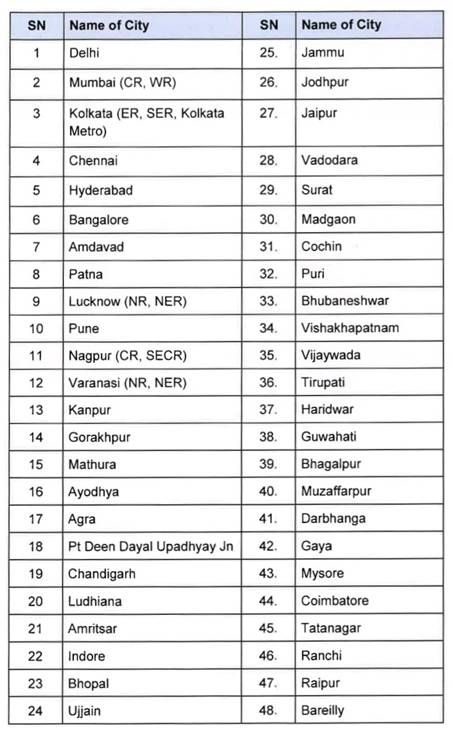
A comprehensive plan covering the identified 48 major cities will be submitted to the Planning Directorate. This plan will detail works that have already been completed or sanctioned, as well as those proposed for the future, along with clear timelines and expected outcomes. Actions will be classified into immediate, short-term, and long-term measures to ensure that capacity improvements are delivered in a phased and time-bound manner.
Major railway hubs included in this initiative span across the country and include cities such as Delhi, Mumbai, Kolkata, Chennai, Hyderabad, Bengaluru, Ahmedabad, Patna, Lucknow, Pune, Nagpur, Varanasi, Kanpur, Gorakhpur, Mathura, Ayodhya, Agra, Chandigarh, Ludhiana, Amritsar, Indore, Bhopal, and Ujjain.
Through this comprehensive and forward-looking strategy, Indian Railways aims to significantly enhance its ability to meet future travel demand, reduce congestion at major stations, and improve overall service efficiency. The initiative represents a crucial step toward strengthening India’s rail infrastructure and ensuring that the network remains capable of supporting the country’s growing mobility needs in the years ahead.
(Cover photo by Atharva Tulsi on Unsplash)