
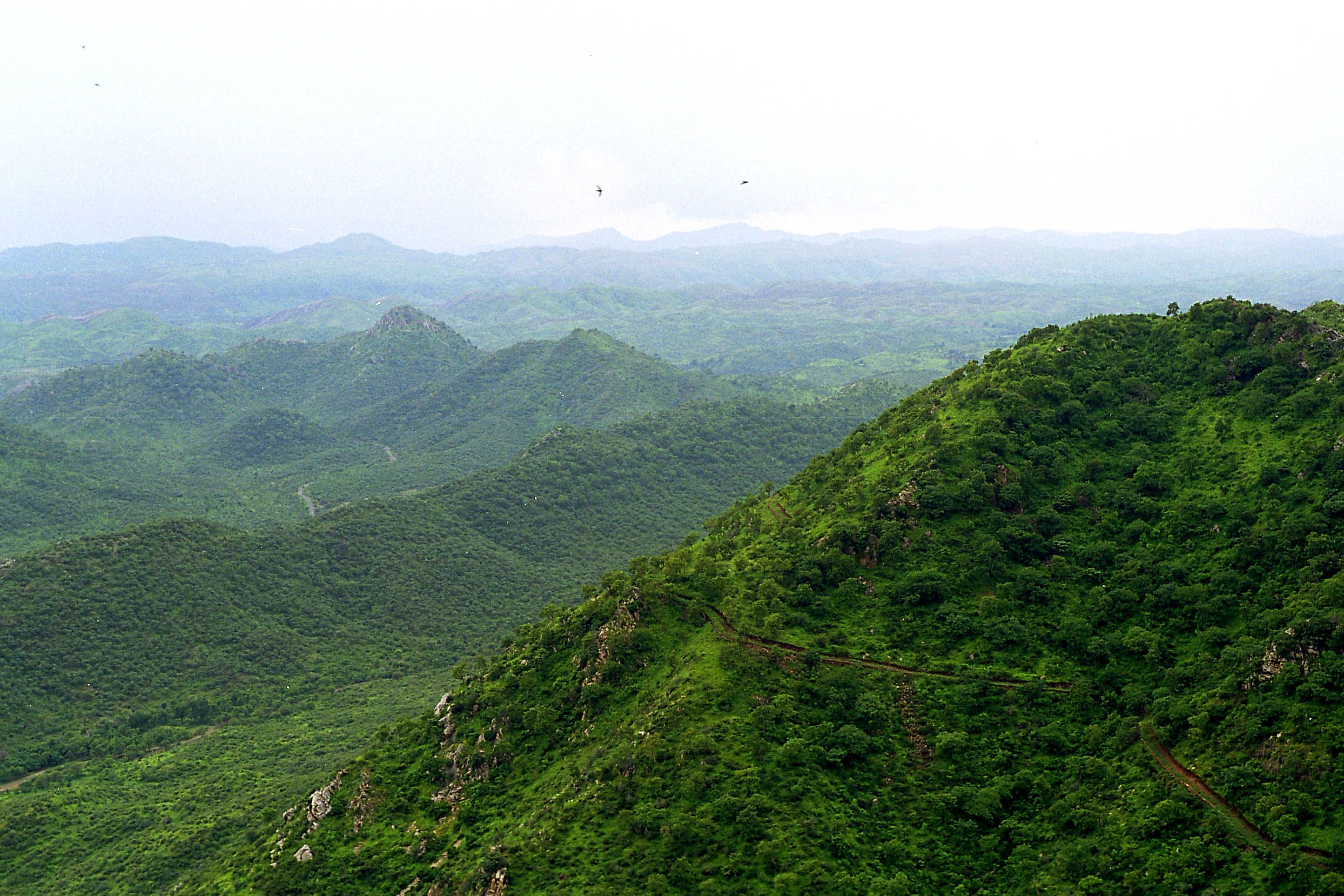

New Delhi: Amid growing concern over the ecological future of the Aravalli hills, the Union Ministry of Environment, Forest and Climate Change on Wednesday directed all states concerned to impose a complete ban on granting any new mining leases across the entire Aravalli region.
The ministry said the prohibition applies uniformly to the full landscape of the Aravallis and is aimed at preserving the integrity of the ancient mountain system as a continuous geological ridge stretching from Gujarat to the National Capital Region.
In an official statement, the ministry said the directions are intended to stop unregulated mining activities and protect the Aravallis from further degradation. It added that for mines already in operation, state governments must ensure strict compliance with all environmental safeguards, in line with the Supreme Court’s directions. “Ongoing mining activities are to be regulated stringently, with additional restrictions, to ensure environmental protection and adherence to sustainable mining practices,” the ministry said, reiterating its commitment to the long-term conservation of the Aravalli ecosystem.
The Centre has also instructed the Indian Council of Forestry Research and Education to identify additional areas and zones across the Aravalli range where mining should be prohibited, beyond the regions already barred from such activity. This exercise, the ministry said, will be guided by ecological, geological and landscape-level considerations.
Supreme Court Judgment
The move follows a Supreme Court judgment delivered on November 20 in the ongoing TN Godavarman Thirumulpad vs Union of India case. The court approved a uniform scientific definition of the Aravalli hills and the Aravalli range proposed by a committee led by the environment ministry. Under this definition, any landform rising at least 100 metres above the surrounding terrain qualifies as an Aravalli hill, while the Aravalli range is defined as two or more such hills located within 500 metres of each other.
Interim Direction
While accepting the definition, the court issued a clear interim direction, stating, “Till the MPSM [Management Plan for Sustainable Mining] is finalised by the MoEF&CC through Indian Council of Forestry Research and Education (ICFRE), no new mining leases should be granted.” The court highlighted the Aravallis’ critical role as a green barrier preventing the eastward expansion of the Thar desert and underscored their importance for biodiversity and climate regulation. It declined to impose a blanket ban on mining across the range, noting that such a step could encourage illegal operations, but called for a comprehensive, science-based management plan modelled on similar frameworks for other ecologically sensitive regions.
The acceptance of a height-based definition of the Aravallis has, however, triggered widespread concern among environmental activists and opposition parties, who argue that lower hillocks and ridges vital for ecological connectivity could be left outside regulatory protection. Social media campaigns have claimed that the new criteria could potentially expose large portions of the Aravallis to mining.
Against this backdrop, the Centre’s decision to halt all new mining leases is being seen as an attempt to address public apprehensions while complying with the Supreme Court’s order. The Aravalli range, one of the world’s oldest mountain systems, spans Delhi, Haryana, Rajasthan and Gujarat, and plays a crucial role in groundwater recharge and in shielding northwestern India from advancing desertification.