
India is the world’s second-largest fish producer, accounting for 8% of global production and supporting nearly 30 million livelihoods
New Delhi: Niti Aayog on Monday released a comprehensive report titled ‘India’s Blue Economy: Strategy for Harnessing Deep-Sea and Offshore Fisheries’, outlining a national roadmap to unlock the vast potential of India’s marine resources through a sustainable, science-driven approach.
The report was launched by Prof. Ramesh Chand, member (agriculture), Niti Aayog, and B V R Subrahmanyam, CEO, Niti Aayog, at a special event attended by representatives from maritime states, industry stakeholders and research institutions.
The report suggests India to expand its fisheries footprint beyond coastal waters into deep seas within its Exclusive Economic Zone (EEZ) and international waters accessed through regional agreements.
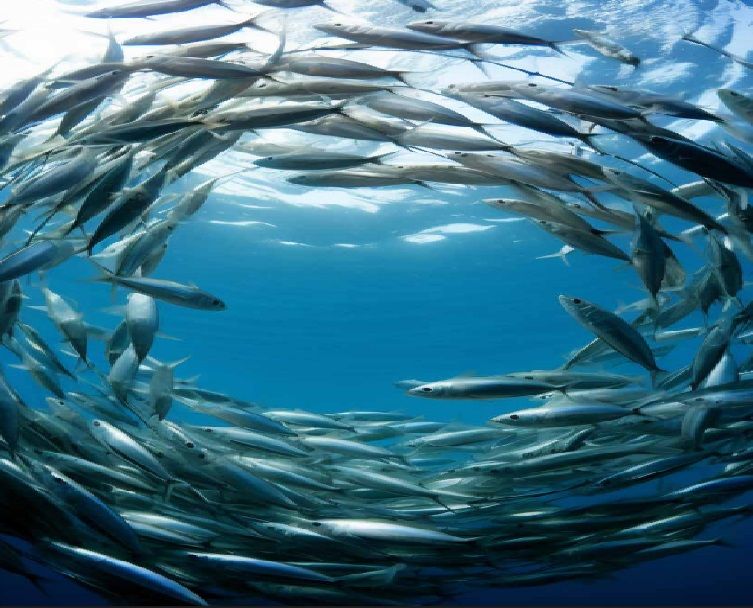
India is the world’s second-largest fish producer, accounting for 8% of global production and supporting nearly 30 million livelihoods. With an EEZ of more than two million sq km and a coastline of more than 11,000 km, India’s fisheries sector offers enormous untapped potential. The report estimates an annual potential yield of 7.16 million tonnes, emphasising that responsible exploration of deep-sea resources can enhance seafood exports, create jobs, and reduce pressure on coastal ecosystems.
The strategy envisions a science-based, technology-enabled, socially inclusive, and ecologically sustainable model for developing India’s deep-sea and offshore fisheries. It identifies six key policy pillars — policy and regulatory overhaul; institutional and capacity strengthening; fleet modernisation and infrastructure upgradation; sustainable fisheries management; financing and resource mobilization; and enhanced community participation.
Acknowledging the capital-intensive nature of deep-sea fishing, the report calls for inclusive fleet development through fisher cooperatives, cluster-based ownership, and access to modern technologies. It also proposes an indicative three-phase costing framework for implementation —
Phase 1 (2025–28): Laying the foundation and fostering early growth
Phase 2 (2029–32): Scaling up and achieving global competitiveness
Phase 3 (2033 onwards): Attaining global leadership in sustainable deep-sea fisheries
By converging ongoing central and state-level schemes, the framework aims to ensure efficient utilization of resources, long-term ecological balance and socio-economic growth for coastal communities.
The report marks a significant step towards realizing India’s Blue Economy Vision, aiming to strengthen marine governance, boost innovation, and position India as a global leader in sustainable deep-sea fisheries while empowering coastal communities and ensuring ecological resilience.