
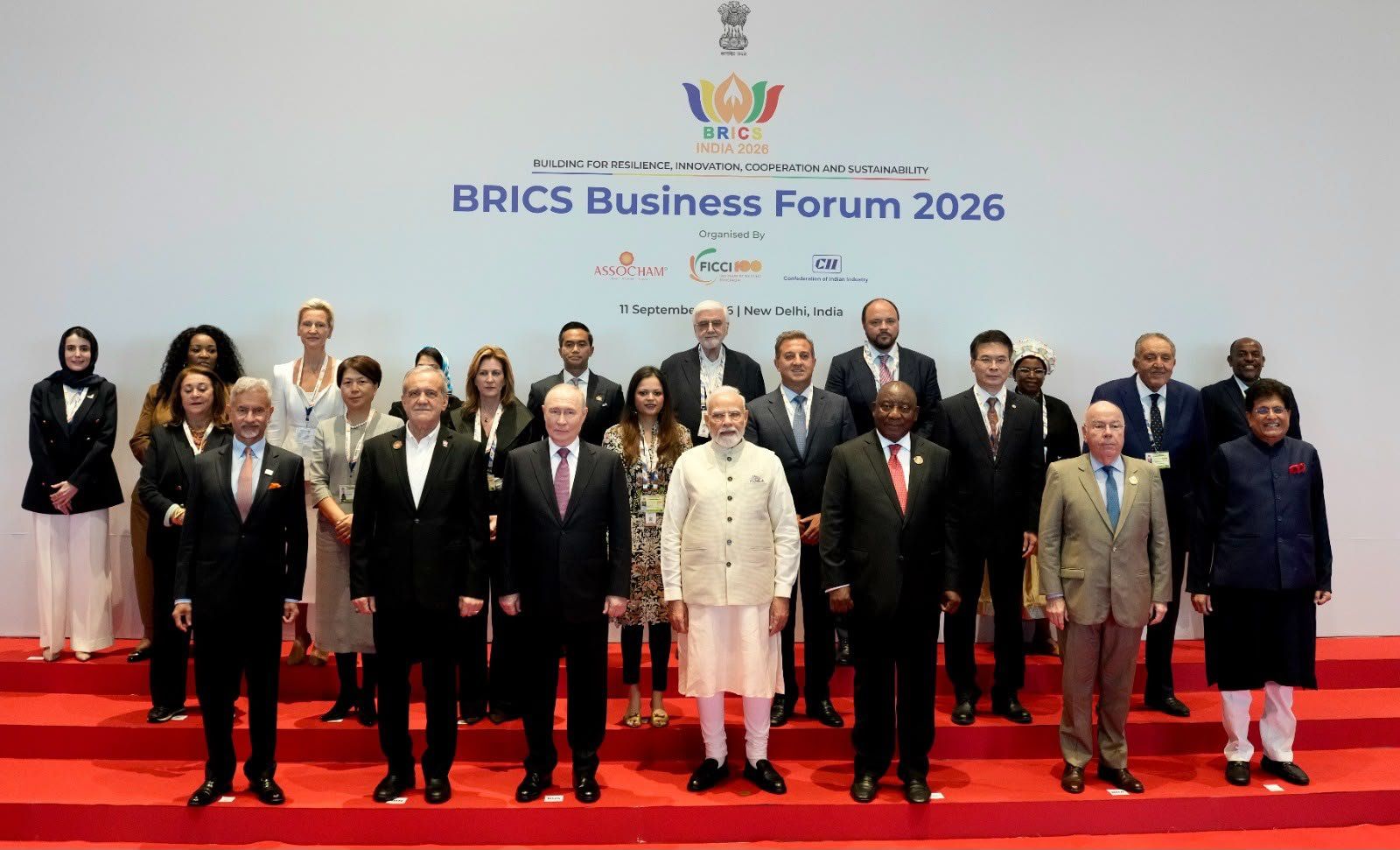
The 18th BRICS Leaders' Summit officially opened in New Delhi today, bringing together major global power figures including Russian President Vladimir Putin, Chinese President Xi Jinping, and Iranian President Masoud Pezeshkian. Hosted by Indian Prime Minister Narendra Modi, the high-profile gathering takes place against a backdrop of acute economic and geopolitical strains, drawing intense international focus to the bloc's strategic deliberations.
Shaping a New Global Economic Roadmap
As the summit commenced, discussions immediately centered on formulating alternative economic frameworks. Prime Minister Modi, alongside Putin and Pezeshkian, is actively pushing a new global economic roadmap in Delhi. Simultaneously, India is leveraging the platform to champion domestic economic priorities, emphasizing micro, small, and medium-sized enterprises (MSME) growth as a pillar for cooperative development across member states.
Bilateral Diplomacy: Trade, Borders, and Bilateral Marathons
The summit also serves as a crucial arena for resolving bilateral frictions. Prime Minister Modi has a packed diplomatic schedule, he is set for a marathon of roughly 15 bilateral meetings. Attention is heavily fixed on India-China relations, Modi is scheduled to meet Xi Jinping amid ongoing border and trade focuses. Diplomatic gestures have also accompanied the intense negotiations, Prime Minister Modi gifted a copy of the Tirukkural to Vladimir Putin.
Navigating Geopolitical and Economic Pressures
Opening amidst mounting international friction, the summit highlights the grouping's evolving role in navigating complex global conflicts. The event has commenced directly under the weight of wider geopolitical and economic pressures. The presence of leaders like Iran's Pezeshkian further underscores the bloc's growing footprint in discussions concerning alternative multilateral alignment and regional security.