
New Delhi: In a transformative step that promises to redefine the auditory experience for millions, the Telecom Regulatory Authority of India (Trai) has finalised its detailed recommendations for formulating a Digital Radio Broadcast Policy for private broadcasters.
The policy, developed after extensive stakeholder consultation, provides a complete roadmap for launching digital radio services, including spectrum auction details, financial terms, and a phased migration plan for existing broadcasters.
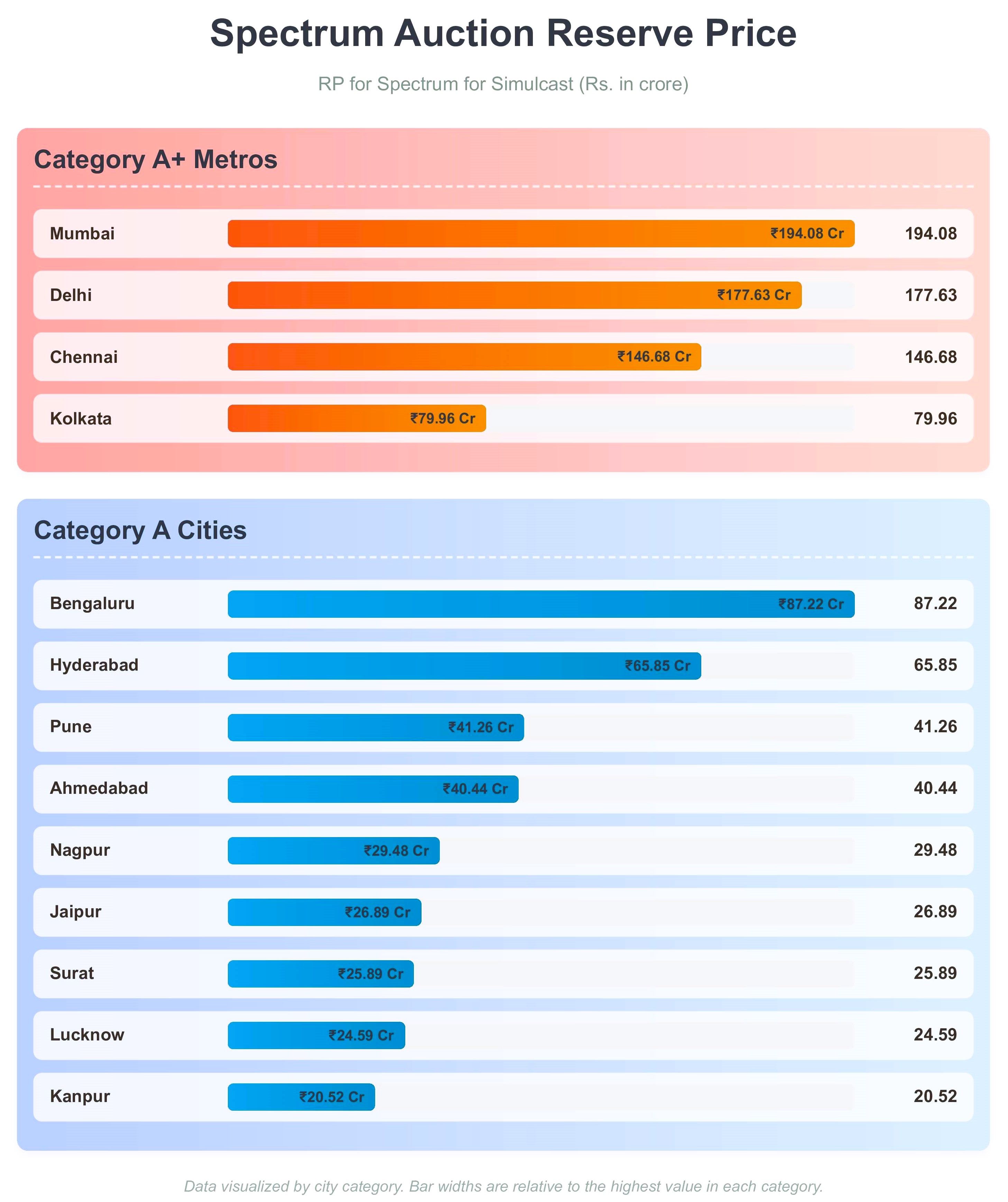
The recommendations were issued in response to a reference from the Ministry of Information and Broadcasting (MIB) in April last year. The initiative will kick off with spectrum auctions in four premium 'A+' category cities: Delhi, Mumbai, Kolkata, and Chennai; and nine 'A' category cities, including Hyderabad, Bengaluru, Ahmedabad, Pune and Jaipur.
Core of New Policy: Simulcast Mode
The cornerstone of Trai's proposal is the introduction of digital radio in Simulcast mode. This approach allows broadcasters to transmit their existing analog channel simultaneously with new digital channels on the same frequency.
Multi-Channel Boost: A single assigned "spot frequency" will enable broadcasters to deliver one analog channel, three digital channels, and one data channel, dramatically expanding content offerings compared to the single channel possible in analog FM.
Voluntary Migration: Existing FM radio broadcasters will be permitted to migrate to this simulcast mode on a voluntary basis.
Single Technology Standard: Trai has emphasised the need for India to adopt a single digital radio technology standard in the VHF Band II to ensure uniformity and avoid market fragmentation. The government will select this technology after stakeholder consultations or by incorporating the selection into the auction process.
Rollout Roadmap: Auctions, Migration
The transition to digital radio will be a carefully managed process:
Auction-Led Entry: Frequencies for new channels will be assigned through an auction, as per the Telecommunications Act, 2023.
Migration Offer: Immediately after the auction, existing FM broadcasters will be given a 6-month window to voluntarily opt for migration to simulcast mode.
Migration Cost: Migrating broadcasters will pay a "migration amount" equal to the difference between the auction-determined price and a proportionate amount of the non-refundable one-time entry fee (NOTEF) they have already paid for their remaining license period.
Commencement Deadline: All broadcasters, whether new or migrating, must commence simulcast operations within two years of the auction's conclusion.
Financial Framework
Trai has laid out a clear financial structure to support the new ecosystem:
Authorisation Period: The license for digital radio broadcasting will be valid for 15 years.
Revenue Definition: The definition of gross revenue (GR) from the existing FM policy will be retained. Crucially, revenue from streaming a radio channel online will be included in GR if the broadcaster provides the stream.
Authorisation Fee: The fee will be levied on adjusted gross revenue (AGR), which is GR minus revenue not related to radio and any GST paid. The fee is set at:
-- 4% of AGR for cities in categories 'A+', 'A', 'B', 'C', and 'D'.
-- A concessional 2% of AGR for the first 3 years for cities in border, hilly, and NE regions, and 'E' category cities, after which it will align with the 4% rate.
Fostering Competition
To ensure a healthy market and widespread adoption, Trai has proposed several enabling measures:
Market Diversity: No single entity will be allowed to own more than 40% of the total spot frequencies in a city, ensuring a minimum of three different operators in each market.
Infrastructure Sharing: The policy recommends creating a new authorization for 'Radio Broadcasting Infrastructure Providers' to build and lease active and passive infrastructure. Additionally, the mandatory co-location rule is removed, allowing voluntary infrastructure sharing among broadcasters and telecom players. Prasar Bharati is also encouraged to share its infrastructure at concessional rates.
Receiver Ecosystem: A key recommendation is for the government to issue an advisory to ensure digital radio receivers are built into mobile phones and car infotainment systems, mirroring the successful policy for FM radio.
Online Streaming: Broadcasters will be allowed to simulcast their live terrestrial channels online without user control, expanding their reach.
Oversight Committee: A high-level steering committee with members from MIB, MeitY, broadcasters, and device manufacturers will be constituted to monitor the proliferation of digital radio.
For the initial phase, two new spot frequencies will be auctioned in each of the 13 identified cities. The reserve price for these auctions has been specified, though the exact figures are detailed in the full recommendation document.
To ease financial pressure, both new winners and migrating operators will have multiple payment options, including paying the bid or migration amount in annual instalments over 15 years, with a back-loaded structure (nil in the first 5 years, 1/3rd in the next 5, and 2/3rd in the final 5 years) while protecting the net present value (NPV).
Digital radio broadcasting promises CD-quality audio, reduced interference, and a wealth of new content through multiple channels on a single frequency. With its detailed recommendations, Trai has laid the groundwork for a competitive digital radio environment that offers new opportunities for broadcasters and, ultimately, a far richer and more diverse listening experience for the Indian public. The ball is now in the court of the MIB to act on these proposals and launch India into the digital radio age.