


New Delhi: Nepal is experiencing a sweeping generational shift in its political landscape. A wave of youth activism that began as a protest movement has now evolved into a powerful electoral force, placing Gen-Z at the centre of the country’s democratic transformation.
The national election, held after months of political upheaval, illustrates how demographic change, digital mobilization, and widespread frustration with traditional political elites are reshaping governance in the Himalayan republic. The developments mark a dramatic moment in Nepal’s political evolution — from centuries of monarchy to a republican system now challenged and potentially redefined by a new generation of voters and leaders.
Nepal’s parliament consists of 275 seats, with 165 chosen through direct constituency contests and 110 allocated through proportional representation. Approximately 19 million citizens were registered to vote in the current election, reflecting a substantial expansion of the electorate following the political crisis of 2025. A large share of these new voters are young people participating in national politics for the first time.
Latest counting trends show reform-oriented parties with strong appeal among younger citizens are making notable gains. Rastriya Swatantra Party is currently ahead in 110 seats, while the Nepali Congress has so far secured only 10. In Jhapa-5, the rapper-turned-politician’s party has extended its advantage over the Communist Party of Nepal (Unified Marxist-Leninist) as vote counting continues. In several constituencies, candidates associated with newer political movements have performed strongly, reflecting public dissatisfaction with traditional leadership structures. Analysts note that youth turnout and digital campaigning have significantly contributed to these results.
The Youth Face
A figure who symbolizes this generational shift is Balendra Shah, widely known as Balen. Initially recognized as a rapper and cultural commentator, Shah rose to national prominence after winning the mayoral election in Kathmandu as an independent candidate. At 35, he represents a younger political generation that communicates directly with voters through social media platforms rather than relying on entrenched party networks. His political messaging has emphasized transparency, urban development, and the need to dismantle patronage systems that have dominated Nepal’s politics for decades.
The contrast between emerging leaders like Shah and established political figures became a defining theme of this election. Veteran politicians such as K P Sharma Oli, who has served multiple terms as prime minister, represent a generation that dominated Nepali politics after the transition to republicanism. Younger activists and voters often describe the political establishment as resistant to reform and disconnected from the economic challenges facing the country’s youth. In response, a growing number of candidates under the age of 40 entered the electoral arena, many of them advocating institutional reform and anti-corruption measures.
Demographic realities have also strengthened the political influence of young voters. Nepal has a population of roughly 30 million people, and its electorate is notably youthful. Nearly half of registered voters are under the age of 45, while millions belong to Gen-Z (those born after the mid-1990s). This demographic shift is especially important in urban areas where digital connectivity and social media have amplified political engagement. Youth participation has not only increased voter turnout but has also reshaped campaign strategies, pushing candidates to communicate through online platforms and grassroots networks.
The rise of Gen-Z political influence cannot be understood without examining the protests that erupted across Nepal in 2025. The demonstrations began after the government attempted to impose restrictions on major social media platforms, a move widely perceived as an effort to silence criticism. Young citizens, who rely heavily on digital platforms for communication and activism, interpreted the ban as a direct threat to freedom of expression.
Digital Organization
What initially appeared to be a single-issue protest soon expanded into a broader movement against corruption and economic inequality. Young Nepalis took to the streets in major cities, demanding accountability from political leaders and calling for systemic reform. Many protesters argued that decades of coalition politics had produced little improvement in employment opportunities or economic stability. Youth unemployment, combined with widespread perceptions of nepotism in government appointments, fuelled the anger that drove the demonstrations.
The protests quickly intensified, especially in Kathmandu, where clashes between demonstrators and security forces resulted in casualties. As the movement spread nationwide, government authority weakened. Public buildings were attacked, and the political crisis deepened as large sections of society began supporting the protesters’ demands. Under mounting pressure, PM Oli eventually stepped down, marking one of the most dramatic moments in Nepal’s recent political history.
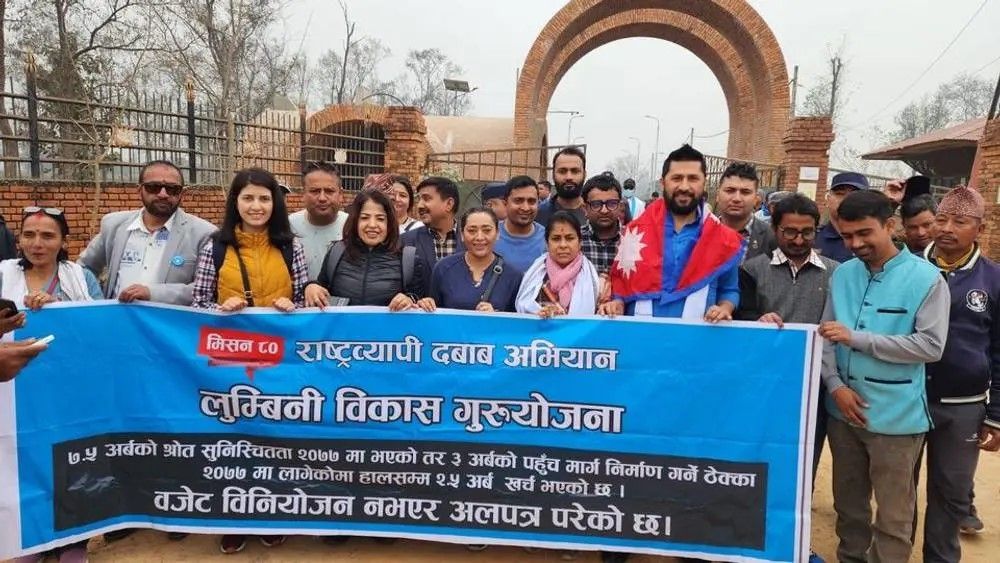
A figure who symbolizes this generational shift is Balendra Shah, widely known as Balen. His political messaging has emphasized transparency, urban development, and the need to dismantle patronage systems that have dominated Nepal’s politics for decades.
A striking feature of the protest movement was its reliance on digital organization. Activists coordinated discussions, planned demonstrations, and debated political strategies through online forums and communication platforms. In some cases, thousands of participants joined virtual meetings to deliberate on leadership and policy proposals. This decentralized style of activism reflected the digital culture of Generation Z, which tends to prioritize collaborative decision-making and rapid information exchange.
Several young activists emerged as prominent voices during the movement. Among them was Sudan Gurung, a social campaigner who became involved in negotiations between protest groups and state institutions. Gurung later described the movement as an attempt to create a political system that genuinely reflected the aspirations of younger citizens.
Another activist, Miraj Dhungana, emphasized the need for transparency in governance. Dhungana argued that the political order had failed to address the concerns of ordinary citizens, particularly young people facing unemployment and limited economic prospects. As he stated during the protests, “The system must become fair and transparent.” His remarks captured the broader mood among demonstrators who demanded structural reform rather than temporary political compromises.
Anti-royalty Movement
To fully understand the significance of these developments, it is important to consider Nepal’s longer political history. For centuries, the country was governed by a monarchy that concentrated power in the hands of the royal family. Although limited democratic reforms were introduced in the late twentieth century, the monarchy remained a dominant political institution until the early 2000s.
A turning point occurred after the decade-long Maoist insurgency, which began in 1996 and profoundly destabilized the country. Following a peace agreement and a constituent assembly election, Nepal formally abolished the monarchy in 2008 and declared itself a federal democratic republic. The transition was widely celebrated as the beginning of a new democratic era.
However, the years that followed were marked by persistent political instability. Governments frequently collapsed due to coalition disputes, and many citizens grew frustrated with the slow pace of economic development. Millions of Nepalis sought employment abroad, sending remittances that became a crucial pillar of the national economy. For younger generations, the gap between democratic expectations and political reality created deep dissatisfaction.
The emergence of Gen-Z politics therefore represents another stage in Nepal’s long struggle to redefine its political institutions. The fall of the monarchy established the framework for democratic governance, but the current youth movement seeks to transform how that democracy actually functions. Younger voters are demanding not only elections but also accountability, transparency, and economic opportunity.
Whether this generational surge can translate into lasting political stability remains uncertain. Movements built on protest energy often face difficulties when they enter the realm of governance, where policy compromises and administrative experience become essential. Nevertheless, the events unfolding in Nepal demonstrate that a digitally connected generation is capable of reshaping political structures that once appeared deeply entrenched.
If the momentum continues, Nepal may become one of the first countries where Gen-Z moves beyond activism to play a central role in governing institutions. Such a development would not only transform Nepal’s domestic politics but could also influence political movements across South Asia, where large youth populations are increasingly demanding a greater voice in shaping their nations’ futures.
(Cover photo by Raimond Klavins on Unsplash)