
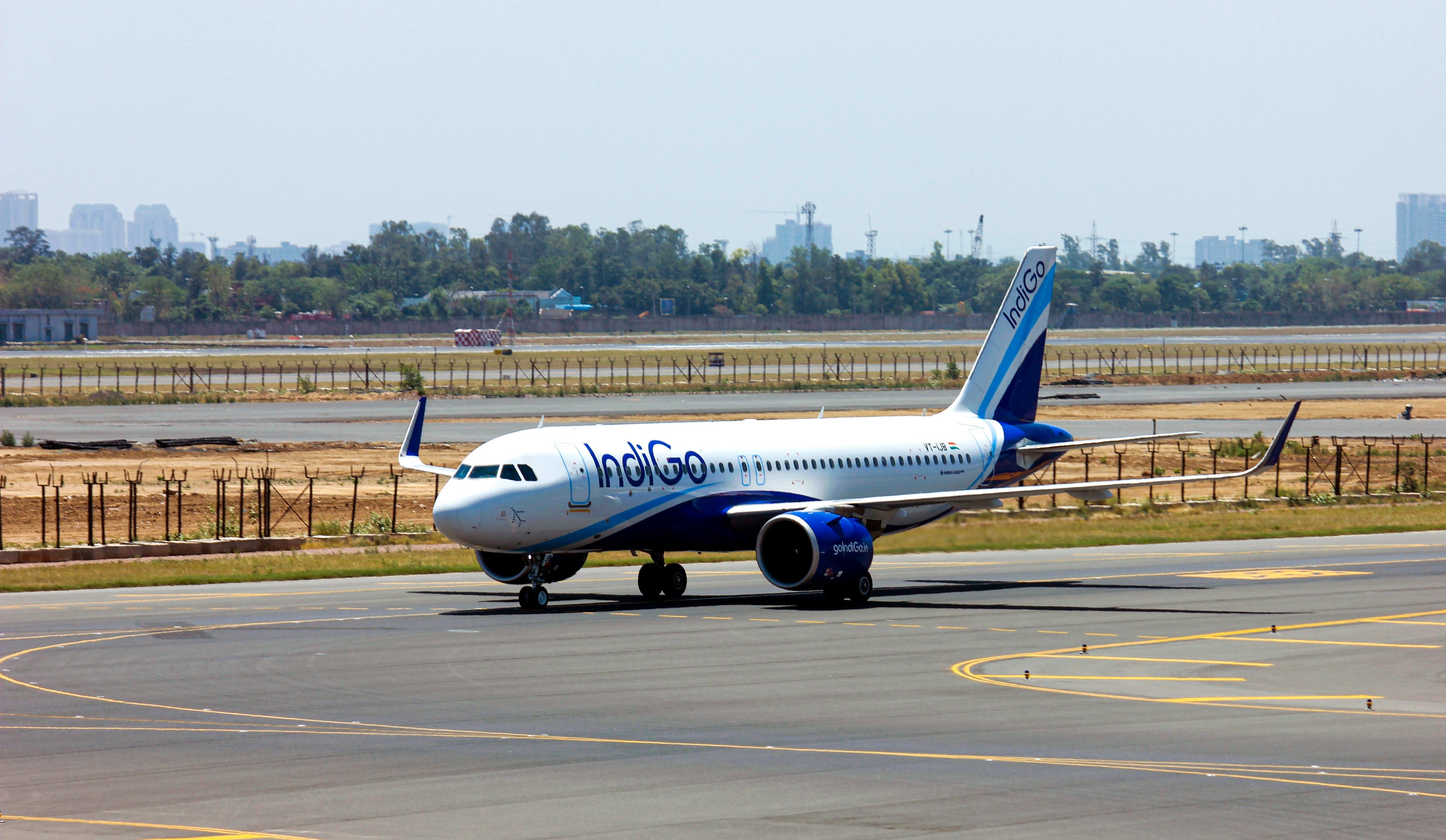

New Delhi: More than 500 IndiGo flights were cancelled across India on Saturday, with Bengaluru reportedly accounting for 124 disruptions, as the airline’s nationwide operational breakdown entered its fifth consecutive day.
The cascading cancellations triggered massive confusion at major airports, a steep surge in airfares on several routes, government intervention to impose fare caps, and strict directives requiring IndiGo to complete all pending passenger refunds by December 7.
Alarmed by soaring fares amid the cancellations, the Ministry of Civil Aviation invoked its regulatory powers to enforce temporary fare caps on all affected routes, stating that no airline would be permitted to exploit the situation. Officials said the decision was necessary to protect passengers — including senior citizens, students and medical travellers — from unreasonable charges.
Airlines and online travel platforms are now under real-time monitoring, with any deviation from the prescribed fare band subject to immediate action.
The government has also directed IndiGo to complete all pending refunds by 8:00 PM on December 7 and to waive rescheduling charges for affected passengers. The airline has been ordered to set up dedicated support and refund facilitation units tasked with proactively contacting travellers, processing reimbursements automatically, and arranging alternative travel without repeated follow-ups.
The crisis — marked by lost baggage, stranded travellers, and overwhelmed terminals — has prompted the aviation regulator to investigate possible failures in the airline’s operational planning and oversight.
The disruption deepened over the weekend as airports in Mumbai, Delhi, Hyderabad, Chennai and Pune also reported heavy cancellations, forcing thousands of passengers into long queues, repeated re-bookings, and hours of uncertainty. Many travellers took to social media to highlight a lack of timely updates and to complain about difficulties locating their luggage after abrupt flight changes. The unusual surge in airfares on alternative carriers further intensified public anger, with some last-minute one-way tickets touching nearly ₹90,000 on high-traffic routes.
IndiGo attributed the crisis to a convergence of unforeseen operational challenges, particularly the implementation of new Flight Duty Time Limitation rules that placed a large number of pilots on mandatory rest just as the airline expanded its winter schedule on October 26. The staffing shortage quickly snowballed, leading to more than 1,000 cancellations on Friday alone, the worst single-day disruption yet.
Another major source of stress for passengers — misplaced baggage — has also been addressed. IndiGo must trace and deliver all separated baggage within 48 hours to passengers’ homes or preferred addresses, and provide compensation where required by existing passenger rights rules.
Meanwhile, the Directorate General of Civil Aviation has temporarily put its Flight Duty Time Limitation orders on hold to help stabilise operations and has formed a four-member committee to determine what went wrong. Early assessments suggest potential gaps in IndiGo’s internal planning, compliance readiness, and oversight systems, prompting calls for an independent examination.
The Ministry of Civil Aviation has reaffirmed that it is coordinating round-the-clock with airlines, airports and security agencies to mitigate disruptions and has stressed a “zero-inconvenience” approach for vulnerable passengers. While normal operations have not yet been fully restored, regulators say they are closely monitoring the recovery and will maintain heightened oversight until stability returns to the country’s air travel network.
(Cover photo by Rudraksha Banjhal on Unsplash)