

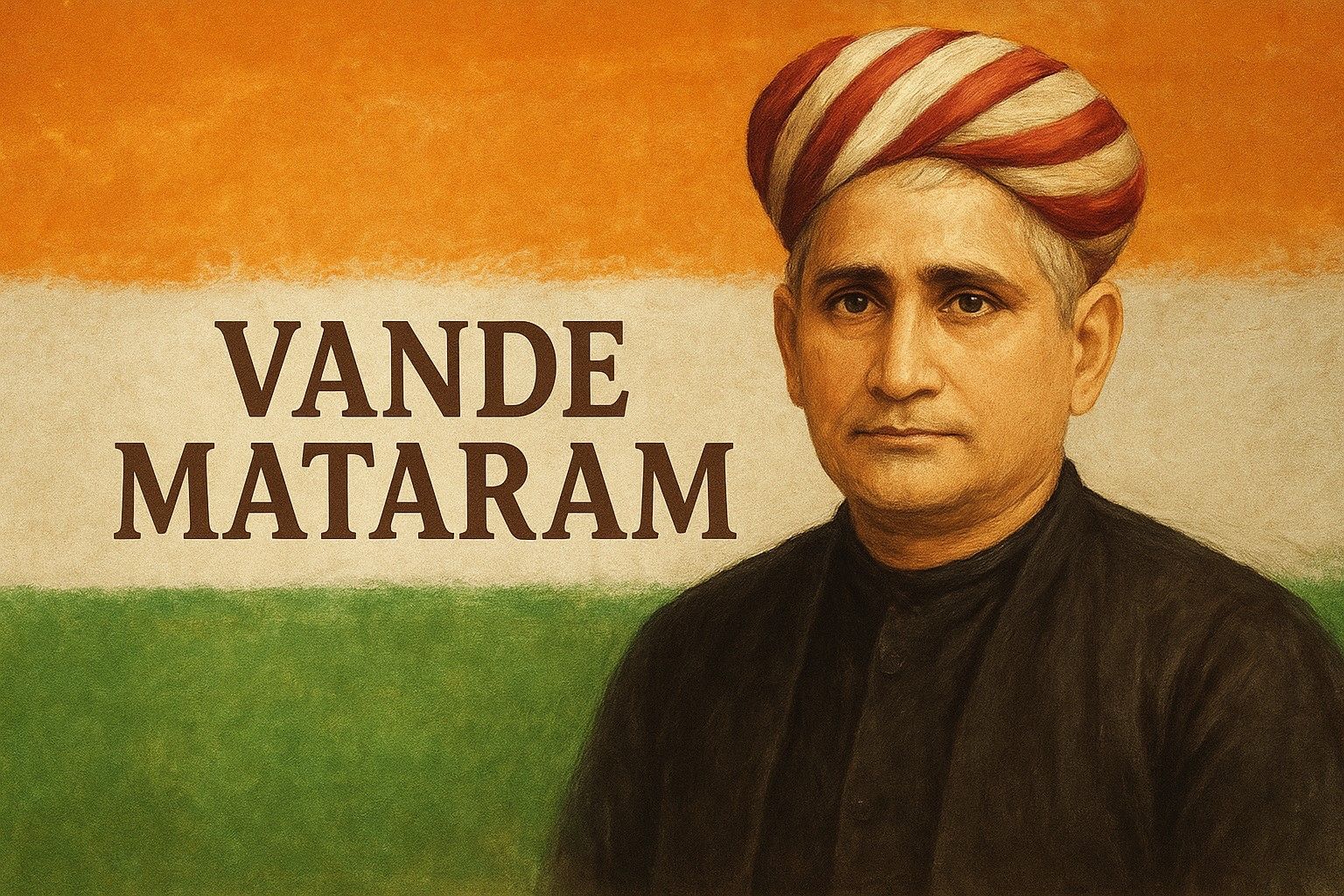
New Delhi: India will mark a momentous milestone — the 150th anniversary of its national song, Vande Mataram, on November 7. Composed by Bankim Chandra Chatterjee, this iconic anthem has inspired generations of Indians, from freedom fighters to everyday citizens, and continues to evoke a sense of pride, unity, and reverence for the motherland. The Ministry of Minority Affairs will organize the inaugural ceremony of this historic commemoration in New Delhi, an event that promises to blend tradition, patriotism and cultural celebration.
The inaugural ceremony will be graced by Union minister of minority affairs and parliamentary affairs, Kiren Rijiju, along with minister of state for minority affairs and fisheries, animal husbandry and dairying, George Kurian. The event will feature mass singing of Vande Mataram, live telecast of Prime Minister Narendra Modi’s address, speeches by the dignitaries, and the launch of the booklet on the ‘Joint Committee on the Waqf (Amendment) Bill, 2024’. People across India are encouraged to join in this celebration, turning it into a nationwide expression of patriotism and collective gratitude.
The journey of Vande Mataram begins in the literary heart of 19th-century Bengal. Bankim Chandra Chatterjee, a towering figure of Bengali literature, first composed the hymn in 1875, believed to coincide with the auspicious day of Akshaya Navami. Initially published in the literary journal Bangadarshan, it later found a permanent home in his novel Anandamath in 1882. Its words, ‘Mother, I Bow to Thee’, celebrate the motherland as both divine and nurturing, giving voice to a spiritual devotion intertwined with patriotism. Rabindranath Tagore later set it to music, cementing its status as a song of both literary and cultural significance.
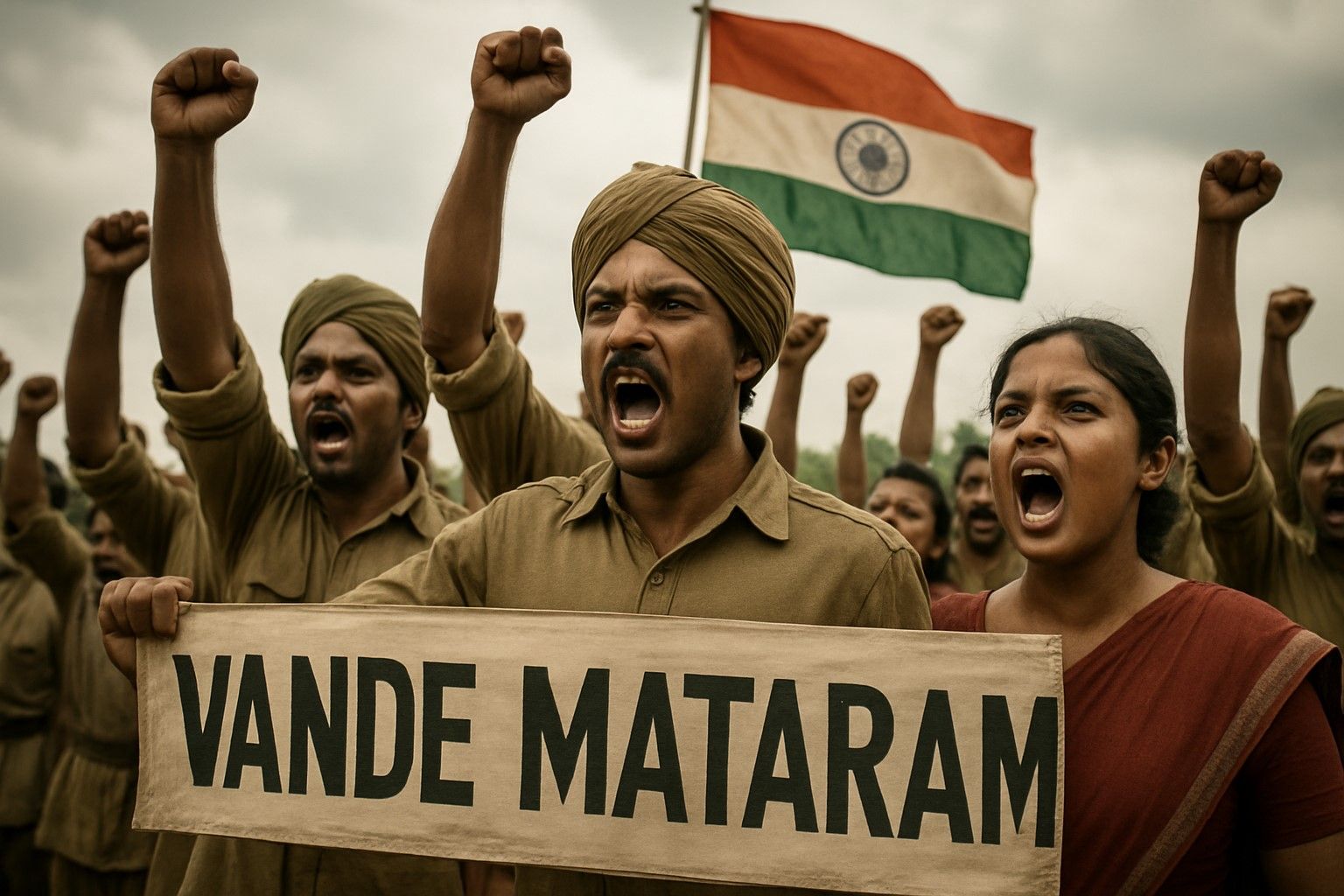
Vande Mataram became more than a poem; it became a clarion call for resistance against colonial rule. Rishi Aurobindo, writing in 1907, recalled the early days when few heard the song, but as political awakening spread in Bengal, it resonated with an entire generation seeking truth and liberation. The song inspired mass movements, from prabhat pheris (morning processions) in Kolkata to public processions in Barisal (in Bangladesh), where thousands of Hindus and Muslims marched together chanting Vande Mataram. British authorities attempted to suppress its influence, imposing fines on students and prohibiting its public recital, but these measures only strengthened its symbolic power.
The song’s significance extended beyond India. In 1907, Madam Bhikaji Cama raised the tri-colour in Stuttgart, Berlin, emblazoned with the words Vande Mataram, while Indian revolutionaries abroad, like Madan Lal Dhignra in England, invoked it even in the face of death. Its reach, from Indian streets to global stages, reflects its enduring role as a unifying anthem for people striving for freedom and justice.
Within India, Vande Mataram became deeply intertwined with nationalist politics. It was sung at the Indian National Congress session of 1896 and played a key role in the anti-partition and Swadeshi movements of 1905. Leaders, students, and ordinary citizens alike adopted it as a symbol of resistance, with its recitation often leading to confrontations with colonial authorities. Over time, it transcended regional, religious, and linguistic boundaries to become a rallying cry for the entire nation.
The Constituent Assembly of independent India recognized its historical significance alongside the national anthem, Jana Gana Mana. On January 24, 1950, Dr. Rajendra Prasad, the first President of India, affirmed that Vande Mataram “shall be honoured equally with Jana Gana Mana and shall have equal status with it”, acknowledging its central role in India’s freedom struggle. Today, it continues to hold a revered place in the nation’s cultural and civic life.
The 150th-anniversary commemoration is being observed across India in multiple phases. National and local events, including exhibitions, musical performances, seminars, and public readings, aim to revive the song’s historical and cultural significance. A commemorative stamp and coin will be released, while short films and visual stories highlighting the life of Bankim Chandra Chatterjee and the song’s role in the freedom struggle will reach audiences via social media and official platforms.

Year-long activities include cultural evenings at Indian Missions worldwide, radio and television programs, patriotic murals along highways, tree plantation drives, and global music festivals inspired by Vande Mataram. These initiatives not only celebrate the song’s rich legacy but also connect India’s proud past with contemporary aspirations for unity, self-reliance, and cultural vibrancy.
As India celebrates 150 years of Vande Mataram, it is more than a commemoration — it is a reaffirmation of the enduring ideals of unity, sacrifice, and devotion to the motherland. Emerging from the literary genius of Bankim Chandra Chatterjee, the song evolved into a symbol of resistance, cultural pride, and national consciousness. Its melody and words continue to inspire, reminding every Indian that the motherland is both a sacred trust and a shared identity, worthy of unwavering respect and dedication.
In 2025, as voices across the country unite in singing Vande Mataram, it is a moment to reflect on the journey of a song that transcended literature to become a nation’s soul, a melody of freedom, and an eternal tribute to the spirit of India.