

New Delhi: The 2026 monsoon outlook, for now, appears unusually uncertain. Given that India’s southwest monsoon remains the country’s most important economic variable outside geopolitics and global oil prices, this adds to the vagaries faced by the nearly 42% of the country’s workforce that still depends directly or indirectly on agriculture, as well as the more than half of the country’s net sown area that is rain-fed. Importantly, reservoir replenishment shapes food inflation, hydropower generation, rural incomes, and consumption trends across the economy.
Forecasts from the India Meteorological Department (IMD) and private forecaster Skymet Weather suggest a weak-to-below-normal season combined with rising rainfall volatility. Current estimates place seasonal rainfall between 92% and 94% of the long period average (LPA). The IMD projects rainfall at 92% of LPA with a ±5% margin of error, while Skymet expects around 94%. In India’s classification system, “normal” rainfall ranges from 96% to 104% of LPA.
The numerical gap may appear modest, but historically even a 4-8% rainfall deficit can significantly affect crop output, food prices, electricity demand and fiscal spending. More importantly, economists and climate scientists are increasingly concerned not just about the quantity of rainfall, but about how rainfall is distributed across the country’s geography and time. Several forecasts indicate prolonged dry spells interrupted by short periods of intense rainfall.
The main climate driver shaping the 2026 outlook is the rising probability of El Niño conditions strengthening during the second half of the monsoon. El Niño typically weakens Indian rainfall by disrupting moisture transport from the Indian Ocean toward the subcontinent.
Meteorologists are also closely tracking the Indian Ocean Dipole, or IOD. A positive IOD can partly offset El Niño’s negative impact by warming the western Indian Ocean and improving moisture flow toward India. Current projections indicate neutral IOD conditions early in the season with a possible shift toward positive territory later.
Climate Risks Intensify
At the same time, marine heatwaves in the Arabian Sea are intensifying. Warmer oceans increase atmospheric moisture capacity, creating a paradoxical outcome: fewer rainy days overall, but more high-intensity rainfall events. India has already witnessed this pattern repeatedly in states such as Himachal Pradesh, Uttarakhand, Kerala and Assam, along with cities including Mumbai and Bengaluru.
The highest-probability outcome remains a mildly deficient but manageable monsoon. Under this scenario, India receives rainfall around 92-95% of LPA with moderate regional disparities but no nationwide drought. Reservoir levels remain broadly adequate, Kharif sowing slows temporarily in some regions, and inflation rises moderately before stabilizing. The broader macro-economic impact would likely remain manageable because India entered 2026 with relatively strong foodgrain stocks and resilient services-sector growth.
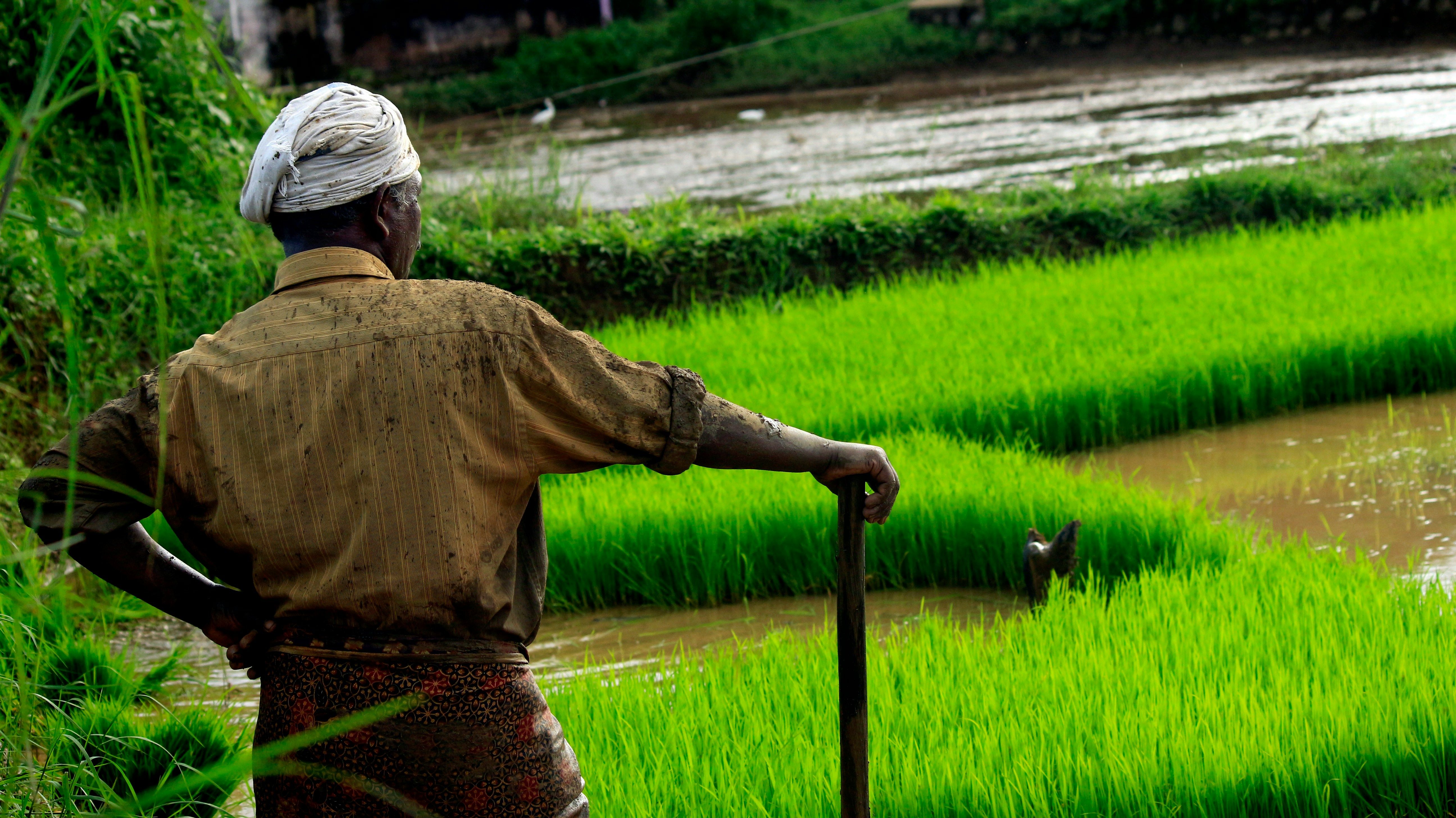
A severe deficient monsoon could sharply reduce Kharif output — especially rice, pulses, cotton and soybean — while accelerating groundwater depletion in northwestern India and weakening rural wages, labour demand and consumption. (Photo by Nandhu Kumar on Unsplash)
Agriculture, however, would still face uneven stress. States such as Punjab, Haryana, Rajasthan, Gujarat and parts of Madhya Pradesh are considered likely rainfall-deficit zones. Rice production may weaken modestly because delayed sowing affects acreage and yields, while pulses and oilseeds could face sharper stress because they depend heavily on timely rainfall distribution rather than total seasonal accumulation.
Food inflation could rise by one to two percentage points, particularly in vegetables, pulses and edible oils. However, cereal inflation may remain relatively contained because India still holds substantial wheat and rice buffer stocks. Power demand would also remain elevated because deficient rainfall tends to prolong heatwave conditions and increase cooling demand. India has already recorded electricity demand above 256 GW during recent heat episodes. The Reserve Bank of India would likely avoid aggressive monetary tightening unless food inflation becomes persistent.
Worst Case Scenario
The major downside risk is a severe deficient monsoon. If El Niño strengthens sharply between July and September, rainfall could fall below 90% of LPA nationally. Historically, drought years such as 2002 and 2009 caused major agricultural losses, inflation spikes and weaker rural incomes.
A severe deficient monsoon would affect the economy through several channels simultaneously. Kharif production could decline sharply, particularly for rice, pulses, cotton and soybean. Groundwater extraction would increase rapidly in northwestern India, worsening aquifer depletion. Rural wage growth could weaken as agricultural labour demand falls, affecting consumption in smaller towns and villages. Sectors such as two-wheelers, affordable housing and entry-level consumer goods would likely face slower demand growth.
Food inflation could rise well above RBI comfort levels, especially in vegetables and pulses. Hydropower generation would decline, increasing dependence on coal and imported energy at a time of global energy uncertainty. Fiscal pressure would also increase as governments expand rural employment programs, irrigation subsidies and food support schemes. Historically, severe monsoon failures have reduced India’s GDP growth by roughly 0.5-1 percentage point.
A third and increasingly important scenario involves “average rainfall with extreme distribution”. India could technically record near-normal rainfall while simultaneously experiencing floods, crop destruction and urban disruption because rainfall increasingly arrives in concentrated bursts rather than evenly distributed patterns. Climate scientists argue that total rainfall numbers are becoming less meaningful than rainfall distribution itself.
Under this pattern, central India and the western coast could witness repeated cloudburst-like events while northwestern India remains dry for extended periods. This creates simultaneous flood-and-drought conditions. Agriculture suffers because crops require consistent moisture across growth stages, and excess rainfall over short durations can damage crops more severely than moderate deficits.
Urban India remains especially vulnerable. Cities such as Mumbai, Bengaluru, Chennai, Kolkata and Delhi continue to face major drainage and infrastructure limitations. Short-duration extreme rainfall can disrupt transport systems, damage infrastructure and reduce productivity. Insurance losses and disaster-relief expenditure would also rise significantly.
Eastern India may experience a different monsoon profile from northwestern India this year. Several forecasts indicate episodic above-normal rainfall across eastern and northeastern India despite an overall national deficit. For West Bengal, this creates a mixed picture. Paddy cultivation could benefit if rainfall timing remains favourable, but flood risk in low-lying districts may increase sharply during active monsoon phases. Kolkata remains particularly vulnerable because drainage systems struggle during high-intensity rainfall combined with tidal effects. Tea production in north Bengal and Assam could also face volatility if dry spells alternate with intense precipitation.
The balance of evidence currently points toward a weaker-than-normal monsoon with significant regional and temporal variation. The most likely rainfall range remains: 92% < Monsoon Rainfall < 95% of LPA.
However, aggregate rainfall is no longer the best measure of economic risk. The critical variables this year will be rainfall distribution during July and August, the pace of El Niño strengthening, the emergence of positive IOD conditions, reservoir storage levels, Kharif sowing progress and food inflation trends from late summer onward.
India’s monsoon is increasingly shifting from a “quantity risk” problem to a “distribution risk” problem. Even if total rainfall remains near normal, the country could still face simultaneous inflation shocks, floods, agricultural stress and infrastructure disruption because rainfall patterns are becoming more erratic under climate change. India’s economy is more diversified and resilient than during earlier drought decades, but the monsoon still shapes inflation, rural incomes, food security and political stability in ways no other weather system does.
(Cover photo by Sachin Mittal on Unsplash)