
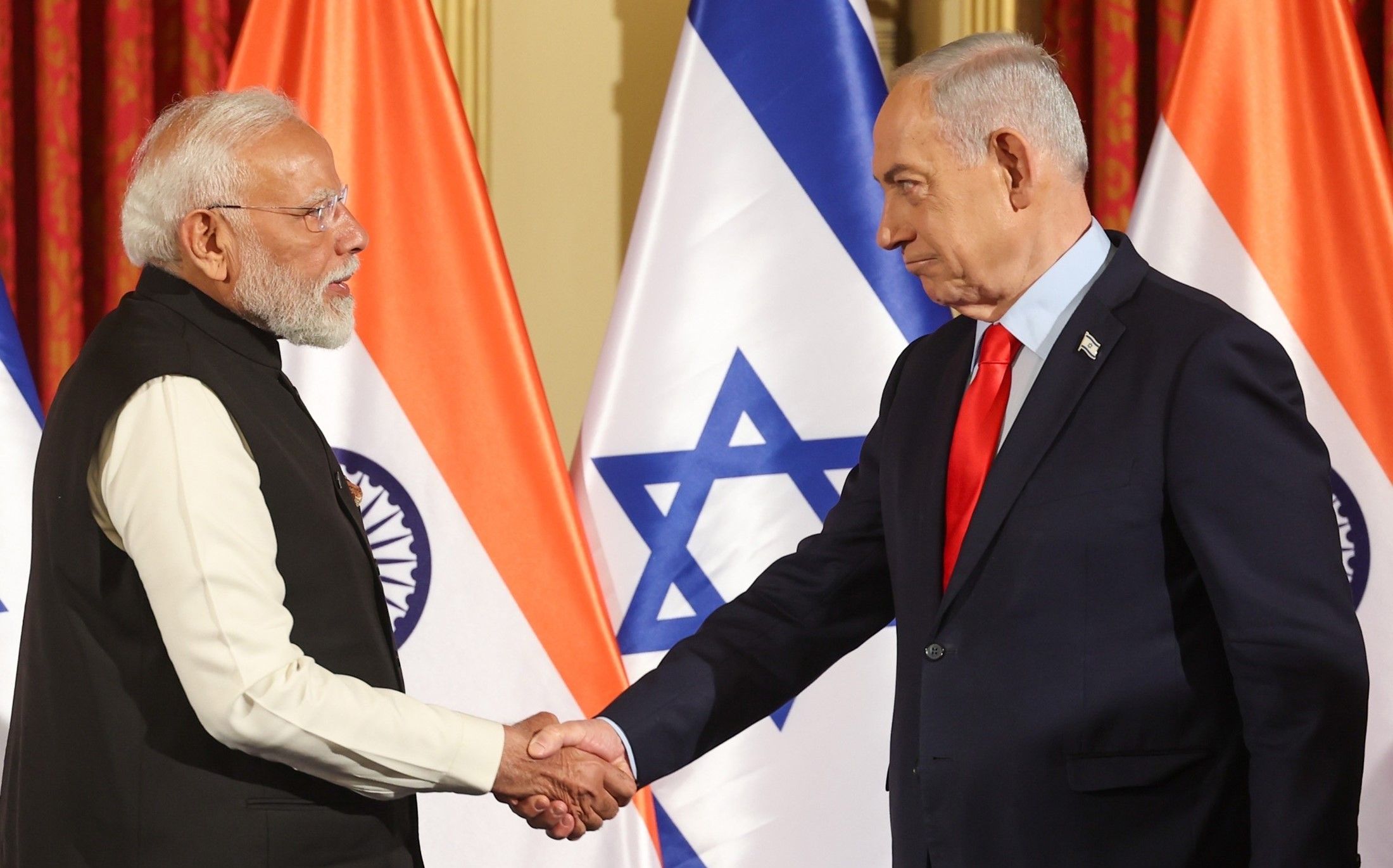

New Delhi: Prime Minister Narendra Modi and his Israeli counterpart Benjamin Netanyahu have agreed to elevate India-Israel ties to what they called a ‘Special Strategic Partnership for Peace, Innovation and Prosperity’, marking a new phase in relations rooted in shared democratic values, security concerns and technological ambition.
PM Modi was in Israel from February 25 to 26 at Netanyahu’s invitation, accompanied by a high-level delegation of senior ministers and officials. The visit built on the momentum created by his trip to Israel in 2017 and Netanyahu’s return visit to India in 2018, which both leaders said had laid the foundation for a new era of partnership.
At the heart of the renewed engagement is a shared push for innovation-led growth. The two PMs underlined how Israel’s strengths in cutting-edge technology complement India’s scale, talent pool and manufacturing capacity. They pledged to deepen cooperation in AI, cybersecurity, semiconductors, quantum computing, biotechnology, agriculture, water management, defence systems and space exploration. The partnership, they said, aligns with India’s goal of becoming a developed nation by 2047 while positioning both countries at the forefront of emerging technologies.
Calling for early conclusion of the proposed Free Trade Agreement, they noted that the Bilateral Investment Treaty, India-Israel Innovation Bridge, India-Israel Innovation Centre for Agriculture and India-Israel Industrial R&D and Innovation Fund would significantly enhance economic, entrepreneurial and scientific collaborations between the two countries..
During discussions on regional and global issues, PM Modi conveyed his support for the Gaza Peace Plan and hoped that the initiative would bring peace and stability to the region. The two leaders also called for closer cooperation between the two countries on IMEC and I2U2 initiatives. They also expressed their resolve to strengthen the global fight against terrorism. Both leaders strongly condemned terrorism “in all its forms and manifestations”, including cross-border attacks, and reaffirmed their resolve to combat the threat together. They also discussed regional developments and underscored the need for a durable peace in the Middle East.
PM Modi said, “India and Israel are unequivocal in their position that terrorism has no place in the world in any form, and in any manifestation. Terrorism cannot be accepted. We have stood shoulder to shoulder in opposing terrorism and those who support it, and we will continue to do so.”
“Peace and stability in West Asia are directly linked to India’s security interests. Therefore, from the very beginning, we have supported dialogue and a peaceful resolution of issues. This is the call of the Global South and of humanity as a whole. India’s position is clear: Humanity must never become a victim of conflict. The Gaza Peace Plan has opened a pathway towards peace. India has extended its full support to these efforts. In the future as well, we will continue to engage in dialogue and cooperation with all countries,” he added.
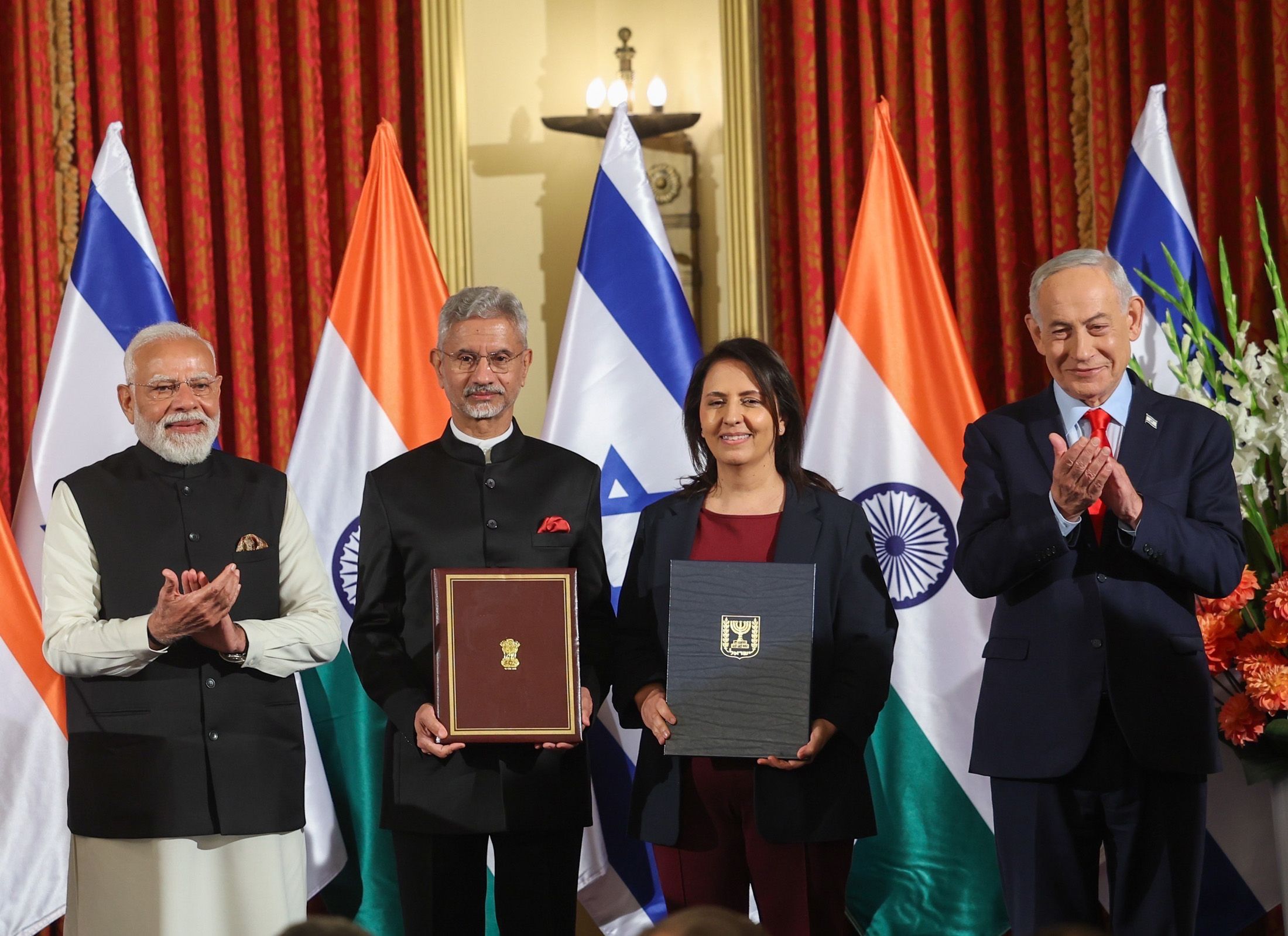
A key focus of the visit was to institutionalize cooperation. Both sides stressed the need to strengthen government-to-government, business-to-business and people-to-people mechanisms so that policy announcements translate into tangible outcomes.
On defence and security, the leaders welcomed the MoU on defence cooperation signed in November last year and outlined a roadmap for expanding collaboration. They also agreed to advance cooperation in critical and emerging technologies through a new initiative led by the two countries’ National Security Advisors.
In science and innovation, the India-Israel Industrial R&D and Innovation Fund will be further strengthened, with greater outreach to industry and support for joint research projects. Contributions to the India-Israel Joint Research Calls will rise from $1 million to $1.5 million on each side, enabling expanded collaboration between universities and research institutions. The Joint Commission on Science and Technology will now meet at the ministerial level.
AI, Cybersecurity
AI emerged as a priority area. The two sides signed an MoU on AI cooperation and agreed to build stronger links between researchers, industry leaders and start-ups. They also welcomed closer collaboration between ISRO and the Israel Space Agency, opening doors for joint ventures and innovation in the space sector. A new ‘Horizon Scanning’ mechanism will help both governments anticipate emerging global trends in technology, economics and society.
Cybersecurity cooperation will be expanded through a multi-year strategic programme that includes capacity-building, joint research and tabletop exercises. The leaders also welcomed the establishment of an India-Israel Centre of Excellence in Cybersecurity in India and noted the successful launch of the inaugural India-Israel Cyber Policy Dialogue last year.
Trade and investment featured prominently. The signing of a bilateral investment agreement in September 2025 is expected to boost investor confidence, while negotiations for a free trade agreement have formally begun. Both sides expressed hope that talks would be concluded at the earliest.
Financial cooperation is set to deepen, with discussions on linking India’s UPI with Israel’s fast payment system to facilitate cross-border transactions. An MoU between NPCI International and Israel’s MASAV will examine payment linkages. The leaders encouraged expanded direct air connectivity between Tel Aviv and major Indian cities and greater Indian participation in Israel’s infrastructure projects, including metro systems, railways and desalination plants.
In agriculture and water management, long-standing pillars of the relationship, the two leaders reviewed the progress of 35 Centres of Excellence across India, which have trained more than a million farmers in advanced techniques. Eight more centres are being operationalized. They welcomed the creation of an India-Israel Innovation Centre for Agriculture and new fellowships for Indian researchers in Israel. Cooperation will also expand in fisheries, aquaculture, climate action and environmental protection.
People-to-people ties were described as the bedrock of the relationship. The two sides agreed that up to 50,000 additional Indian workers could travel to Israel over the next five years, particularly in construction and caregiving, with safeguards to ensure their safety and rights. They also pledged to expand opportunities for Indian professionals in high-skill sectors such as data science and AI.
Cooperation in health, education and culture will also be stepped up, including through a new India-Israel Academic Cooperation Forum and expanded university partnerships.
As PM Modi concluded his visit, both sides projected confidence that the newly elevated partnership would deepen bilateral ties and help shape cooperation in a rapidly changing global landscape.