
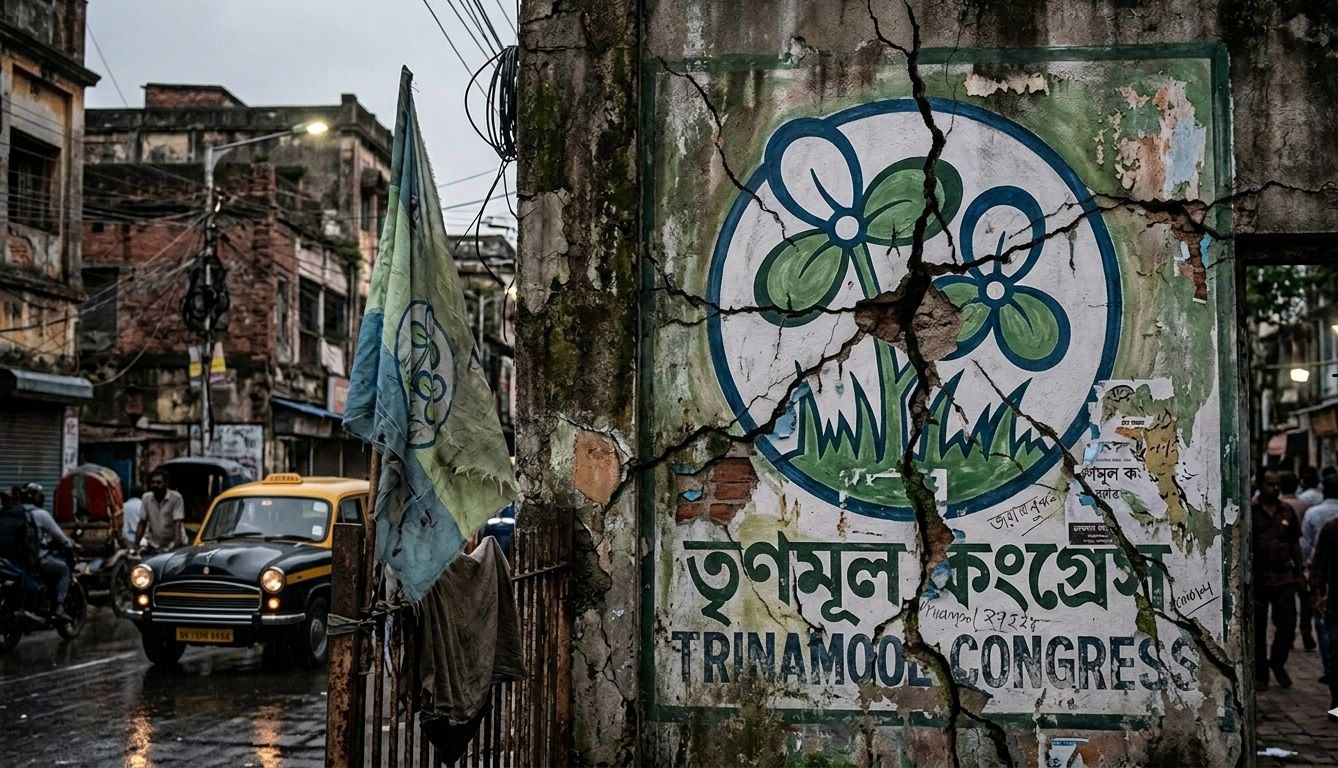

New Delhi: The crisis engulfing the Trinamool Congress is more than a routine post-election setback. It is the gravest challenge the party has faced ever since Mamata Banerjee founded it in 1998.
After nearly three decades of dominating West Bengal politics and 15 uninterrupted years in power, the TMC is confronting a question that once seemed unthinkable: can a party built around a single leader survive a crushing electoral defeat and a rebellion from within?
The answer will shape not only the future of West Bengal but also the direction of opposition politics in India.
The 2026 Assembly election was not simply a defeat for the TMC; it fundamentally altered the state’s political landscape. The BJP won 207 seats in the 294-member Assembly, comfortably crossing the majority mark and ending the Trinamool’s 15-year rule. The TMC was reduced to around 80 seats, a dramatic collapse from the 215 it won in 2021.
The reversal becomes even more striking when viewed historically. Mamata ended 34 years of Left Front rule with 184 seats in 2011, increased the tally to 211 in 2016 and 215 in 2021, only to see her party’s dominance unravel five years later.
The symbolism of the defeat may prove even more damaging than the numbers. Mamata lost Bhawanipur to former confidant Suvendu Adhikari by more than 15,000 votes, while reports suggest that nearly two-thirds of her outgoing cabinet ministers were also defeated. Political parties recover from losses. They struggle to recover from the loss of invincibility that shields leaders from internal dissent. That protective aura surrounding Mamata has now been shattered.
Blaming the current turmoil solely on the election result would be too simplistic. Electoral defeats expose weaknesses; they rarely create them. The present crisis reflects structural contradictions that accumulated during years of uninterrupted dominance.
Unlike cadre-based organisations, the Trinamool evolved into a highly centralised political movement. Mamata’s popularity and political instincts became the party’s principal organising force. Regional leaders derived authority from proximity to the leadership rather than from independent political bases. As long as the party kept winning, these contradictions remained hidden because victory distributed rewards and influence. Defeat has suddenly exposed the institutional weaknesses beneath the surface.
The scale of the rebellion suggests that the crisis extends far beyond routine factionalism. Reports indicate that a majority of the TMC’s Lok Sabha MPs have expressed support for the NDA and sought separate recognition. Whether those numbers ultimately hold or not, the development represents the most serious parliamentary challenge Mamata Banerjee has faced.
The Assembly presents an equally dangerous picture. A majority of the party’s legislators are reportedly backing expelled leader Ritabrata Banerjee as legislature party leader. More importantly, the dissidents appear to have crossed the two-thirds threshold required under India’s anti-defection law, potentially protecting themselves from disqualification. The implications are profound. This is no longer simply a question of defections but a battle over the future identity and ownership of the Trinamool Congress itself.
The rebellion is driven less by ideology than by political survival. Personality-driven parties often enjoy extraordinary loyalty during periods of expansion because political careers are linked to electoral success. Once power is lost, politicians begin reassessing their options. The calculations become straightforward. Can the current leadership return to office? Does remaining loyal improve future prospects? Would aligning with a stronger political force offer greater security?
Indian politics offers many precedents. The Congress experienced repeated schisms during periods of decline. The Janata Party fragmented under competing ambitions. More recently, the Shiv Sena’s split permanently altered Maharashtra politics. The Trinamool now faces a similar historical test.
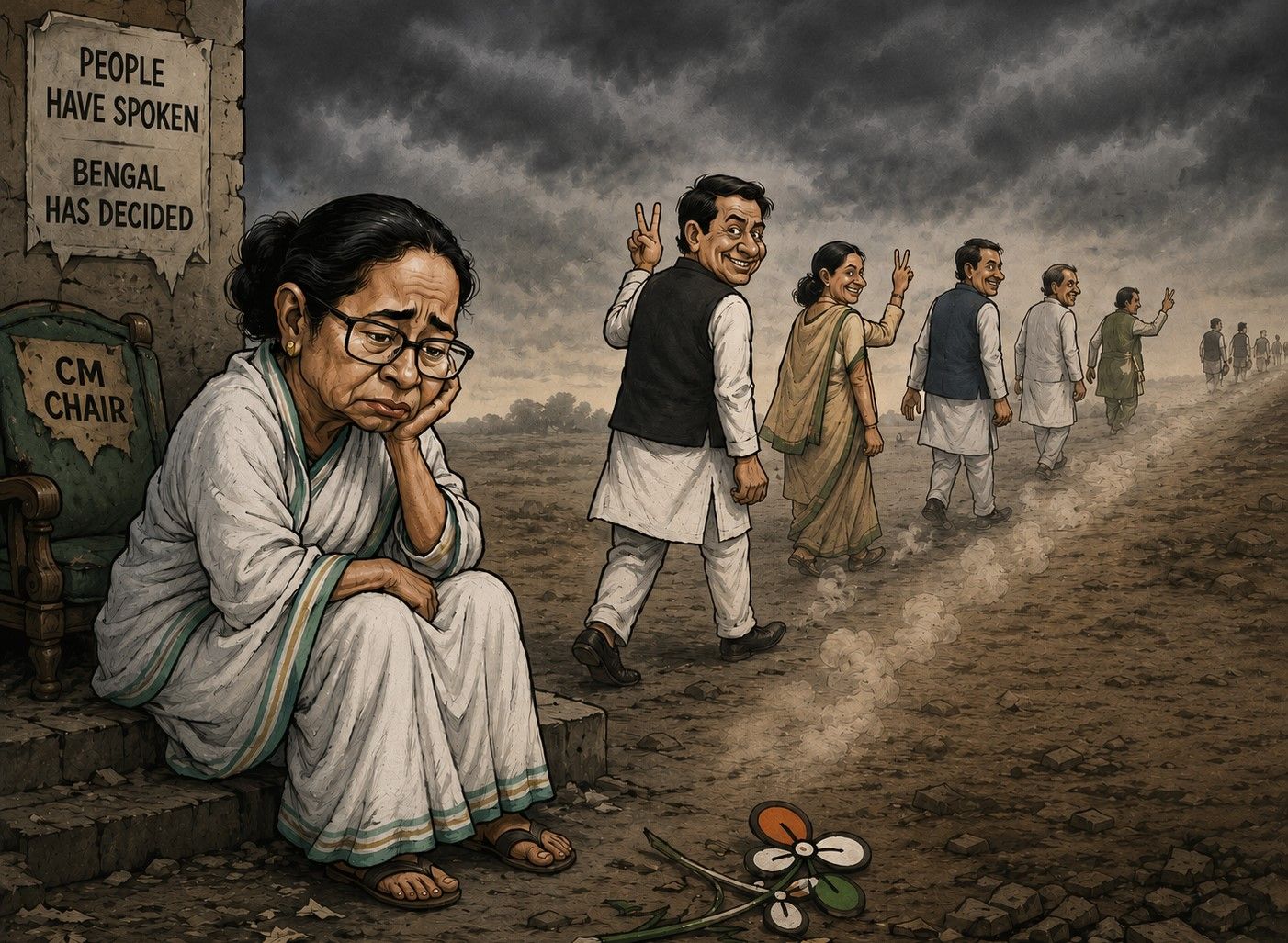
For Mamata, the challenge is unlike any she has previously encountered. Her political career was built on confronting external adversaries. She fought the Left Front when it seemed politically invincible, survived political isolation and physical attacks, and resisted the BJP’s expansion into West Bengal. Every defining struggle involved defeating opponents across the aisle.
The current battle is fundamentally different because the challenge comes from leaders who emerged from the political ecosystem she created. The organisational structure now under strain was built around her authority and sustained by her electoral success. The crisis is therefore political, institutional and deeply personal.
The turmoil has also revived uncomfortable questions about succession. The growing prominence of Abhishek Banerjee and younger leaders was expected to facilitate generational transition. Instead, it appears to have intensified factional competition. Leadership succession remains one of the least institutionalised aspects of Indian regional politics. Many parties postpone difficult conversations about the future while relying on charismatic founders. Electoral setbacks often transform those unresolved questions into existential crises.
The TMC’s troubles also reflect broader changes in Indian politics. Regional parties once relied on strong state identities to shield themselves from national political currents. That insulation is weakening. National parties have expanded their organisational reach, electoral narratives have become increasingly centralised and legislators increasingly calculate opportunities beyond state boundaries. Political survival is no longer solely a state-level equation.
For BJP and the NDA, the TMC’s instability presents a strategic opportunity. Weakening one of India’s most influential regional opposition parties could reshape parliamentary arithmetic and alter the broader opposition landscape. Whether those gains become permanent depends on whether defectors establish an independent political base or merely become temporary allies.
Yet predictions of the TMC’s immediate collapse would be premature. Indian politics repeatedly demonstrates that established parties possess remarkable resilience. The Congress survived multiple splits. The DMK and AIADMK overcame serious rebellions. Even the BJP endured prolonged periods of uncertainty before emerging as the country’s dominant political force. Deep organisational networks and durable social coalitions rarely disappear overnight.
The Trinamool retains significant strengths. Mamata remains one of India’s most recognisable political leaders. Her welfare programmes created enduring constituencies across West Bengal. The party continues to possess substantial grassroots networks embedded in local governance. Most importantly, she cultivated an emotional bond with large sections of the electorate that cannot easily be replicated.
The immediate challenge facing the Trinamool is organisational rather than electoral. Purges may deepen divisions, while excessive accommodation may project weakness. Structural reforms that decentralise authority, strengthen internal institutions and broaden leadership may become unavoidable if the party hopes to remain a durable political force.
For Mamata, the stakes extend beyond political survival. Her legacy was built on dismantling entrenched power structures and ending political monopolies. History may ultimately judge her not only by her victories but by whether she can transform a movement centred on one individual into an institution capable of surviving its founder.
The larger lesson extends beyond West Bengal. Electoral defeats are temporary. Organisational legitimacy is far harder to restore. Parties can recover from losing office, but rebuilding the confidence of their own legislators and workers is a much more difficult task.
The coming months will determine whether Trinamool Congress becomes another example of the decline of personality-driven regional parties or whether it stages another improbable comeback under the leader who built it. The battle for West Bengal may have ended in 2026, but the battle for the future of the Trinamool Congress has only just begun.