
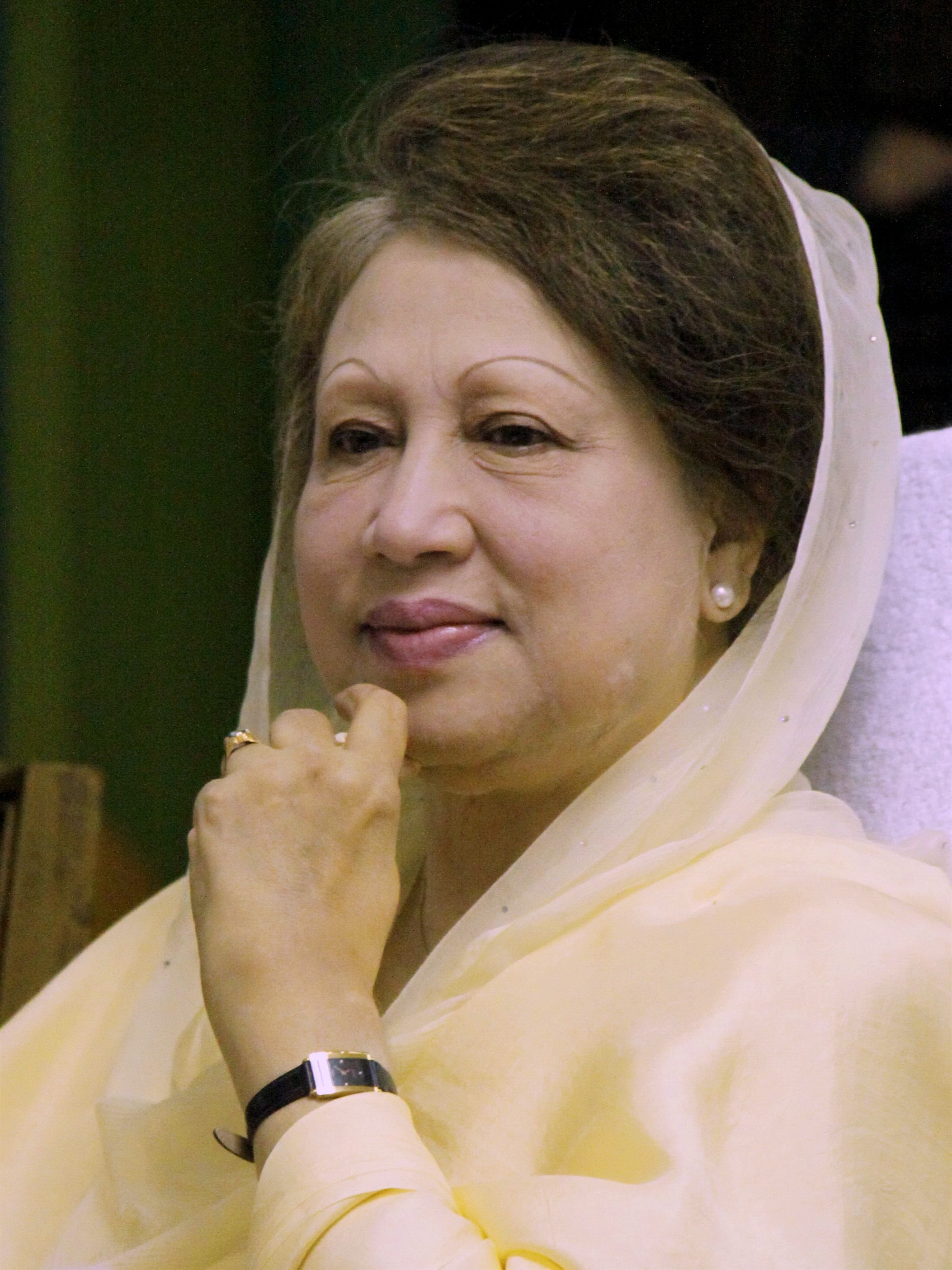
New Delhi: Khaleda Zia, Bangladesh’s first female Prime Minister and one of the most consequential political figures of South Asia, has died at the age of 80. Her passing draws a line under more than four decades of political turbulence in which her own rise, rule, decline, and endurance closely mirrored the country’s unfinished struggle to build a stable democratic order.
From Private Citizen to Political Heir (1945-81)
Born on August 15, 1945, in Dinajpur, Khaleda Zia came of age in what was then East Pakistan. Her early life unfolded far from the glare of politics. That changed after her marriage to Ziaur Rahman, a military officer who emerged as a national hero during the Liberation War of 1971. As Bangladesh navigated the uncertain years after independence, Ziaur Rahman rose through the ranks, eventually assuming the presidency in 1977.
The defining rupture came on May 30, 1981, when President Ziaur Rahman was assassinated in Chittagong. The killing not only destabilized the state but also thrust his widow into a political landscape she had not sought. Within months, Khaleda Zia was drawn into the Bangladesh Nationalist Party (BNP), founded by her late husband in 1978. By 1983, she had become its chairperson, inheriting not only a party but a contested national legacy.
Confronting Military Rule (1982-90)
The 1980s were dominated by the military regime of Hussain Muhammad Ershad, who seized power in March 1982. Khaleda Zia emerged as one of the most visible civilian opponents of authoritarian rule. Throughout the decade, she led alliances, boycotts, and street movements demanding free elections and the restoration of democracy.
The crescendo came in 1990. Mass protests intensified from October to December, culminating in Ershad’s resignation on December 6, 1990. That moment remains central to Khaleda Zia’s political legacy. It was not merely the fall of a dictator but the reopening of democratic possibility after nearly a decade of military dominance.
Restoring Parliamentary Democracy (1991-96)
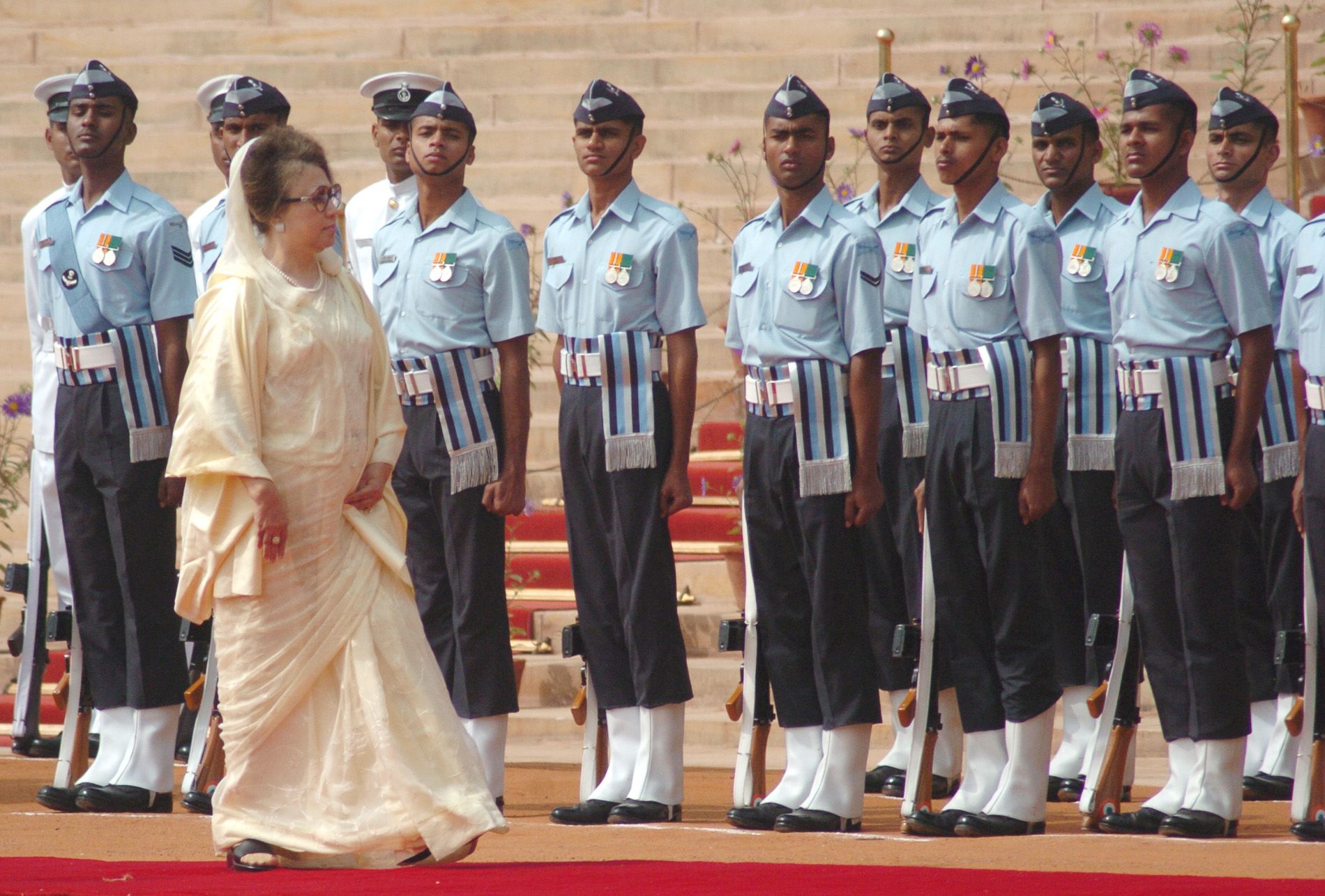
The general elections of February 27, 1991 marked a watershed. Khaleda Zia’s BNP emerged victorious, and on March 20, 1991 she was sworn in as Prime Minister, becoming the first woman to hold the office in Bangladesh. Later that year, the 12th Amendment to the Constitution restored the parliamentary system, reversing the presidential model entrenched since the mid-1970s.
Her first term, from 1991 to 1996, combined democratic normalization with growing political polarization. While institutions such as parliament and the judiciary resumed civilian roles, confrontation with the opposition Awami League intensified. Disputes over electoral credibility led to boycotts and unrest, culminating in her resignation in March 1996 amid demands for a neutral caretaker government.
Caretaker Politics & Return to Power (1996-2001)
After a brief BNP victory in February 1996 that failed to gain legitimacy, elections under a caretaker government were held on June 12, 1996, bringing Sheikh Hasina to power. For five years, Khaleda Zia led the opposition, refining the very caretaker system her party had resisted but later embraced as a safeguard against electoral manipulation.
That strategy paid off on October 1, 2001, when the BNP-led alliance won a landslide victory. Khaleda Zia returned as Prime Minister on October 10, 2001, beginning her second full term.
Governance, Growth & Growing Strains (2001-06)
Between 2001 and 2006, Bangladesh experienced economic expansion, increased remittances, and greater global engagement, including peacekeeping missions. Yet this period also saw deepening political antagonism, rising militancy, and persistent allegations of corruption.
As her term neared its end, disputes over the caretaker system resurfaced. By October 2006, political deadlock had paralyzed the country. On January 11, 2007, a military-backed emergency government took power, postponing elections and suspending basic political activity. Khaleda Zia’s era of direct governance was effectively over.
Legal Battles & Political Confinement (2007-20)
The emergency period ushered in an aggressive anti-corruption drive. On February 8, 2018, Khaleda Zia was convicted in the Zia Orphanage Trust case and sentenced to prison, barring her from contesting elections. Supporters decried the verdict as politically motivated, while the government framed it as accountability long overdue.
Her health deteriorated in custody.
In March 2020, amid the Covid-19 pandemic, she was released on humanitarian grounds and confined to her residence, her movements and political activities restricted. Though formally still BNP chairperson, she ceased to be an active campaigner.
Personal Life in Shadow of Power
Throughout her public life, Khaleda Zia remained intensely private. Widowed at 35, she raised two sons while navigating relentless political hostility. Family tragedies, illness, and legal pressures accumulated, particularly in the last decade. These personal struggles humanized her for supporters and reinforced her image as a leader who endured rather than retreated.
What Her Death Means for the Coming Elections
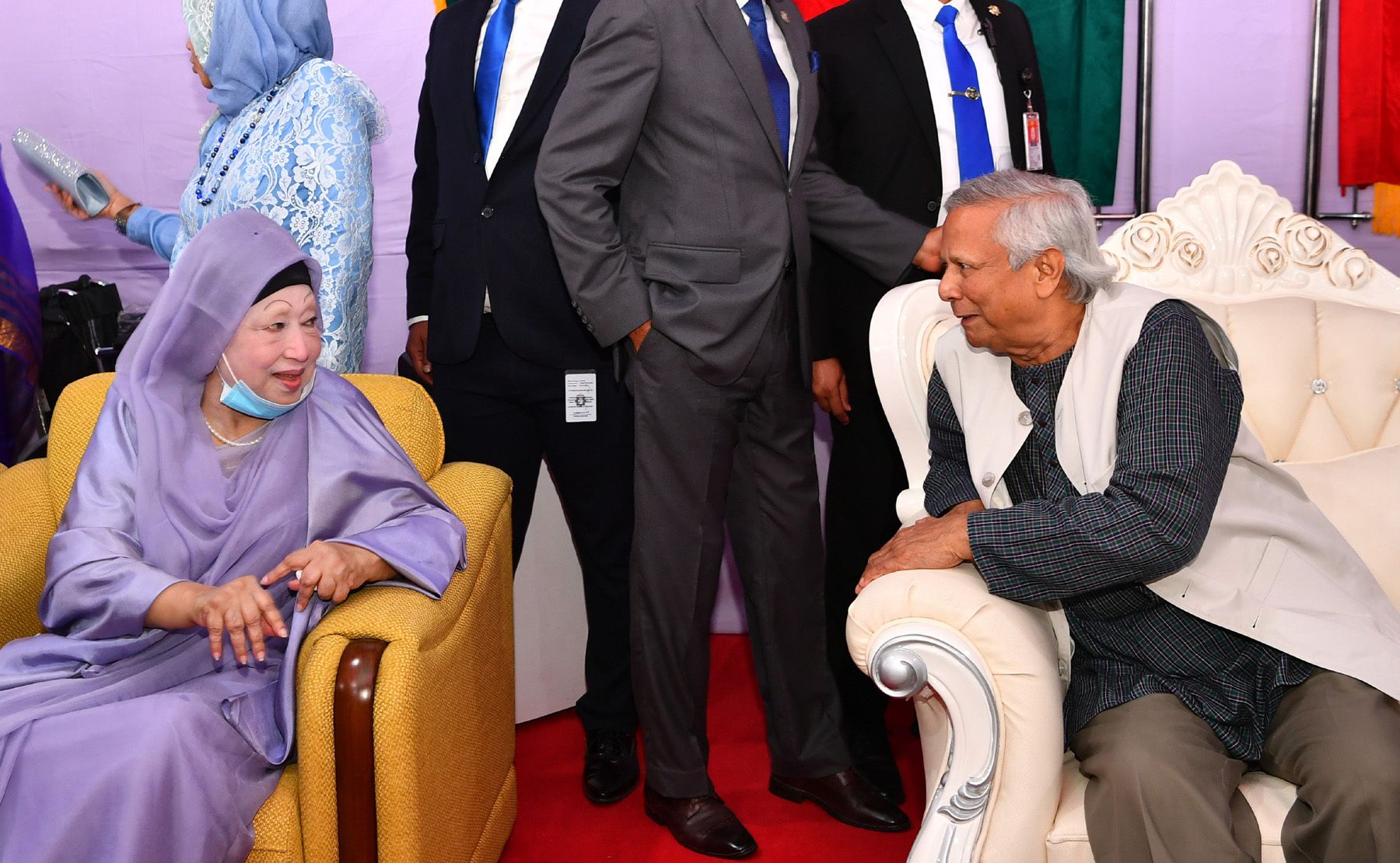
Khaleda Zia’s death comes as Bangladesh approaches another national election shaped by questions of participation, legitimacy and opposition viability. Her passing removes a unifying symbol for the BNP, even as it strengthens her status as a historical figure rather than a political actor.
In the short term, her death is likely to mobilize supporters emotionally, potentially reinvigorating opposition activism. In the longer term, it accelerates a leadership transition the BNP has postponed for years. Without her presence, the party must define itself beyond lineage and grievance, a challenge that will shape its electoral prospects.
For the ruling establishment, the moment recalibrates the political narrative. An era defined by two rival leaders — Khaleda Zia and Sheikh Hasina — has effectively ended. Whether that closure opens space for reconciliation or hardens existing divides will be tested at the ballot box.
An Era Ends… the Debate Continues
Khaleda Zia’s life traced Bangladesh’s democratic journey from post-independence fragility through military rule, restoration, stagnation, and renewed uncertainty. She was at once a restorer of democracy and a product of its limitations, a pioneer for women and a participant in deeply personalized politics.
Her death marks the end of a political generation shaped by assassination, upheaval, and survival. How Bangladesh remembers Khaleda Zia will remain contested. But her imprint on the nation’s democratic story — etched across dates, movements, victories, and defeats — is indelible.