
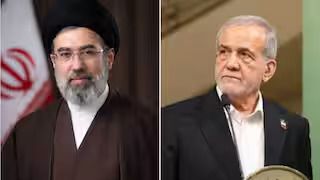

As of today, August 6, 2026, the Iranian administration is grappling with a severe internal crisis that threatens the stability of the executive branch. Following weeks of mounting friction between the presidency and the country’s hardline establishment, reports have emerged detailing a "final ultimatum" delivered to President Masoud Pezeshkian. This development marks a significant escalation in the power struggle within Tehran, placing the future of the Pezeshkian government in immediate jeopardy as the President reportedly weighs his departure from office.
The Ultimatum and Resignation Threats
The current political instability was catalyzed by reports on August 4, 2026, suggesting that a definitive mandate has been issued to the President. The ultimatum was issued by Mojtaba Khamenei, although some reports attribute the "final ultimatum" directly to Supreme Leader Ayatollah Ali Khamenei.
This directive appears to be a response to President Pezeshkian’s repeated threats to step down. The Supreme Leader’s ultimatum specifically addresses these resignation threats, which have surfaced amid a deepening national crisis. Questions remain over whether the President's next attempt at resignation will be formally accepted by the leadership, potentially bringing his tenure to an end.
IRGC Influence and Internal Friction
Central to this political deadlock is the role of the Islamic Revolutionary Guard Corps (IRGC) and its relationship with the presidency. The Supreme Leader has explicitly backed an IRGC commander amidst the ongoing troubles, though specific details on the commander's identity have not been reported yet in the current press cycle.
This public show of support for the military wing suggests a narrowing of President Pezeshkian's authority. The ultimatum is inextricably linked to the President's internal struggle to maintain control over policy in the face of hardline opposition. The friction between the reformist-leaning presidency and the IRGC-backed clerical leadership has now reached a point where the Supreme Leader has felt compelled to intervene with a "final" warning to ensure administrative compliance.
Geopolitical Pressure and External Warnings
The domestic turmoil in Tehran is unfolding against a backdrop of increasing international pressure. On August 5, 2026, just a day before the current peak of the internal crisis, former U.S. President Donald Trump issued a stern warning to the Iranian government. Trump stated that the Strait of Hormuz would be "opened very soon" and warned that Iran would be "hit really hard" if a new deal is not reached.
The external threats appear to have intensified Iran's internal political troubles, with the country's leadership reportedly divided over how to respond to renewed Western pressure. With the Strait of Hormuz, a vital global oil chokepoint, becoming a focal point of international rhetoric, the pressure on Pezeshkian to either stabilize the domestic front or exit the stage has intensified.