
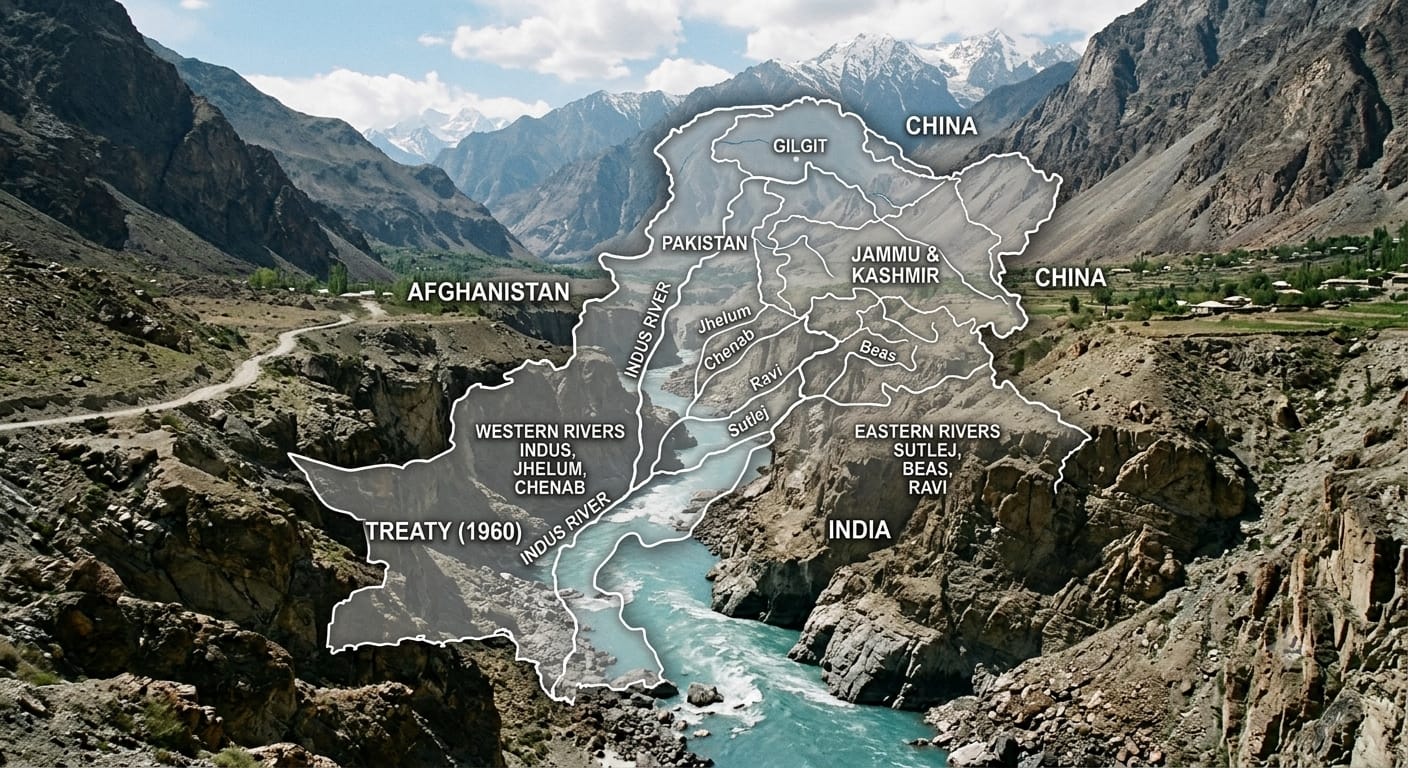

As of July 9, 2026, the decades-old water-sharing arrangement between India and Pakistan has entered its most precarious phase. Following years of diplomatic friction, India has effectively signaled a freeze on the Indus Waters Treaty (IWT), a move that analysts suggest is aimed at holding Pakistan accountable for cross-border security issues. The central mantra driving New Delhi's current stance, according to reports from India's News.Net, is that "terrorism and treaties cannot go together."
The Security-Water Nexus
India’s decision to keep the treaty in abeyance is rooted in a fundamental shift in its diplomatic strategy. For years, the 64-year-old agreement remained one of the few functional links between the two nuclear-armed neighbors despite multiple conflicts. However, India has recently taken a firmer stance on the global stage. As reported by The Hindu, India informed the United Nations that Pakistan has violated the "spirit" of the Indus Waters Treaty by inflicting three wars and thousands of terror attacks over the decades.
This "treaty freeze" is being interpreted as a strategic lever. By refusing to engage in the routine technical and administrative mechanisms that keep the IWT functioning, India is signaling that the era of separating water cooperation from national security is over. According to India's News.Net, this freeze is intended to "choke" the traditional diplomatic leeway Pakistan has enjoyed under the treaty's protections.
Escalating Rhetoric and Regional Reactions
The move has sparked sharp reactions from Islamabad. On June 30, 2026, a Pakistani minister issued a stark warning to India, stating they "will cut off those hands" that attempt to interfere with the treaty, as reported by The Times of India. This follows earlier defiant statements from Pakistani Prime Minister Shehbaz Sharif, who asserted in 2025 that India would not be able to snatch "even one drop" of water from Pakistan.
Despite the heated rhetoric, the diplomatic reality remains a stalemate. The suspension of regular treaty activities has created a vacuum in water governance, leading to what The Hindu describes as significant implications for regional stability. While Pakistan has historically relied on the IWT as a guarantee of its water security, the current freeze puts that certainty at risk, leaving Islamabad to brace for potential "water woes" in the coming seasons, according to NPR.
Legal Constraints and Water Flow Reality
A critical question remains: Can India legally "turn off the tap"? While the treaty has survived 64 years of shared rivers and nuclear standoffs, the legalities of weaponizing water are complex. Analysis from indiaherald.com questions whether the real weapon is the water itself or the threat of its withdrawal.
Historically, experts have noted that India could not easily weaponize water against Pakistan. A 2025 report by Swarajyamag highlighted that India could not legally or technically weaponize the flow "yet" due to existing infrastructure and the specific provisions of the treaty. To date, there have been no confirmed reports of India physically halting the flow of the rivers; rather, the current crisis is one of legal and administrative suspension. However, the freeze on the treaty's collaborative mechanisms means that disputes over new projects or water volumes are no longer being resolved through the established Permanent Indus Commission, leaving the future of the basin's management in a state of high-stakes uncertainty.
Sources
1. India's News.Net
2. indiaherald.com
3. Swarajyamag
4. The Times of India
5. The Hindu
6. NPR