
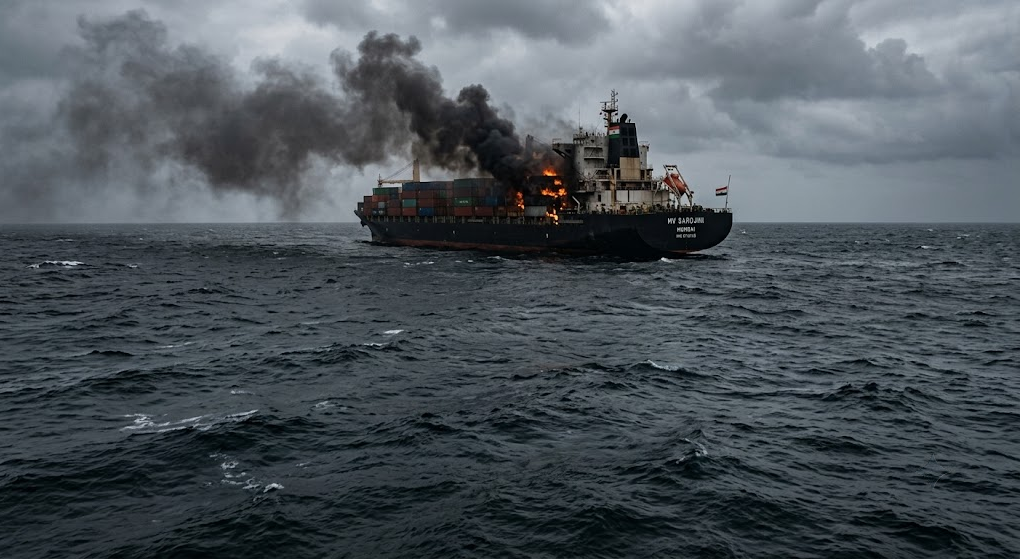

The safety of civilian maritime personnel has once again come under sharp focus as reports confirm the death of another Indian seafarer in the Black Sea. On July 25, 2026, news emerged that Sagar Gupta, an Indian national, was killed following a drone attack on a commercial vessel, marking a grim milestone in the ongoing risks faced by merchant sailors in conflict zones.
The Attack on MV OMORFI
According to reports, Sagar Gupta lost his life when the vessel he was serving on, the MV OMORFI, was targeted in a drone strike. The incident has drawn immediate and sharp condemnation from India’s Ministry of External Affairs (MEA). The MEA has formally condemned the strike on commercial shipping, emphasizing the vulnerability of non-combatant vessels in the region.
While the specific origin of the drone has not been detailed in initial reports, the attack occurred within the volatile maritime corridors of the Black Sea, which have become increasingly hazardous for international trade. The MV OMORFI is the latest commercial ship to be caught in the crossfire of the regional conflict, highlighting the persistent threat to the freedom of navigation and the lives of those who maintain global supply chains.
A Rising Toll for Indian Nationals
This latest fatality is not an isolated incident. Sagar Gupta is the fifth Indian merchant seafarer to be killed in the context of the Ukraine war. The frequency of these tragedies has accelerated in recent days; This fresh attack comes just days after four other Indians were killed in a strike on Odesa.
The loss of five seafarers underscores a growing crisis for the Indian maritime community. India provides a significant portion of the global seafaring workforce, and its nationals are increasingly finding themselves in high-risk zones where commercial interests intersect with military operations. The rapid succession of deaths, from the Odesa incident to the strike on the MV OMORFI, suggests a deteriorating security environment that civilian protections are failing to mitigate.
Global Maritime Instability and Commercial Risks
The dangers to shipping are not confined solely to the Black Sea. In a broader context of maritime instability, an LPG carrier also came under fire near Iran. These concurrent incidents in different geographic sectors point to a systemic increase in the risks associated with commercial shipping near geopolitical flashpoints.
For India, the death of Sagar Gupta is a call for heightened diplomatic and security measures to protect its citizens abroad. As the MEA continues to monitor the situation, the maritime industry faces mounting pressure to reassess the safety of routes that pass through active conflict zones. The transition of commercial vessels from neutral carriers to collateral targets remains a primary concern for international law and global commerce.