
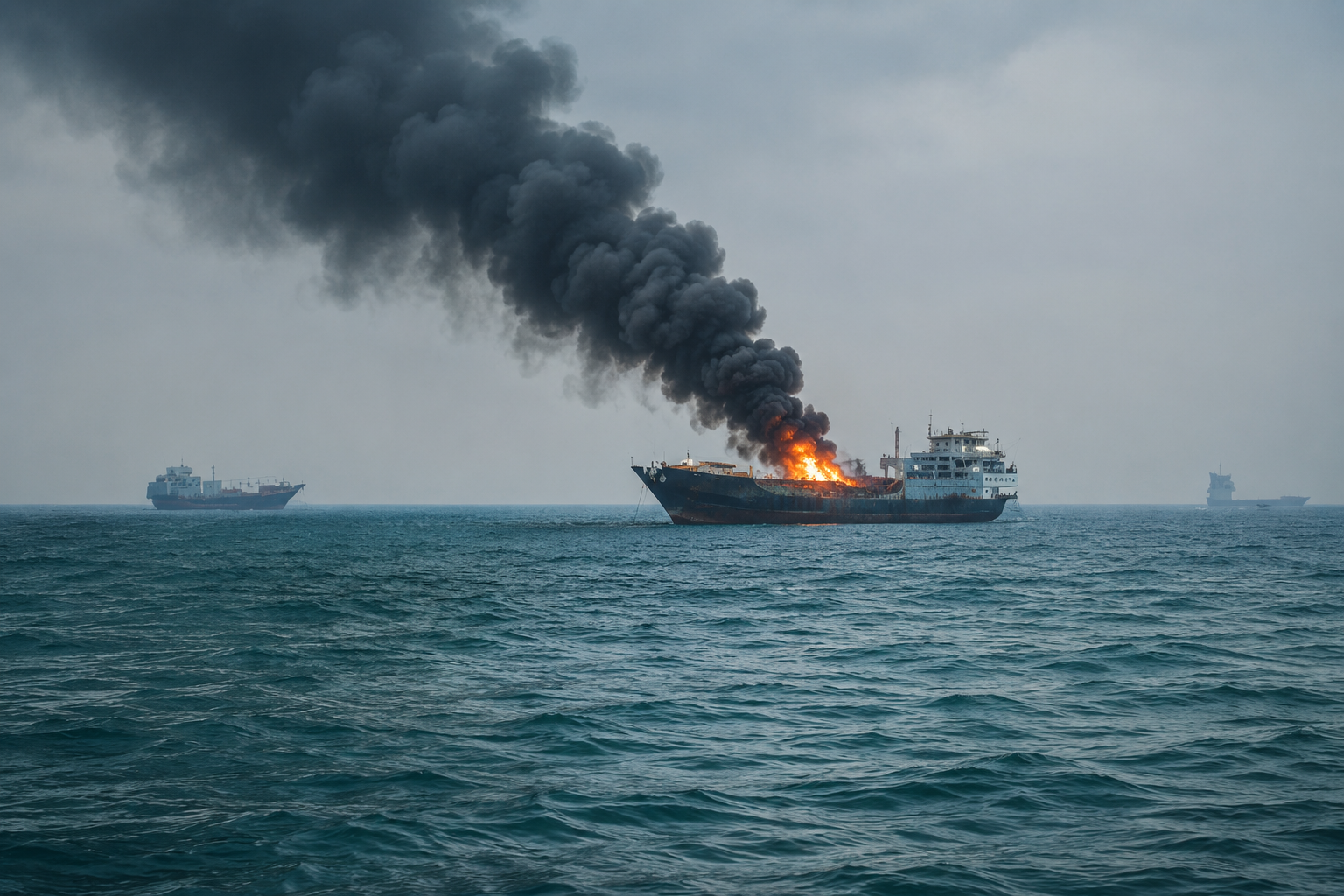

The volatile security situation in the Persian Gulf has claimed the life of an Indian national today, July 14, 2026. According to reports, an Indian crew member was killed and several others were injured after Iranian forces launched strikes against oil tankers linked to the United Arab Emirates (UAE) in the Strait of Hormuz. The incident marks a sharp escalation in regional hostilities and highlights the increasing peril faced by foreign merchant mariners operating in one of the world's most critical maritime chokepoints.
Casualties and the Nature of the Attack
Details emerging from the Strait of Hormuz indicate a precision strike against commercial vessels. The Iranian operation resulted in the death of one Indian sailor and left six others injured. The vessels involved were identified as UAE-linked oil tankers, MT Al Bahiyah and MT Mombasa, which were transiting the narrow waterway when the strikes occurred.
The use of missiles in the attack has been noted by the UAE government, which issued a formal condemnation of the strike. The UAE characterized the event as an alleged missile attack occurring amid rapidly escalating tensions in the Gulf. The strikes reportedly began late on July 13 and continued into the early hours of today, targeting multiple maritime vessels. Iran’s Justification, "Ignored Warnings"
Tehran has moved quickly to provide a rationale for the use of force. The Islamic Revolutionary Guard Corps (IRGC) claimed that the strikes were not unprovoked. The IRGC stated that the targeted tankers had "ignored repeated warnings" issued by Iranian maritime authorities prior to the engagement.
However, Iran is actively defending the strikes. The Iranian government maintains that the vessels failed to comply with established protocols or communications from the IRGC, leading to the kinetic response. This "warning" framework is a recurring theme in Iranian maritime interdictions, though it provides little solace to the families of the foreign nationals caught in the crossfire.
Iran’s Justification: "Ignored Warnings"
Tehran has moved quickly to provide a rationale for the use of force. The Islamic Revolutionary Guard Corps (IRGC) claimed that the strikes were not unprovoked, stating that the targeted tankers had ignored repeated warnings issued by Iranian maritime authorities before the engagement.
India Lodges Strong Protest
Following the attack, the Ministry of External Affairs (MEA) summoned Iranian diplomats, including Deputy Chief of Mission Mohammad Javad Hosseini, to lodge a strong protest over the strikes on the merchant vessels. India condemned the attacks on commercial shipping, called for an immediate end to hostilities, and stressed that the safety of civilian seafarers and unhindered maritime trade must be ensured. The MEA also said that the Indian Embassy and Consulate in the UAE are in close contact with the affected sailors and local authorities to provide all necessary assistance.
Escalating Regional Conflict
The timing of the attack is particularly significant, as it comes amid the broader escalation in the conflict involving the United States, Israel, and Iran. The Strait of Hormuz has long been a theater for such confrontations, but the direct targeting of UAE-linked assets resulting in foreign fatalities represents a deepening of the crisis.
For India, the death of a citizen in these waters underscores the vulnerability of its massive seafaring workforce. With thousands of Indian sailors employed on international tankers, the safety of Hormuz transit remains a primary concern for New Delhi. While the UAE continues to condemn the breach of maritime safety, the international community is closely watching for further escalations that could disrupt global energy supplies and lead to further loss of life.