

New Delhi: India has urged united global action to strengthen energy security for small island developing states (SIDS), amplifying its call at the International Solar Alliance (ISA) leadership session held on Wednesday on the sidelines of CoP30 in Belém, Brazil. At the forum, Union environment minister Bhupender Yadav described solar energy as a force for transformation and social revolution, noting that India is sharing its successful rooftop, agricultural and rural solar models with SIDS through ISA leadership.
Addressing the high-level ministerial leadership session of the ISA SIDS platform, the minister called for collective and future-ready global action to secure affordable, resilient and clean energy pathways for SIDS.
The event, organized under the theme ‘Uniting Islands, Inspiring Action - Leadership for Energy Security’, brought together ministers and senior representatives from SIDS, ISA member nations and partner organizations, with a focus on strengthening the energy ecosystem for some of the world’s most climate-vulnerable nations.
Drawing from the session’s concept paper, Yadav noted that SIDS face a unique energy paradox – high dependence on expensive imported fossil fuels and increasing exposure to climate-induced disruptions alongside fragile and dispersed electricity infrastructure. The ISA SIDS Platform, he said, is designed to help bridge this challenge by establishing a transformative digital and financial ecosystem that enables structured procurement, blended financing, local capacity building and simpler access to proven and scalable solar technologies.
Opening his remarks on an optimistic note, Yadav underscored India’s rapid progress in clean energy deployment. “Today, India has crossed 500 gigawatts of installed electricity capacity — and more than half of it is clean energy. India has already reached 50% non-fossil energy capacity, five years ahead of its NDC target,” he said. India, he informed, has emerged as the fourth-largest renewable energy producer in the world and ranks third globally in solar power generation.
Offering grassroots examples of the social impact of energy transition, the minister highlighted that “20 lakh families have adopted rooftop solar in India”.
On solar for agriculture, he described it as “a new dawn for our farmer community”, highlighting that solar pumps and solarised feeders are providing assured daytime access to clean power for irrigation. “Now, they work with the sun and sleep with peace. No diesel. No waiting. No stress,” he remarked.
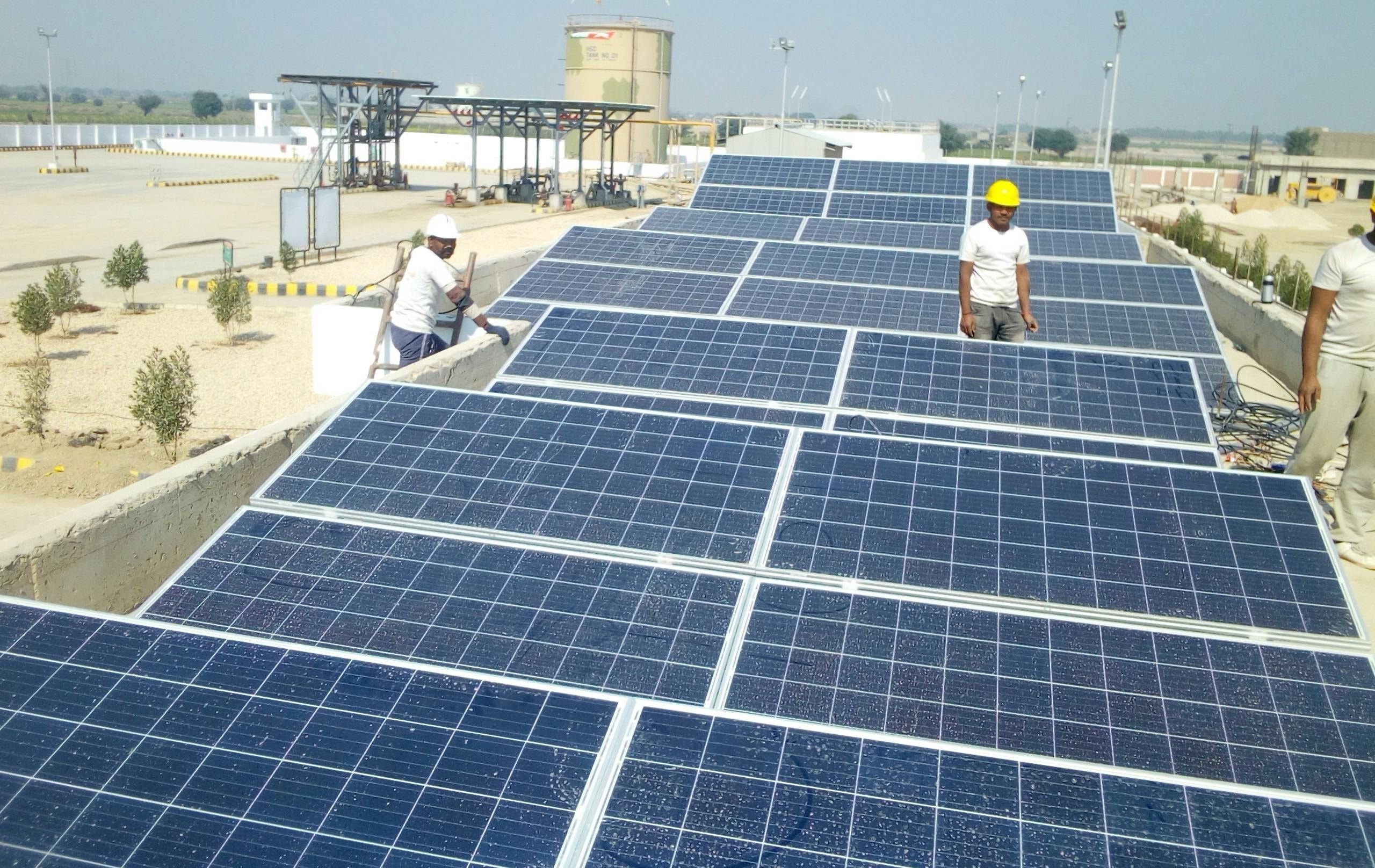
Offering grassroots examples of social impact of energy transition, environment minister Bhupender Yadav highlighted that “20 lakh families have adopted rooftop solar in India”. (Photo courtesy: hippopx.com)
Clean Energy For Remote & Forest Communities
Yadav also underlined India’s progress in extending clean energy to remote and forest communities through the PM JANMAN initiative and emphasized the country’s strong push in energy storage. He noted that India is building some of the world’s largest “solar plus battery” energy systems, including a flagship project in Ladakh that will store enough clean power to support an entire city.
Such storage-linked infrastructure, he said, can play a transformational role in SIDS by lowering diesel imports, reducing power costs and strengthening climate resilience.
Reaffirming India’s commitment to ISA, the minister described the Alliance as “a global solar family”, bringing together over 124 countries across geographies. He said ISA is supporting member nations in project design, mobilising finance, developing local jobs and enabling solar power to become the default choice for reliable and sustainable electricity.
Representatives of SIDS, in their interventions, praised India’s rapid strides in renewable energy and its willingness to share scalable and people-centric models with partner nations. They expressed strong support for the ISA SIDS platform, recognizing that climate-resilient energy systems are not only central to climate goals but also to economic opportunity, social development and long-term sovereignty.
Concluding with a call for solidarity and shared responsibility, Yadav said, “Solar energy is spreading its light in more than technological ways. It is hope and empowerment. It is independence. It is dignity. It is peace.”