
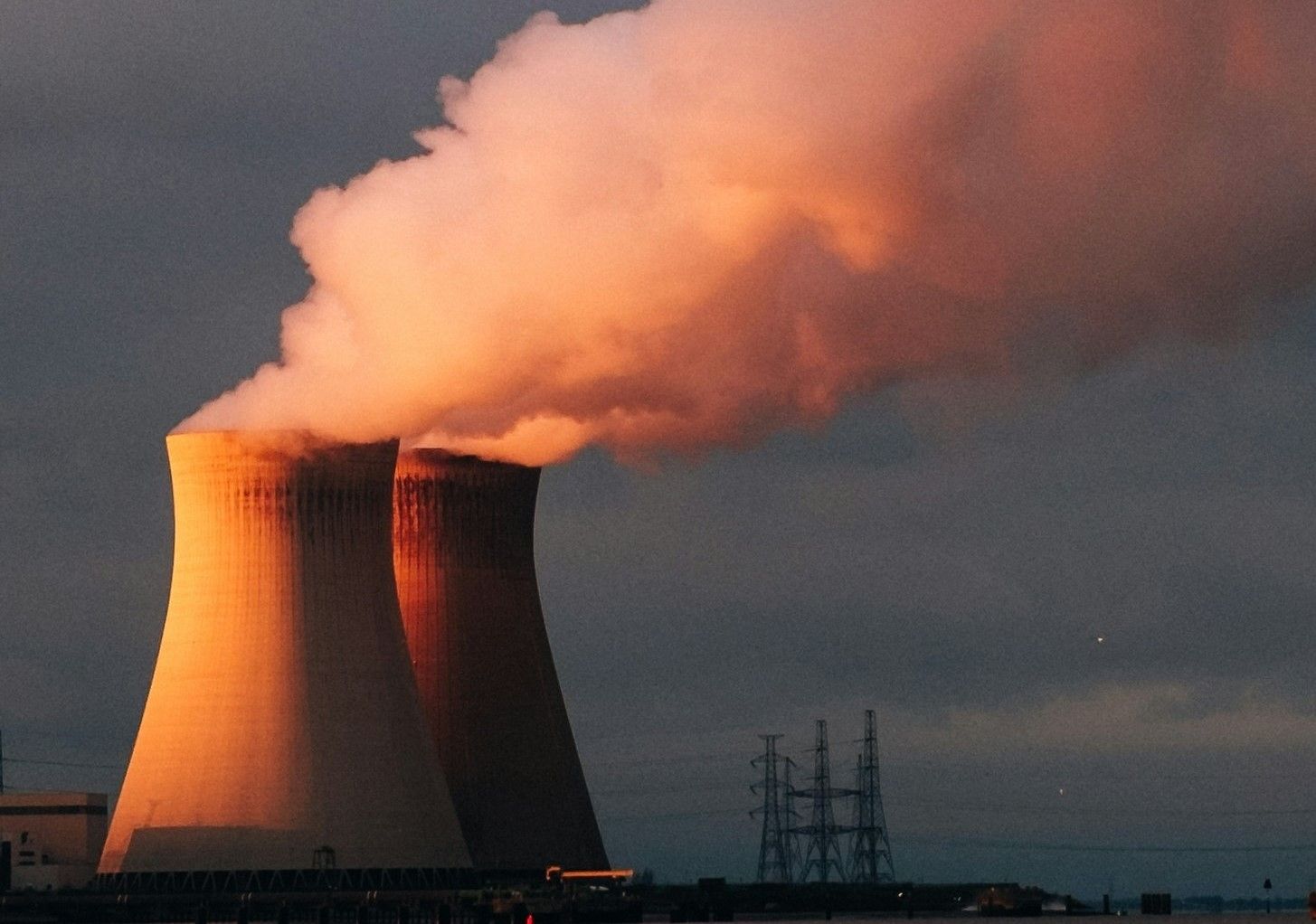

New Delhi: The Parliament passed the Sustainable Harnessing and Advancement of Nuclear Energy for Transforming India (SHANTI) Bill on Thursday, marking a major step in opening the nuclear industry to private players.
The government strongly defended the Bill in Rajya Sabha, with Union minister of state (independent charge) for science and technology Jitendra Singh asserting that nuclear safety, national sovereignty and public accountability remain “non-negotiable”.
Responding to concerns raised by members across parties, Singh said the Bill consolidates and rationalizes provisions of the Atomic Energy Act, 1962 and the Civil Liability for Nuclear Damage Act, while granting statutory status to the Atomic Energy Regulatory Board. Making the regulator part of the parent legislation, he argued, enhances oversight and aligns India’s nuclear governance with global best practices rather than diluting regulatory controls.
Placing the debate in a changing global and technological context, the minister said objections raised during nuclear reforms in 2010 must be re-examined in light of advances in safety systems, reactor design and energy demand. Concepts such as Small Modular Reactors and Bharat Small Reactors, he noted, were unimaginable 15 years ago but are now emerging as safe, efficient and flexible options for clean, round-the-clock power.
Rigorous Vigil
Singh underlined that safety standards remain unchanged and uncompromised, guided by the long-standing principle of “safety first, production next”. He detailed a rigorous inspection regime, including quarterly checks during construction, biannual inspections during operation, five-yearly licence renewals and enhanced enforcement powers for the now-statutory regulator, with oversight aligned to International Atomic Energy Agency norms.
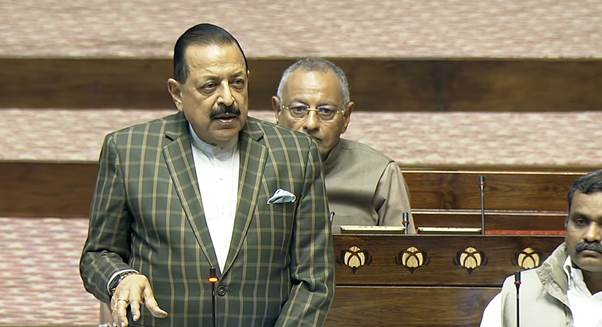
Addressing fears of privatization and foreign influence, Union minister Jitendra Singh clarified that while limited private participation may be permitted in exploration under defined conditions.
He reassured the House that India’s nuclear plants are located away from major seismic fault zones and that radiation levels at facilities such as Kudankulam, Kalpakkam, Rawatbhata and Tarapur are many times below prescribed global limits, dismissing claims of adverse public health impacts and saying there is no scientific evidence linking Indian reactors to carcinogenic effects.
Addressing fears of privatization and foreign influence, Singh clarified that while limited private participation may be permitted in exploration under defined conditions, uranium mining beyond specified thresholds, spent fuel management and control of strategic materials such as fissile material and heavy water will remain exclusively with the government.
On liability, he said graded caps were introduced to enable smaller investors to participate without weakening compensation for victims, with government-backed funds and international conventions stepping in if damages exceed operator limits, and an expanded definition of nuclear damage explicitly covering environmental harm. The Bill also proposes an Atomic Energy Redressal Commission to provide faster grievance resolution without curtailing access to civil courts or higher judiciary, he said.
Outlining India’s long-term roadmap, Singh said nuclear capacity has reached nearly 9 GW, with targets of 22 GW by 2032 and 100 GW by 2047, contributing close to 10% of the country’s energy needs. Emphasizing nuclear power’s growing role in healthcare, agriculture and cancer treatment, he said the SHANTI Bill reflects India’s scientific maturity and readiness to lead responsibly in the global clean energy transition.
(Cover photo by Mick Truyts on Unsplash)