
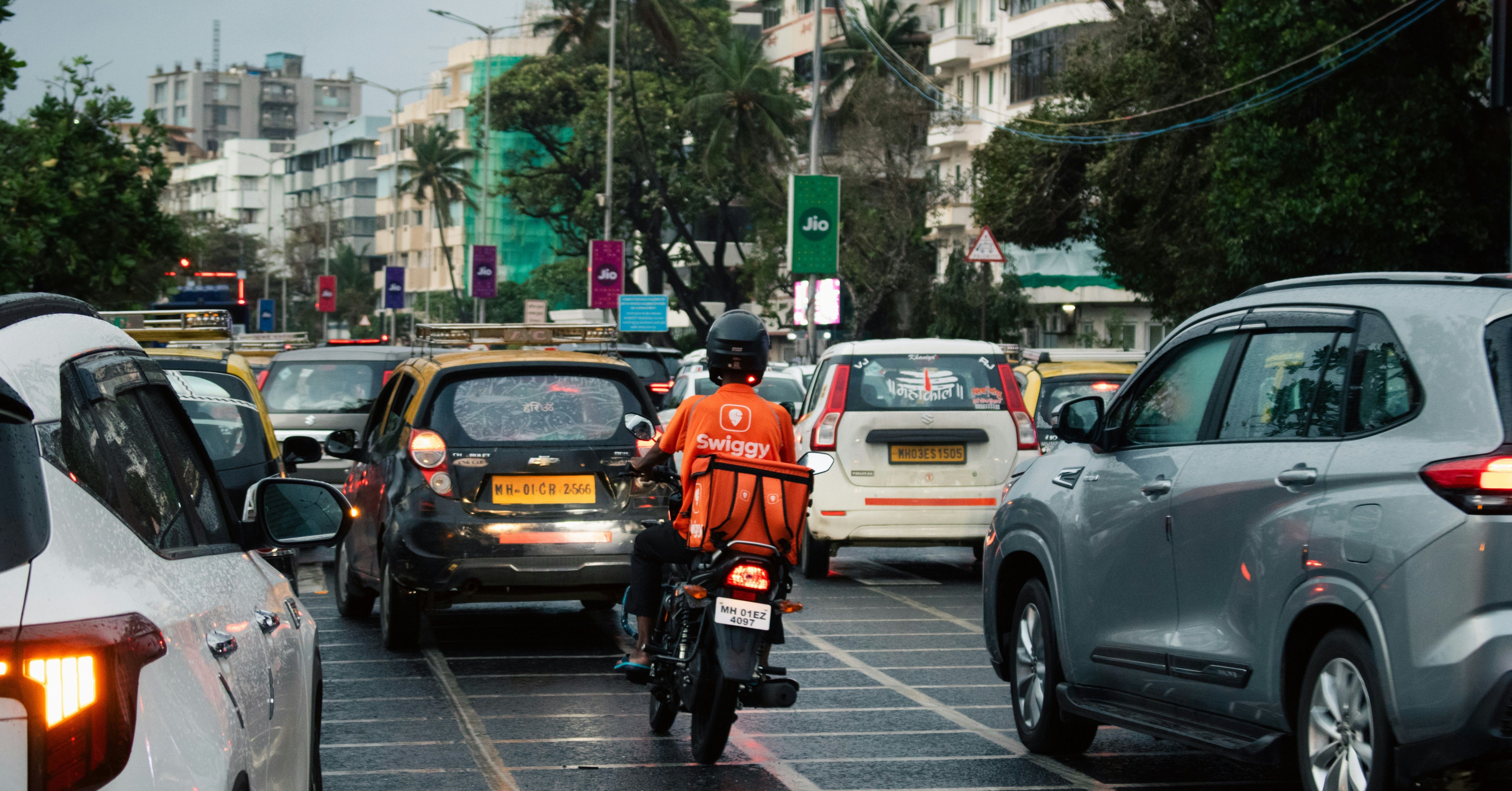

New Delhi: India’s online food delivery market is entering a new phase that’s defined not by a rush of new users, but by how often existing customers tap ‘ORDER NOW’.
According to Investec Equities, the sector is set to nearly triple in size, expanding from $9.1 billion (₹755 billion) in 2024 to almost $27 billion (₹2,240 billion) by 2030, clocking a robust 19% CAGR. This next wave of growth is being powered by rising order frequency, deeper penetration into Tier-2 and smaller cities, and a steady expansion in average order values (AOVs).
This transformation is unfolding against the backdrop of a rapidly evolving food services landscape. India’s broader food services market has already grown from Rs 4 trillion in FY20 to Rs 7 trillion in FY25 and is projected to touch Rs 11-12 trillion by FY30, implying an 11-12% CAGR. Yet, penetration remains strikingly low at just 13% of total food consumption market — far below 58-62% in the US and 42-46% in China — underscoring both the structural constraints and the immense headroom for growth.
Cultural preferences for home-cooked meals and a strong sensitivity to dining costs have historically capped the sector’s expansion. However, structural shifts are steadily reshaping consumption patterns. Smaller households, longer working hours, rapid urbanisation, and migration away from traditional family support systems are nudging consumers toward eating out and ordering in with greater frequency.
At the same time, the organised segment is tightening its grip on the market. Its share has risen from 36-41% in FY20 to an estimated 47-52% in FY25, and is expected to climb further to 60-65% by FY30. Valued at Rs 3.2-3.5 trillion in FY25, the organised segment is projected to scale to Rs 6.6-7.8 trillion by the end of the decade, driven by branded restaurant chains, cloud kitchens, and delivery-first formats that offer consistency, convenience and reliability. A persistent supply gap in restaurant density per capita compared to global peers only strengthens the case for sustained expansion.
Within this ecosystem, online food delivery remains the standout growth engine. Even after its rapid growth, it accounts for just 13% of the overall food services market — a clear evidence of the long runway ahead.
The drivers of this growth are both structural and behavioural. On the demand side, convenience-led consumption, nuclear families, and a younger, working demographic are accelerating the shift toward ordering in. On the supply side, improved logistics, denser restaurant networks, and better platform capabilities have enhanced assortment and delivery reliability, making the experience more compelling.
Yet the most critical shift lies in engagement metrics. The sector had 85 million annual transacting users (ATUs) in 2024, but only 27% — around 23 million — transacted monthly. This conversion rate is expected to rise to 32% by 2029 as habit formation deepens, pushing the total user base to 137 million. The implication is clear: the next phase of growth will be driven less by acquiring new users and more by increasing the frequency of orders among existing ones.
India still lags global benchmarks. Consumers currently place just 3-5 orders per month, compared to 8-10 in the US and 5-10 in China. Bridging this frequency gap presents one of the largest levers for growth as accessibility improves and ordering becomes more habitual.
Geographically, the market is also broadening. While metro and Tier-1 cities continue to account for 75-80% of gross order value (GOV), Tier-2 and smaller cities already contribute 20-25%, highlighting the next frontier of expansion. Rising smartphone penetration and improving digital infrastructure are accelerating this shift beyond traditional urban centres.
AOVs, too, are on an upward trajectory. Leading platforms are expected to see meaningful increases, with AOVs projected to rise from Rs 282 and Rs 407 in FY22 to Rs 461 and Rs 463 by FY26. Industry-wide, AOV is expected to reach Rs 542 by 2028, growing at a 6-8% CAGR, supported by premium restaurant onboarding and a broader range of cuisine offerings.
These trends point to a market that is maturing rapidly but still far from saturation. With formalisation accelerating, low penetration, and strong structural tailwinds, the Indian online food delivery sector is set for significant growth, where depth of engagement will define the winners, notes Investec.
(Cover photo by Zoshua Colah on Unsplash)