


New Delhi: India’s investment revival after the pandemic is gathering momentum, with private companies taking a larger share of new projects as improving capacity utilisation, government infrastructure spending and demand for digital infrastructure reshape the country’s capital expenditure landscape.
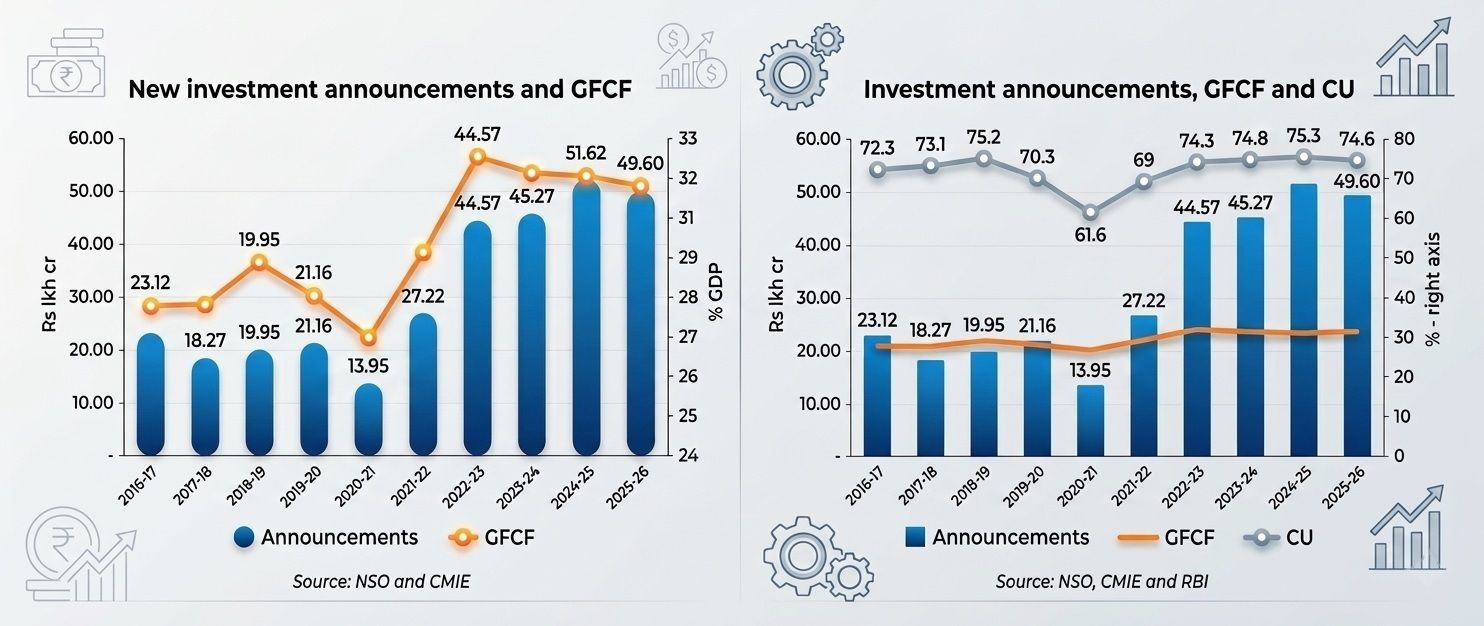
New investment announcements touched nearly Rs 191 lakh crore between FY23 and FY26, averaging around Rs 48 lakh crore annually. Electricity and transport services alone accounted for almost half of all planned investments, while emerging areas such as artificial intelligence and data centres are increasingly attracting fresh capital.
According to the Bank of Baroda’s latest report, Investment scenario in India post Covid, the investment recovery reflects a structural shift in India’s growth engine. The report noted that the economy faced a challenging environment even after the pandemic due to geopolitical conflicts and global trade disruptions, but strong domestic demand provided a degree of protection. It also highlighted that a revival in fundraising through the IPO and debt markets has supported a more favourable investment climate.
Private Sector Revival
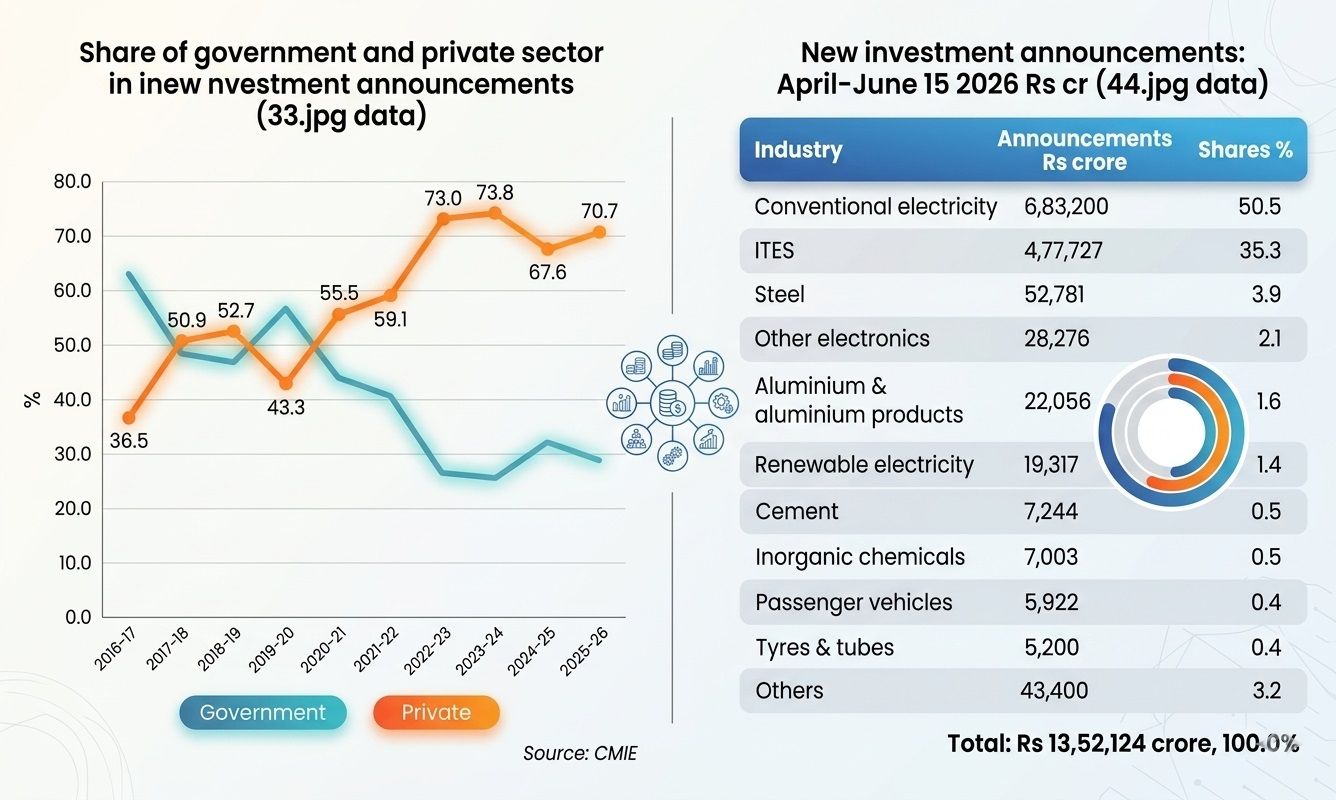
The data shows a sharp change in the composition of investment intentions, with private sector participation overtaking government-led projects in the post-pandemic years.
Before Covid, government projects accounted for an average 54.2% share of total investment announcements during the four years preceding the pandemic. However, between FY23 and FY26, the private sector’s share climbed to 71.3%, indicating stronger corporate confidence and a broadening investment cycle.
The report said investment intentions have strengthened alongside higher factory utilisation. Capacity utilisation in the manufacturing sector, as measured by the Reserve Bank of India, rose after the pandemic and has largely stabilised around 74-75%, suggesting companies are approaching levels where fresh capacity creation becomes necessary.
Power Technology Drive
A sector-wise analysis shows India’s investment landscape is increasingly being shaped by energy security, infrastructure expansion and the digital economy.
The report observed that electricity attracted Rs 50.85 lakh crore of proposed investments between FY23 and FY26, accounting for 26.6% of the total, while transport services attracted Rs 43.56 lakh crore or 22.8%. It said the emphasis on power generation spans both conventional and renewable segments to meet rising demand, while transport investments have been supported by expansion plans in aviation and railways, including major aircraft acquisition plans announced by airlines.
Technology has also emerged as a major investment destination. The IT sector accounted for Rs 11.19 lakh crore, or 5.9%, of total investment announcements during FY23-FY26, reflecting the growing focus on AI-led infrastructure and data centres.
Emerging Investment Trends
The momentum has continued in the current financial year. During the first 75 days of FY27, up to June 15, new investment announcements stood at Rs 13.52 lakh crore, with conventional electricity contributing 50.5% and IT-enabled services accounting for 35.3%.
The report pointed out that electricity and IT together represented around 85% of proposed investments during this period, with data centres and AI technologies emerging as the principal themes within the technology segment.
The investment environment remains encouraging and the current trend is likely to persist, says the report, while noting that that power and information technology are expected to remain dominant sectors as economies increasingly move toward technology-driven growth, while investments in digital infrastructure, data centres and renewable energy are expected to create significant opportunities for investors.
(Cover photo by Aakash Dhage on Unsplash)