
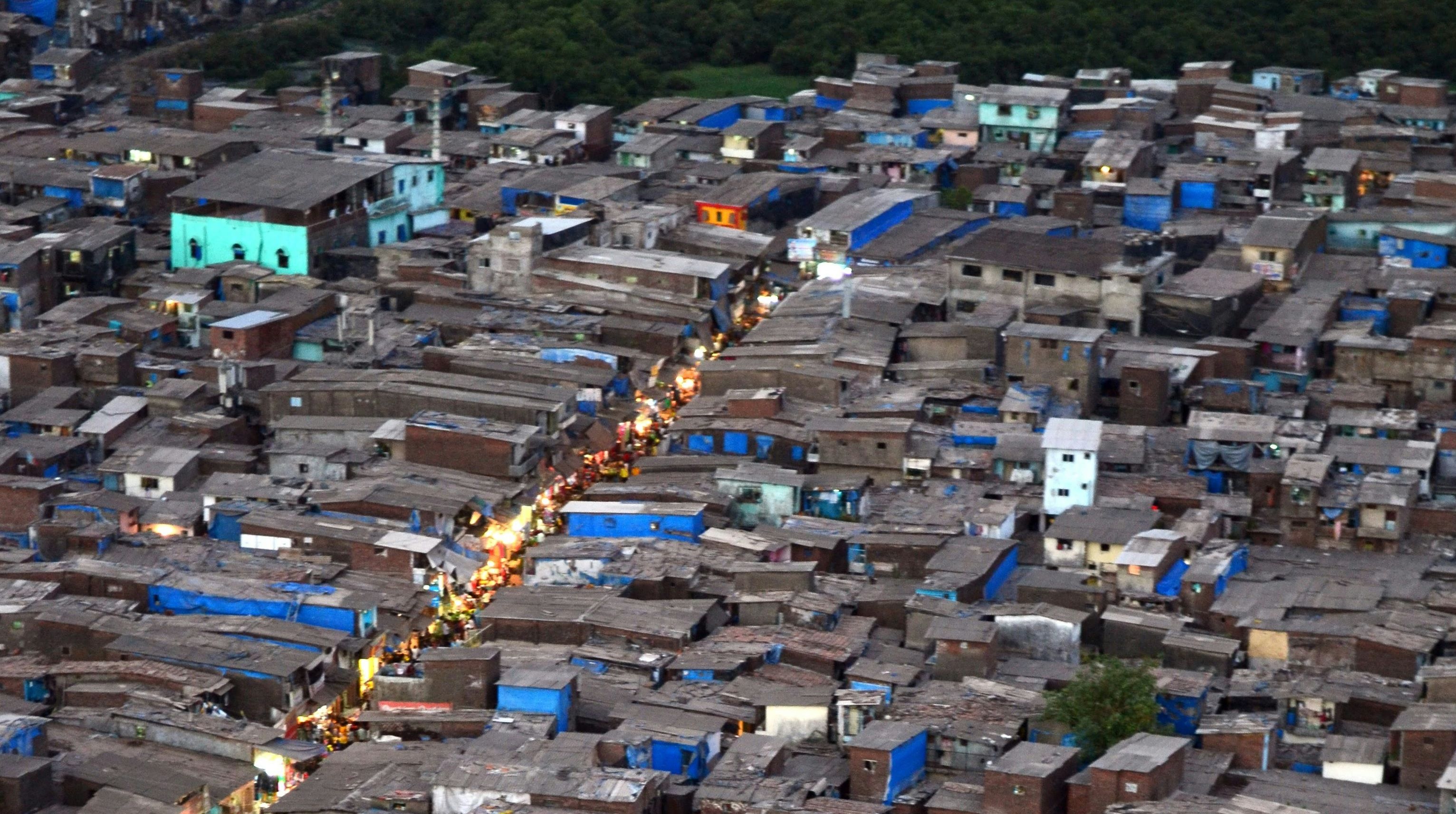

New Delhi: India’s cities are growing at breakneck speed, but their housing systems are collapsing under the weight of inequality, in-country migration and speculative urban development. The world now has more than 1.1 billion people living in slums and informal settlements, while up to 3.4 billion lack access to adequate housing, according to World Cities Report 2026: The Global Housing Crisis — Pathways to Action released by the United Nations Human Settlements Programme (UN-Habitat).
For India, whose slum population was estimated by UN-Habitat at 236 million in 2020 — suggesting that nearly half of its urban population lives in slums, urbanisation is accelerating faster than infrastructure creation; the report reads less like a global warning and more like a mirror.
The report argues that governments across the world, including India, have spent decades relying on market-led housing models that failed to deliver affordable homes for low-income populations. Instead, soaring land prices, shrinking rental affordability and speculative real-estate investment have created cities where millions survive in informal settlements without secure tenure, sanitation or basic services.
“Today’s global housing crisis is the result of decades of inaction. Limited investment, rapid urbanization, macroeconomic pressures and crises driven loss of homes are among the factors that have contributed to current shortcomings,” says Anacláudia Rossbach, Under-Secretary-General and Executive Director of UN-Habitat. She notes that “up to 3.4 billion people worldwide are estimated to be living without secure, safe, and adequate housing, of which over 1 billion reside in informal settlements and slums”.
India occupies a particularly uncomfortable position in this global housing crisis. The report specifically flags its housing market for “limited mortgage access and prioritization of high-end housing”, highlighting how formal housing supply increasingly caters to upper-income groups while low-income urban migrants are pushed into informal settlements. Even flagship affordable housing schemes have struggled against the economics of urban land.
The contradiction is visible across Indian metros. Mumbai’s Dharavi, Delhi’s sprawling resettlement colonies and the mushrooming informal settlements around Bengaluru and Hyderabad remain critical labour reservoirs for India’s urban economy, even as policymakers continue to view them as planning failures rather than economic ecosystems. According to the report, informal housing in many developing countries now accounts for up to 80% of residential construction activity.
The economic stakes are enormous. Housing contributes nearly 13% to global GDP and supports more than 280 million jobs worldwide through construction and allied sectors. In India, where the real-estate and infrastructure sectors are major growth engines of its economy, the inability to provide affordable urban housing increasingly threatens productivity, labour mobility and social stability.
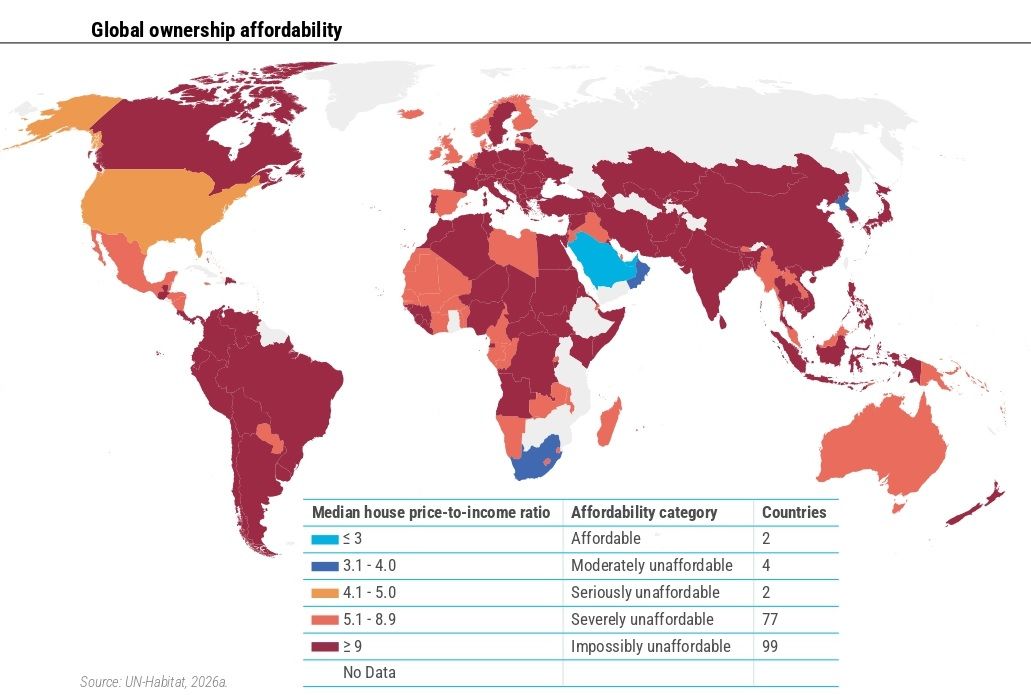
India’s Housing Trap
The UN Habitat report is particularly sharp in its criticism of governments that reduced housing policy to ownership-driven real-estate expansion. “Five decades of experience show that market-led, ownership-centric models alone have not met growing adequate housing needs especially for the vulnerable,” it says.
India’s experience reflects that tension. Programmes such as Pradhan Mantri Awas Yojana expanded housing targets dramatically, but urban affordability continues to deteriorate because wages have not kept pace with land and rental inflation. In major Indian cities, middle-class buyers are stretched by mortgage burdens while low-income workers remain completely excluded from formal housing.
The report points out that globally, housing shortages rose from 251 million units in 2010 to 288 million in 2023. In India, urban housing deficit remains heavily concentrated among economically weaker sections and low-income households, despite years of subsidy-led intervention.
“Housing prices have risen far faster than incomes, particularly for low-income households,” says the report. The trend is intensified in rapidly urbanising economies such as India, where serviced land remains scarce and urban planning systems move slowly against population growth.
What is striking is the report’s rejection of the long-held assumption that slums are temporary distortions in urban growth. “Informality is a defining dimension of contemporary urbanization, and in many cities informal housing is now the norm rather than the exception,” it says. “Given its scale, approaches that ignore or stigmatize informality are no longer viable.”
That observation directly challenges decades of Indian urban policy centred on demolition drives and relocation projects. From Mumbai’s slum clearances to eviction campaigns in Delhi and Ahmedabad, forced displacement has often accompanied infrastructure expansion and “world-class city” ambitions.
“Though the data on evictions is partial and incomplete, analysis by UN-Habitat for this report estimates that at least 64 million people were displaced from informal settlement by urban development processes between 2003 and 2023,” says the report. In India, where transport corridors, riverfront projects and luxury developments frequently intersect with informal settlements, those pressures are intensifying.
The report argues that slum redevelopment without livelihood protection merely shifts poverty geographically. Informal settlements, it notes, are deeply linked to employment networks, home-based enterprises and urban survival economies. That reality is particularly visible in Indian cities where domestic workers, drivers, delivery staff and construction labourers often live close to commercial centres because formal housing near workplaces remains unaffordable.
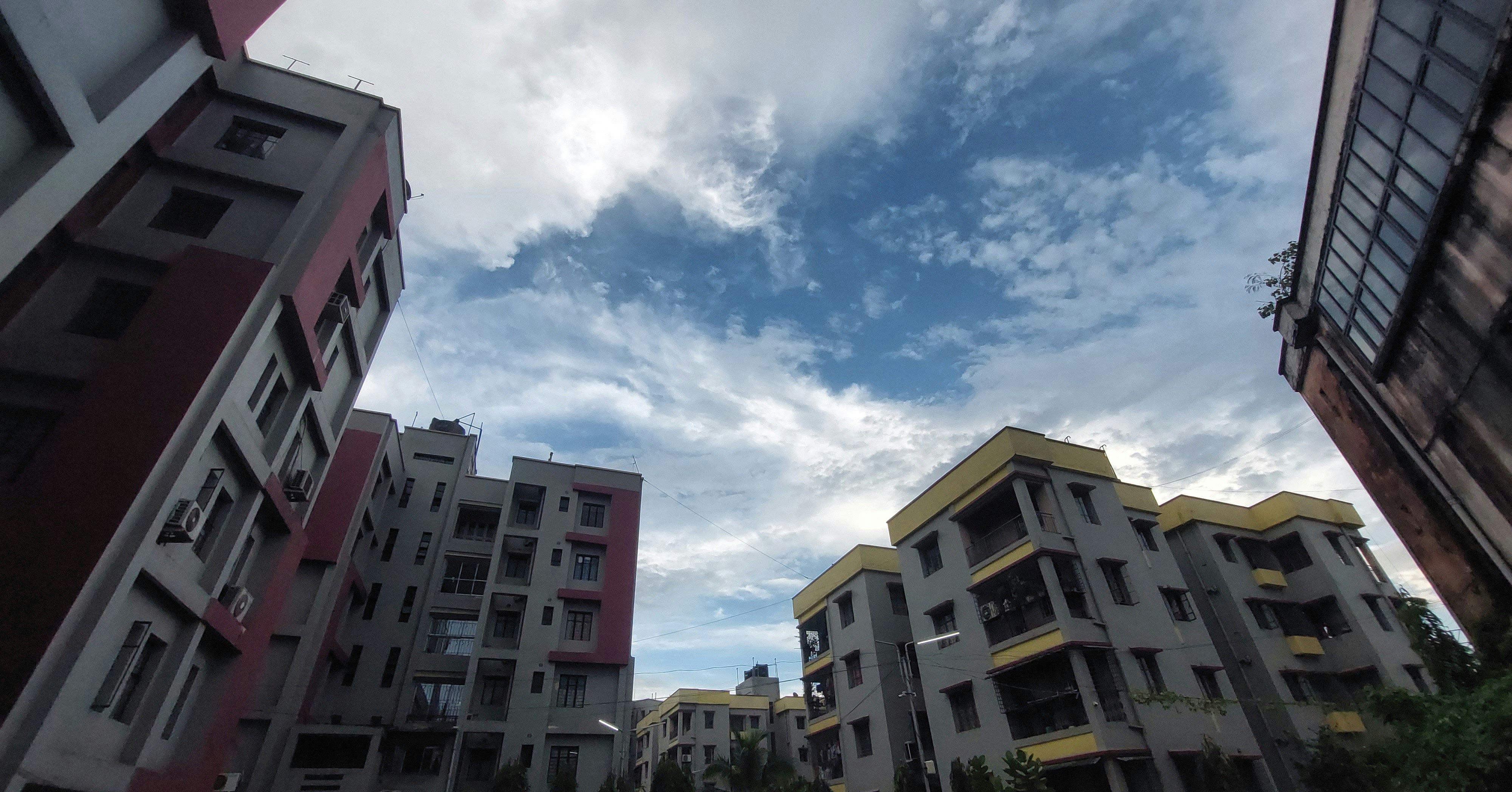
In India, limited mortgage access and a growing focus on high-end housing have sharply reduced affordable housing supply. In eight largest cities, affordable housing fell from 52% of new builds in 2018 to 17% in 2025, as developers shifted toward more profitable mid- and high-end units. Affordability pressures are most severe in Mumbai and Delhi, where price-to-income ratios reached 14.3 and 10.1, putting formal homeownership beyond the reach of median-income households. Although Ahmedabad, Chennai, and Kolkata have relatively lower price-to-income ratios (5.1–5.8), housing shortages remain severe, as the affordable housing supply-to-demand ratio across the eight major cities declined from 1.05 in 2019 to 0.36 in 2025. (Photo by Swaraj Kazi on Unsplash)
Beyond Concrete Targets
The UN Habitat report’s strongest recommendation is that governments must stop treating housing purely as a real-estate problem and recognise it as economic infrastructure. “Adequate housing therefore represents one of the most powerful entry points for accelerating sustainable and inclusive development at all levels,” it says.
For India, that would require a fundamental shift in urban policy. The report advocates in-situ upgrading of slums, flexible land-tenure systems, stronger rental housing frameworks and community-led redevelopment instead of mass relocation. It also calls for deeper state intervention in land regulation and affordable housing finance.
“In many contexts, the social function of housing – its role in supporting well-being, equity and the common good – has increasingly been overshadowed by its treatment as a financial asset,” the report says. “This imbalance risks reducing housing to a speculative investment.”
That critique resonates strongly in India’s major cities, where luxury inventory remains unsold even as affordable housing shortages deepen. Real-estate capital has flowed disproportionately toward premium projects, while rental housing and low-income accommodation remain chronically underdeveloped.
The report also warns that climate change could dramatically worsen urban housing inequality. Climate-related hazards may destroy 167 million homes globally by 2040, with informal settlements facing the highest risks because of flooding, heat exposure and weak infrastructure. Indian coastal and riverfront cities are especially vulnerable.
“A home encompasses complex social, economic, and psychological dimensions and outcomes,” Rossbach says in the report. “From access to employment and public services to legal recognition and social networks, housing plays a central role in shaping well-being and quality of life for everyone everywhere.”
The larger message is uncomfortable for governments and developers alike. India’s urban future cannot be secured through high-rise construction targets alone. Unless cities find ways to house workers with dignity, affordability and security, the economic promise of urbanisation itself may begin to fracture.
(Cover photo by Kunal Kalra on Unsplash)