

New Delhi: India’s core sector growth slowed to a seven-month low of 0.5% in May 2026, as a sharp contraction in fuel and energy-related industries exposed the vulnerability of the country’s industrial engine at a time when the escalating Iran-US conflict threatens to disrupt global oil supplies, push up crude prices and raise input costs for businesses.
The latest data showed that weakness in petroleum refinery products, coal, crude oil and natural gas dragged down the Index of Eight Core Industries (ICI), overshadowing robust expansion in steel, cement and electricity. Notably, the slowdown comes as India braces for heightened energy market volatility amid geopolitical tensions in West Asia, with any sustained rise in oil prices likely to further strain industrial costs and inflation.
The ICI, a key gauge of the country’s industrial health that accounts for 40.27% of the Index of Industrial Production (IIP), had expanded 1.8% in April. The sharp deceleration in May suggests that the recovery in India’s industrial output remains uneven, with gains concentrated in sectors tied to infrastructure and domestic construction demand.
The eight core industries — coal, crude oil, natural gas, refinery products, fertilisers, steel, cement and electricity — collectively form the backbone of India’s industrial ecosystem by supplying essential inputs to manufacturing, transport, agriculture and infrastructure. Their performance is often viewed as an early signal of trends in broader industrial production.
During April-May FY27, the cumulative growth of the core sector stood at 1.1%, significantly lower than the pace required to sustain stronger industrial expansion, reflecting persistent weakness in energy and commodity-producing industries.
Energy Segment Pulls Down Overall Growth
The biggest pressure on the core sector came from the energy basket, where output declined across almost all major segments. Coal production, which carries a weight of 10.33% in the ICI, contracted 9.3% year-on-year in May, while crude oil and natural gas production fell 4.6% and 4.9%, respectively.
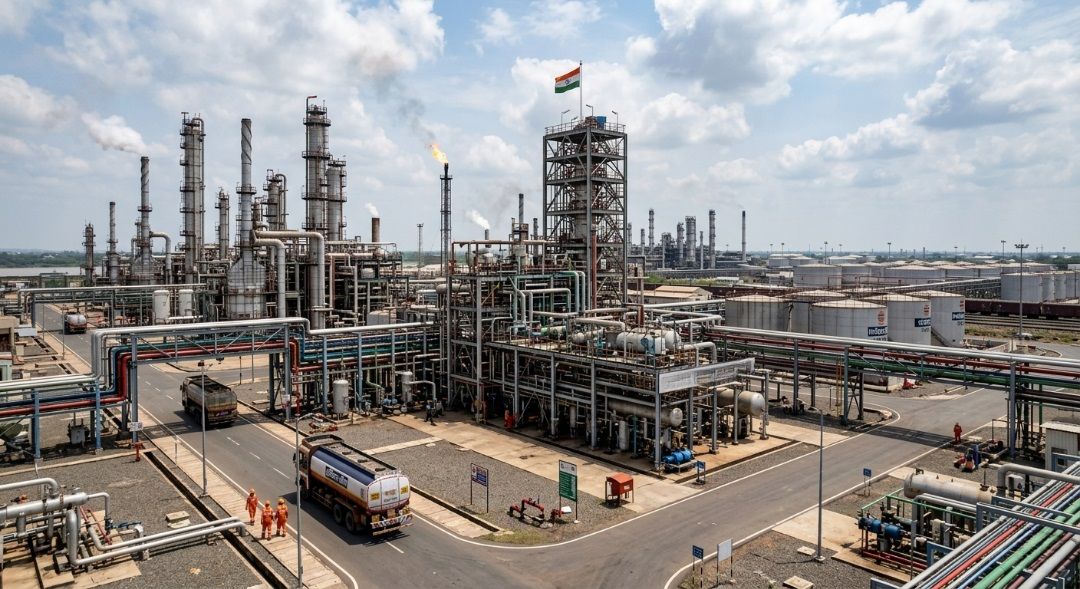
The sharpest impact came from petroleum refinery products, the largest component of the core sector index with a weight of 28.04%. Refinery output dropped 8.7% during the month, significantly dragging down the overall growth rate due to its large share in the index.
Fertiliser production also declined 0.9%, pointing to weakness in another key industrial segment. The broad-based contraction across fuel and energy industries highlights the challenges facing India’s supply-side industrial growth despite continued demand in other areas of the economy.
Construction-Led Sectors Remain a Bright Spot
Countering the weakness in energy industries, sectors linked to infrastructure creation and domestic investment continued to record robust growth.
Electricity generation emerged as the best-performing segment, rising 8.7% in May, supported by increased power demand during the summer season and rising economic activity. Cement production grew 8.4%, indicating continued momentum in housing, urban development and government-led infrastructure projects.
Steel output increased 5%, reflecting sustained demand from construction, capital goods and manufacturing sectors. The resilience of these industries suggests that public spending on infrastructure and private construction activity continue to provide a crucial support to India’s industrial landscape.
Pressure Builds Ahead of IIP Data
The weak core sector reading could weigh on expectations for the broader IIP in the coming months, as the eight industries together constitute more than two-fifths of the overall industrial index.
While the strength in steel, cement and electricity indicates that domestic demand remains resilient, the prolonged decline in coal, crude oil, natural gas and refinery products raises concerns over the health of India’s energy supply chain and industrial production cycle.
Economists will closely track whether the slowdown in May represents a temporary disruption or the beginning of a broader moderation in industrial growth. The May figures are provisional and will be revised based on updated information from source agencies, while the data for June 2026 is scheduled to be released on July 20.