

New Delhi: In a world where wealth is increasingly concentrated yet geographically shifting, India is emerging as one of the most compelling stories of the decade. The Knight Frank Wealth Report 2026 paints a picture of a nation not merely catching up with global wealth trends but actively reshaping them. While North America continues to dominate and Asia-Pacific consolidates its position, India stands out as a powerful counterpoint — a country where economic expansion, entrepreneurial dynamism and demographic momentum are converging to create unprecedented wealth.
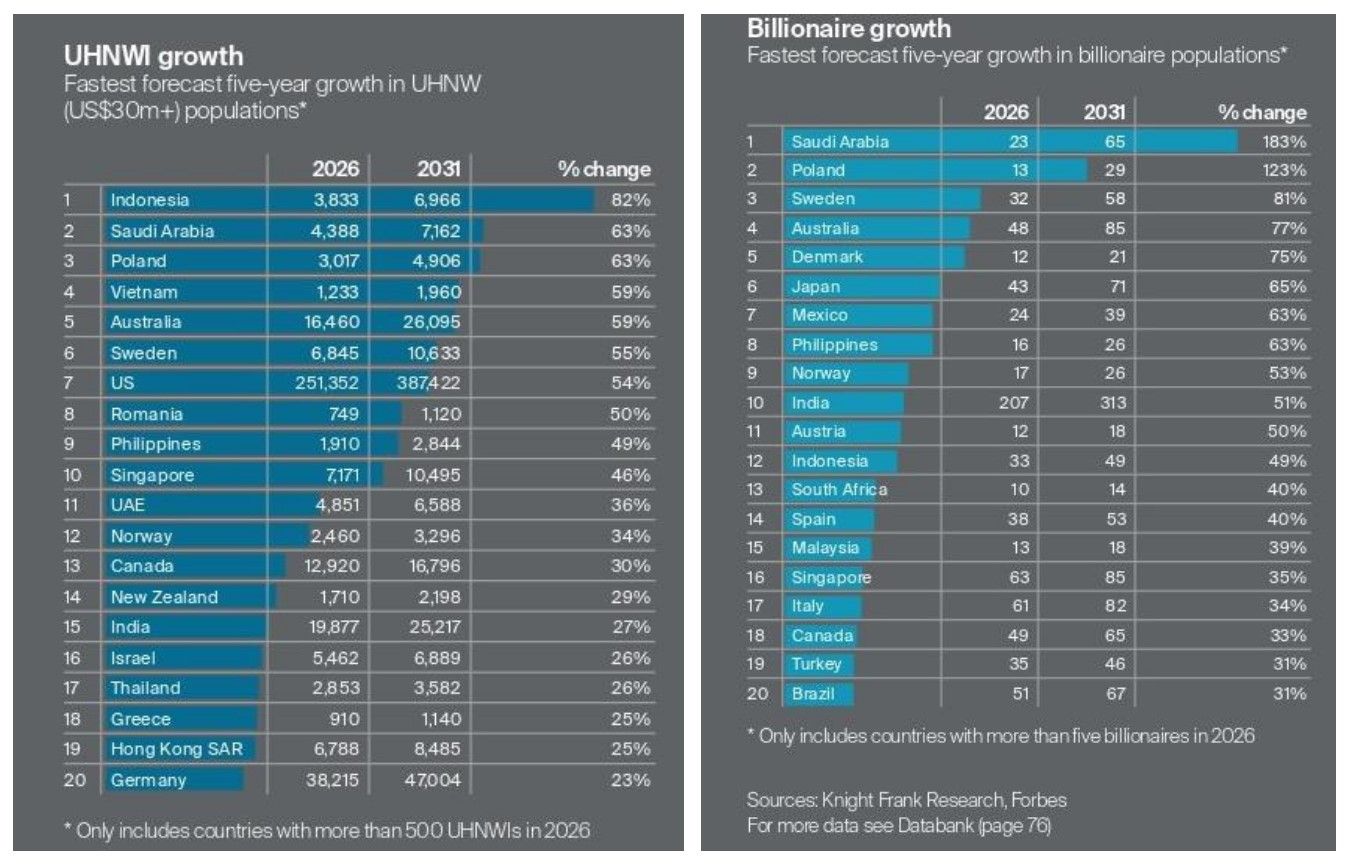
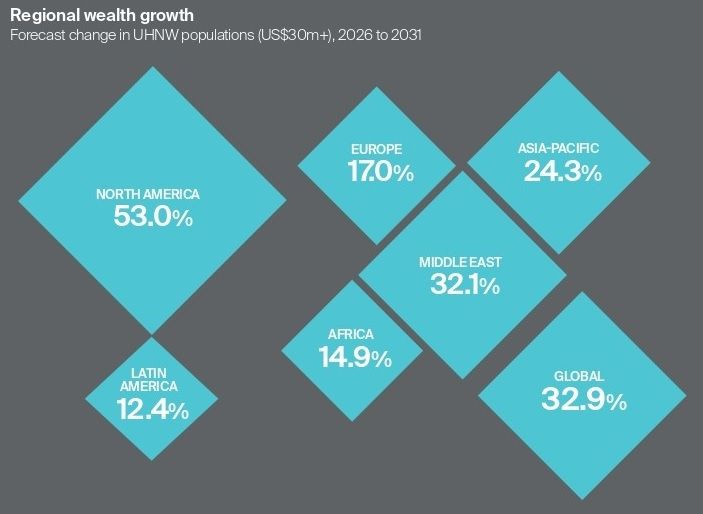
India’s rise is not occurring in isolation. Globally, the ultra-high-net-worth (UHNW) population — individuals with assets exceeding $30 million — is projected to grow by 32.9% between 2026 and 2031. India’s trajectory is sharper, more accelerated, and structurally distinct. The country is among the fastest-growing wealth markets, with its UHNW population expected to climb from 19,877 in 2026 to 25,217 by 2031, logging a 26.9% jump, the report highlights.
“India’s UHNW story is one of rapid expansion, driven by strong economic fundamentals and sustained domestic wealth creation,” notes the report. This expansion reflects a broader shift in the global wealth narrative. While mature markets continue to generate wealth, emerging economies, particularly India, are increasingly becoming engines of new wealth creation. In this evolving landscape, India’s performance is not just impressive; it’s transformative.
Leap into Global Top Tier
At the sharpest end of the wealth spectrum, India’s ascent is even more striking. Ranked sixth globally in terms of billionaire population, the country is projected to witness a 51% increase in the number of billionaires by 2031. This places India among the fastest-growing billionaire hubs in the world, outpacing several established economies and even challenging some mid-tier developed markets.
The Knight Frankreport notes that India already accounts for a meaningful share of global billionaire growth, with its wealthy elite becoming increasingly visible in cross-border investments, global acquisitions, and philanthropic activity. The expansion is not merely numerical; it reflects growing depth and diversification of wealth. “Billionaires are going global and new markets are emerging,” notes the report, highlighting how wealth creation is no longer confined to traditional centres.
India’s billionaire growth is also deeply tied to its entrepreneurial culture. Unlike many legacy wealth markets, a significant portion of India’s ultra-rich wealth is self-made, rooted in sectors such as pharmaceuticals, IT services, fintech, manufacturing and infrastructure. The rise of unicorn startups and the increasing number of IPOs in domestic markets have further accelerated wealth creation at the top end.
Importantly, the report highlights that wealth in India is becoming more liquid and market-linked. A growing share of billionaire wealth is now tied to publicly listed companies and financial assets rather than purely illiquid holdings. This transition enhances transparency and allows for faster scaling of fortunes. “Equity markets continue to play a central role in wealth creation,” says the Knight Frankreport, pointing to the increasing importance of capital markets in India’s wealth ecosystem.
Moreover, inter-generational wealth transfer is beginning to shape the billionaire landscape. As first-generation wealth creators pass on assets, family offices are becoming more sophisticated, increasingly adopting global investment strategies. This institutionalisation of wealth is expected to sustain and amplify India’s billionaire growth over the coming decade.
Drivers of Wealth
Behind the headline numbers lies a complex interplay of economic and social forces that are powering India’s wealth boom. The report identifies strong domestic growth, rising consumption, and a favourable demographic profile as key drivers of wealth creation.
India’s economic trajectory has been marked by resilience and acceleration. Even amid global uncertainties, the country has maintained relatively strong growth rates, supported by reforms, infrastructure investment and a growing digital economy. This macroeconomic stability has created fertile ground for wealth accumulation. “India, however, stands out as a compelling counterpoint,” says the report, contrasting its growth with slower-moving developed economies.
One of the most significant factors is the scale of domestic wealth creation. Unlike some emerging markets that rely heavily on external capital, India’s wealth story is increasingly driven by internal dynamics — expanding middle classes, rising corporate profitability, and increasing financialisation of savings. The report points out that a growing proportion of household wealth is being channelled into financial instruments, including equities and mutual funds, rather than traditional assets such as gold or real estate alone.
The demographic dividend further amplifies this trend. With a young, aspirational population entering the workforce and engaging with capital markets, India is witnessing a broad-based expansion of wealth participation. This is not limited to traditional business families but includes first-generation entrepreneurs and professionals. “India is seeing a significant increase in its UHNW population,” the report observes, pointing to the widening base of wealth creators.
Urbanisation and digital transformation are also playing critical roles. The rapid adoption of technology has lowered barriers to entry across industries, enabling new businesses to scale quickly and efficiently. From e-commerce to fintech, digital platforms are creating new pathways for wealth generation.
Additionally, the report highlights the role of real estate as a key wealth store. Prime residential markets in Indian metros have seen strong demand from UHNW individuals, both as investment assets and lifestyle purchases. This trend aligns with global patterns, where luxury real estate remains a preferred asset class for wealth preservation. “Real estate continues to be a cornerstone of wealth portfolios,” says the report, underlining its enduring appeal.
At the same time, policy reforms aimed at improving ease of doing business and attracting foreign investment have strengthened India’s economic framework. These changes are not only supporting existing enterprises but also encouraging the formation of new ventures, further expanding the wealth ecosystem.
Redefining Wealth Geography
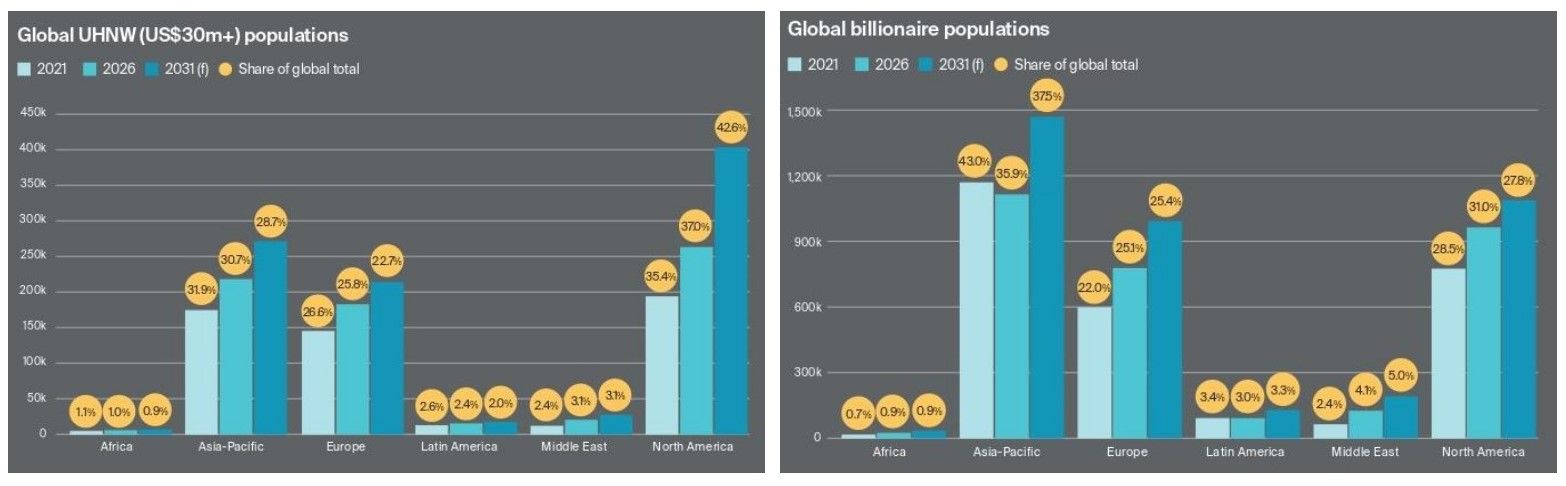
India’s rise must be viewed within the broader context of shifting global wealth dynamics. While North America is projected to increase its share of global UHNW population from 37% in 2026 to 43% by 2031, Asia-Pacific is also gaining ground, representing nearly 31% of UHNW individuals.
Yet within Asia-Pacific, India’s growth trajectory stands out for its pace and scale. Unlike more mature markets such as Japan or Australia, India is still in a relatively early stage of wealth expansion, which gives it significant headroom for future growth.
The report highlights that global wealth is becoming more dispersed, with new markets emerging alongside traditional centres. In this evolving landscape, India is not just participating but leading in terms of growth momentum. “India and China continue to act as key engines of growth,” says the report, though India’s trajectory is increasingly differentiated by its domestic consumption-driven model.
Another notable aspect is the changing composition of global wealth. The report notes that secondary cities and emerging urban clusters are playing a growing role in wealth creation, a trend that is particularly relevant for India. As economic activity spreads beyond traditional metropolitan hubs, new centres of affluence are emerging, further broadening the country’s wealth base.
The Knight Frank report also points to shifting investment preferences among the global ultra-rich, including increased allocations to alternative assets such as private equity and sustainable investments. Indian UHNW individuals are increasingly aligning with these global trends, signalling a maturing investment outlook. “Portfolio diversification is becoming more sophisticated across wealth segments,” says the report.
At the same time, the global billionaire landscape is becoming more competitive. Countries with more than five billionaires in 2026 are witnessing varied growth rates, but India’s projected 51% increase places it firmly among the leaders. This growth not only enhances India’s global standing but also increases its influence in international financial and business networks.
India’s wealth expansion will have far-reaching implications, suggests the report. From luxury markets to real estate, from philanthropy to venture capital, the ripple effects of a growing ultra-rich population will be felt across sectors. “India’s economic and wealth trajectory underscores its growing role in the global wealth landscape.”
Opportunity & Responsibility
As India’s ultra-rich population expands, the country faces both opportunities and challenges. The concentration of wealth can drive investment, innovation and job creation, but it also raises questions about inequality and inclusive growth.
The coming years will test India’s ability to balance rapid wealth creation with equitable development. Ensuring that the benefits of economic growth are widely distributed will be critical to sustaining long-term stability.
At the same time, the rise of India’s ultra-rich presents an opportunity to channel capital into transformative sectors such as infrastructure, healthcare, education and sustainability. With the right policy frameworks and institutional support, this wealth can become a powerful force for national development.
In the global context, India’s ascent signals a broader shift in economic power. As traditional wealth centres adapt to slower growth, emerging markets like India are redefining the contours of global prosperity. The story of India’s ultra-rich surge is, ultimately, a story of transition — from a developing economy to a major global wealth hub. With a projected 51% increase in billionaires and a rapidly expanding UHNW population, India is not just keeping pace with the world; it is helping to shape its future.