
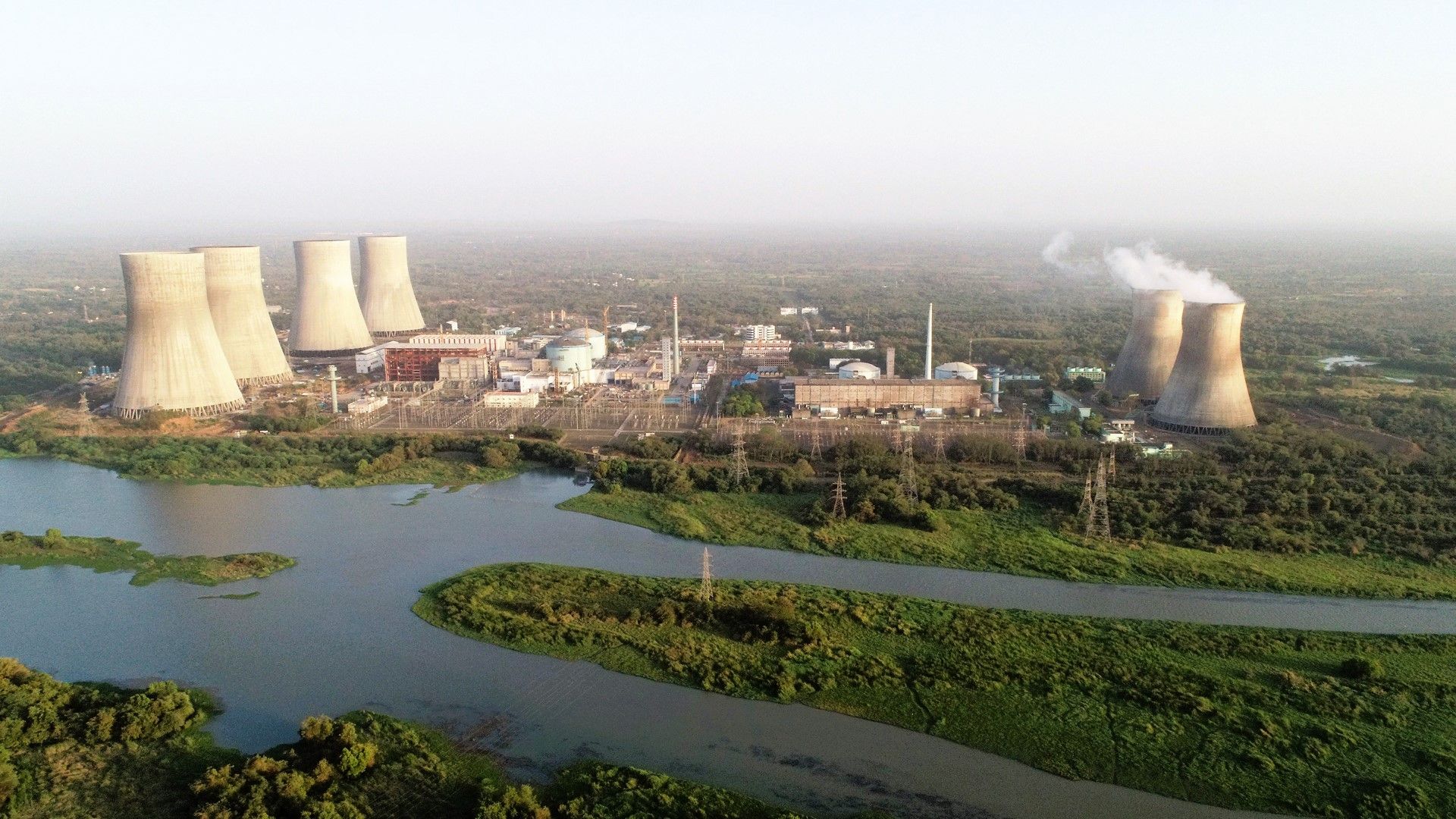

New Delhi: The Department of Atomic Energy (DAE) on Thursday informed Parliament that the Nuclear Energy Mission is targeting an ambitious expansion of India’s atomic power capacity to 100 gigawatt-electric (GWe) by 2047, positioning nuclear energy as a central pillar of the country’s clean-energy transition and ‘net zero’ roadmap. The mission underscores nuclear power’s role as a reliable, low-carbon baseload source capable of supporting long-term economic growth while reducing dependence on fossil fuels.
Designed to significantly scale up nuclear generation, the mission focuses on expanding both large-scale reactors and small modular reactors (SMRs). These efforts are backed by parallel advances in fuel-cycle technologies, hydrogen production, and indigenous manufacturing capabilities to ensure self-reliance.
The DAE told Parliament that the approach is two-pronged: rapid deployment of large reactors at greenfield sites, and strategic use of small reactors to repurpose retiring thermal plants, support energy-intensive industries, and supply remote regions.
Capacity Building
Large reactors remain the backbone of the 100 GWe roadmap. India is already operating 700 MWe pressurised heavy water reactors (PHWRs) developed indigenously, while imported reactors are planned to supplement capacity. Kakrapar Units 3 and 4 and Rajasthan Unit 7 are commercially operational, contributing to the existing 8,780 MW (excluding RAPS-1).
Ongoing construction includes three 700 MWe units — RAPS-8 in Rajasthan and GHAVP-1 and 2 in Haryana — while 10 more units of the same capacity are in various pre-project stages across Rajasthan, Karnataka, Madhya Pradesh and Haryana.
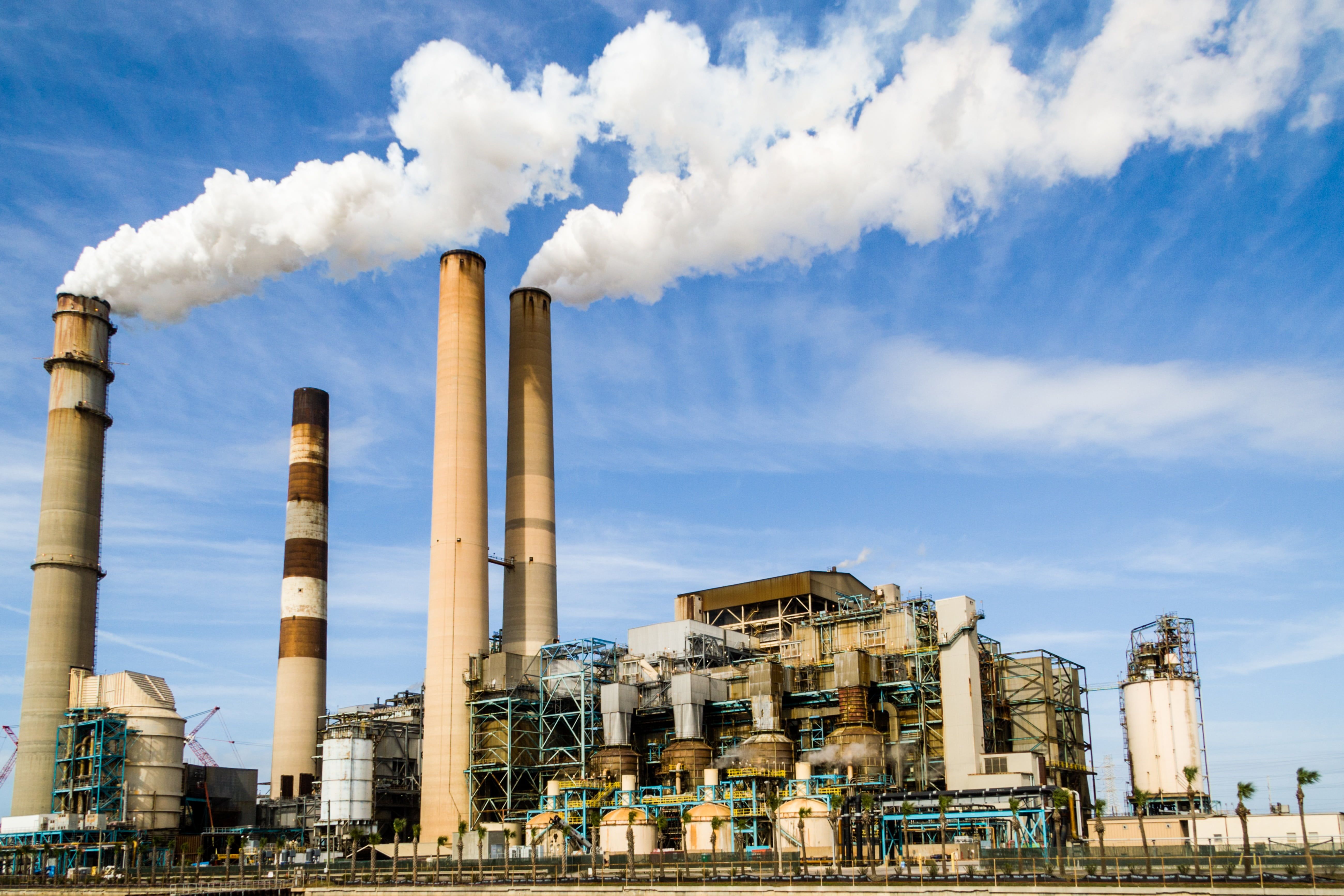
Hydrogen produced from high-temperature reactors will be targeted at transport and industrial applications. These reactors are expected to play a meaningful role in decarbonizing heavy industry over the next decade. (Photo courtesy: PickPik)
The DAE noted that installed nuclear power capacity is projected to rise steadily: 9,480 MW by 2025-26, 11,480 MW by 2026-27, 13,480 MW by 2029-30, and 21,880 MW by 2031-32. In addition, the long-delayed 500 MW prototype fast breeder reactor (PFBR) at Kalpakkam has entered the final phase of commissioning. The Atomic Energy Regulatory Board (AERB) has already granted permission for fuel loading, first approach to criticality, and low-power physics experiments. As of mid-October 2025, loading of fuel sub-assemblies was under way.
SMRs form the mission’s second major pillar and are being developed by Bhabha Atomic Research Centre (BARC) to enable flexible deployment and industrial decarbonization. Three designs are under development: the 200 MWe Bharat small modular reactor (BSMR-200), the 55 MWe SMR-55, and a high-temperature gas-cooled reactor of up to 5 MWth for hydrogen production. The lead units will be constructed at DAE facilities for technology demonstration, with build times expected to be 60 to 72 months after financial sanction.
The DAE highlighted that BSMR-200 and SMR-55 are suitable for captive power needs of sectors such as aluminium and steel, for replacing retiring coal-based units at brownfield sites, and for off-grid deployment in remote locations. Hydrogen produced from high-temperature reactors will be targeted at transport and industrial applications, expanding nuclear energy’s contribution beyond electricity generation. These reactors are expected to play a meaningful role in decarbonizing heavy industry over the next decade.
India’s domestic industrial ecosystem has been positioned to support this scale-up. Most equipment required for PHWRs, BSMR-200 and SMR-55 can already be manufactured in India, the DAE said, supported by technology transfer and handholding from BARC.
As reactor orders rise, private-sector capacity building is expected to accelerate under the Make in India programme. Departmental enterprises continue to produce critical nuclear materials including heavy water, neutron absorbers, zirconium alloys, reactor fuel assemblies, detectors, and sensors.
Resource Challenge
Uranium availability remains critical to the expansion. The Atomic Minerals Directorate for Exploration and Research (AMD) has so far established 436,700 tonnes of in-situ U₃O₈ across 47 deposits in 11 states. As of September 2025, exploration initiatives have yielded a new 28,637-tonne resource at the Jaduguda North-Baglasai-Mechua extension in Jharkhand.
During the ongoing five-year action plan (2024-25 to 2028-29), AMD aims to augment 75,000 tonnes of additional uranium resources. Progress as of September 2025 includes 9,289 sq km of reconnaissance survey, 5,425 sq km of geochemical survey, 478.7 sq km of detailed survey, 1,676 sq km of ground geophysics, and over 2.8 lakh metres of departmental and contract drilling combined. Actual resource augmentation so far stands at 15,778 tonnes.
Exploration has been intensified across 14 states including Andhra Pradesh, Karnataka, Jharkhand, Rajasthan, Madhya Pradesh, Uttar Pradesh, Chhattisgarh, Maharashtra, Haryana, Arunachal Pradesh, Himachal Pradesh, Tamil Nadu, Sikkim, and Bihar. Uranium Corporation of India Ltd (UCIL) continues to operate mines and processing plants in Jharkhand and Andhra Pradesh to supply domestic fuel needs.
The DAE emphasized that radioactive waste management practices remain aligned to international standards, supported by statutory oversight from the AERB. Waste from existing and upcoming reactor fleets, including SMRs, will be managed under the Atomic Energy Act, 1962 and the Safe Disposal of Radioactive Wastes Rules, 1987. Low and intermediate waste is treated, immobilized, and disposed in engineered structures under continuous surveillance.
For SMRs using slightly enriched uranium, spent fuel will be stored in situ and reprocessed domestically to reduce waste volume and recover valuable materials. High-level waste will continue to be vitrified in stable glass matrices and stored in engineered facilities.
According to the DAE, nuclear power has already helped avoid around 822 million tonnes of CO₂-equivalent emissions.
With the Nuclear Energy Mission charting a path to 100 GW by 2047, the department told Parliament that atomic energy will form a major component of India’s clean-energy strategy on its journey towards ‘net zero’ by 2070.