
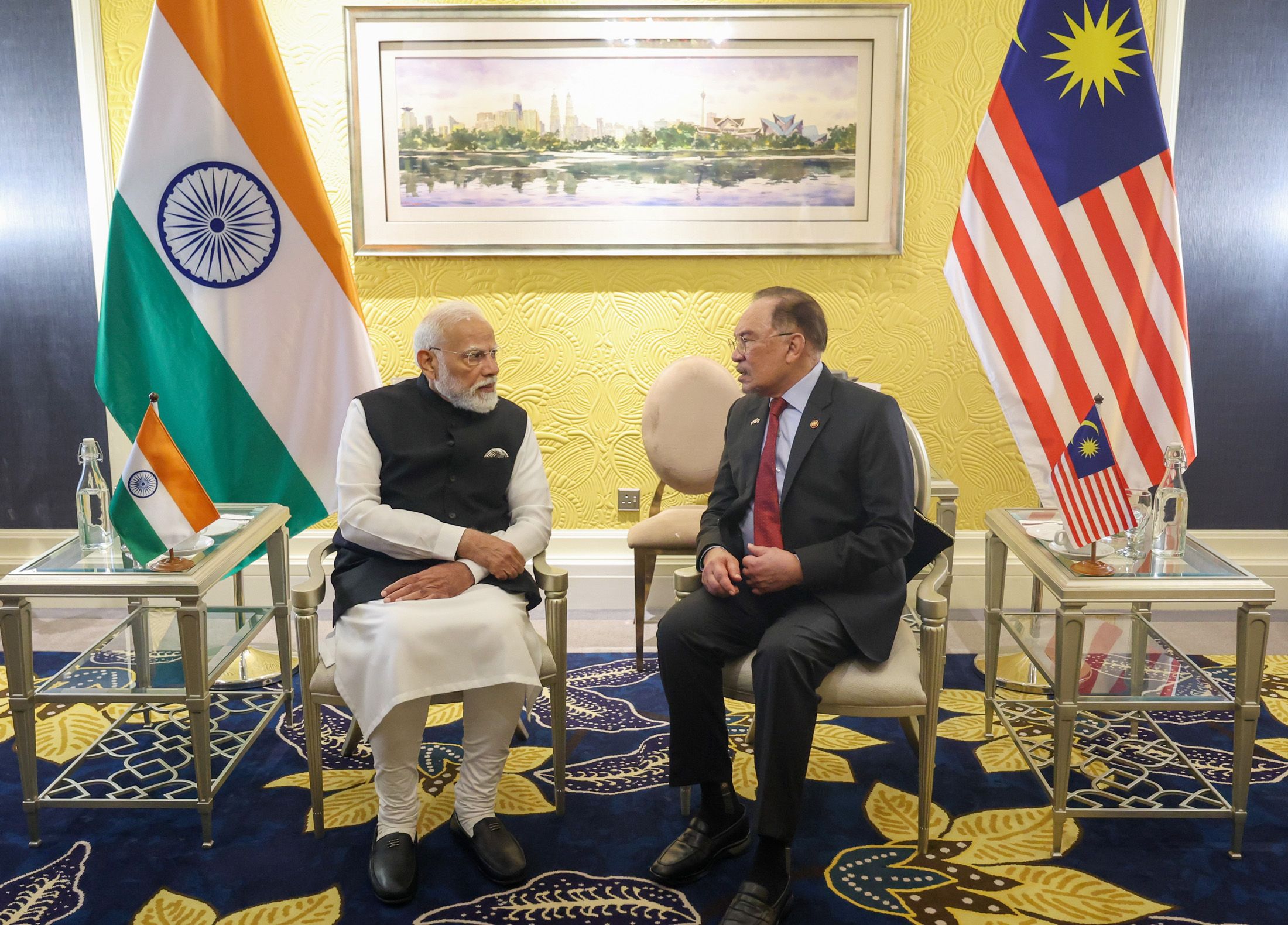

New Delhi: India and Malaysia moved to significantly deepen trade, investment and technology cooperation during Prime Minister Narendra Modi’s official visit to Malaysia from February 7-8, positioning the Comprehensive Strategic Partnership as a growth-oriented economic alliance focused on semiconductors, renewable energy, digital payments and high-value manufacturing. The visit, held at the invitation of Malaysian Prime Minister Dato’ Seri Anwar Ibrahim, delivered momentum for bilateral commerce amid shifting regional and global supply chains.
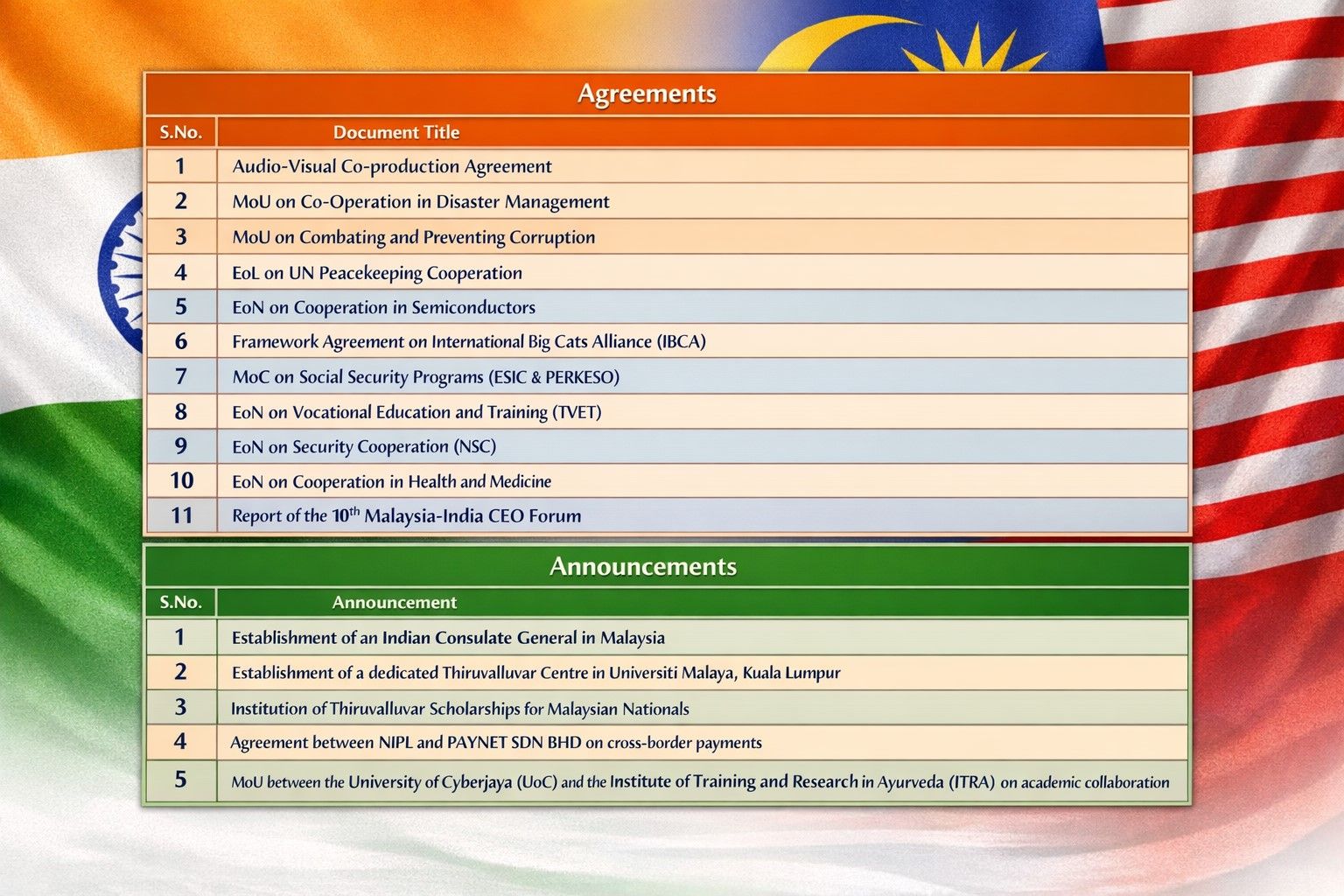
The two leaders held bilateral talks in Putrajaya following an official welcome ceremony, describing discussions as wide-ranging and outcome-oriented. Several agreements and exchanges of notes were witnessed, reinforcing institutional frameworks supporting business, investment, technology and skills development.
Trade Growth & Investment Momentum
The Malaysian PM recognised India as a vital global economic partner and welcomed the steady rise in bilateral trade. The leaders agreed that the partnership is increasingly defined by strategic synergy rather than transactional exchange, with emphasis on high-value and future-oriented sectors.
The leaders underlined the importance of the Malaysia-India Comprehensive Economic Cooperation Agreement (MICECA) and the ASEAN-India Trade in Goods Agreement (AITIGA), welcoming the ongoing review of AITIGA to improve trade facilitation and align it with modern supply-chain realities. Businesses were encouraged to make fuller use of MICECA to deepen economic engagement.
Investment cooperation emerged as a central pillar, with both sides encouraging two-way investments in infrastructure, renewable energy, advanced manufacturing, semiconductors, healthcare, digital economy, fintech, artificial intelligence (AI), green technologies, hospitality and startups. PM Modi highlighted India’s expanding market and manufacturing base as an attractive destination for Malaysian capital, while PM Anwar Ibrahim welcomed Indian manufacturing and technology firms for their contribution to skilled employment in Malaysia.
The convening of the 10th India-Malaysia CEO Forum in Kuala Lumpur was welcomed by both leaders, who expressed hope that private-sector recommendations would directly support policy coordination and commercial outcomes.
Financial Integration & Connectivity
The PMs welcomed ongoing cooperation between the Reserve Bank of India and Bank Negara Malaysia to promote local-currency settlement in bilateral trade and investments, encouraging wider use of the Rupee and Ringgit to reduce transaction costs and currency risk.
Connectivity was recognised as a critical enabler of economic growth. The leaders welcomed expanding air and maritime links and agreed to strengthen them further. Malaysia proposed an enhancement of existing air traffic rights, which India took note of, reflecting rising passenger demand and growing business travel between the two countries.
Digital Economy & Payments
Digital cooperation featured prominently, with the formalisation of the Malaysia-India Digital Council (MIDC) identified as a key mechanism to drive collaboration in fintech, AI, cybersecurity, digital public infrastructure, e-governance and emerging technologies.
The leaders also welcomed the partnership between NPCI International Ltd and PayNet Malaysia to establish bilateral payment linkages. The integration is expected to simplify cross-border payments, lower remittance costs and benefit tourists, students, small businesses and MSMEs, strengthening commercial and people-to-people exchanges.
Energy Transition & Semiconductors
In energy, the Prime Ministers noted the expanding footprint of Malaysia’s PETRONAS and Gentari in India’s renewable energy and green hydrogen sectors. They highlighted opportunities for collaboration in large-scale solar projects and clean-energy solutions, aligned with both countries’ net-zero ambitions. Malaysia acknowledged India’s leadership through the International Solar Alliance.
Semiconductors emerged as a strategic growth area, with both sides agreeing to strengthen cooperation across the value chain, including technology development, workforce training and supply-chain resilience. Ongoing collaborations between IIT Madras Global and the Advanced Semiconductor Academy of Malaysia, as well as industry bodies from both countries, were commended as building blocks for a competitive regional ecosystem.
Food Security & Agri-Business
The leaders agreed to deepen cooperation on food security and agri-commodities, focusing on stable and resilient supply chains. Malaysia reaffirmed its role as a reliable supplier of sustainable palm oil, while both sides agreed to collaborate on oil palm cultivation, downstream processing, value-added palm-based products and structured engagement on market-access issues.
Skills, Talent & Mobility
Education and skills development were positioned as long-term economic enablers. The leaders encouraged greater student and faculty exchanges under existing cooperation programmes and expanded collaboration in technical and vocational education and training to meet evolving industry needs.
Both sides also agreed to further streamline the mobility of professionals and workers, supporting businesses operating across both markets.
Tourism, Aviation & Services
Tourism was highlighted as a growing services-sector driver. India welcomed the ‘Visit Malaysia 2026’ campaign, while Malaysia appreciated India’s Incredible India initiative. Ongoing visa liberalisation measures were acknowledged for boosting tourist arrivals and business travel.
The leaders reaffirmed their commitment to strengthening civil aviation cooperation and air connectivity in line with growing demand for trade, tourism and professional exchanges.
Regional Economic Cooperation & Global Governance
At the multilateral level, Malaysia welcomed India’s 2026 BRICS chairmanship, while India supported Malaysia’s role as a BRICS Partner Country and its aspiration for full membership. Both leaders agreed to strengthen cooperation in global economic governance forums and support reforms of international institutions to better reflect contemporary economic realities.
They reaffirmed support for a free, open and rules-based Indo-Pacific, freedom of navigation under UNCLOS, ASEAN centrality, and closer alignment between the ASEAN Outlook on the Indo-Pacific and India’s Indo-Pacific Oceans Initiative.
PM Modi expressed appreciation for the strong business-focused outcomes of the visit and thanked Malaysia for its hospitality, extending an invitation to PM Anwar Ibrahim to visit India. The visit reinforced India-Malaysia ties as an increasingly investment-driven and technology-focused partnership, positioning both economies to benefit from deeper integration in Asia’s evolving growth landscape.