
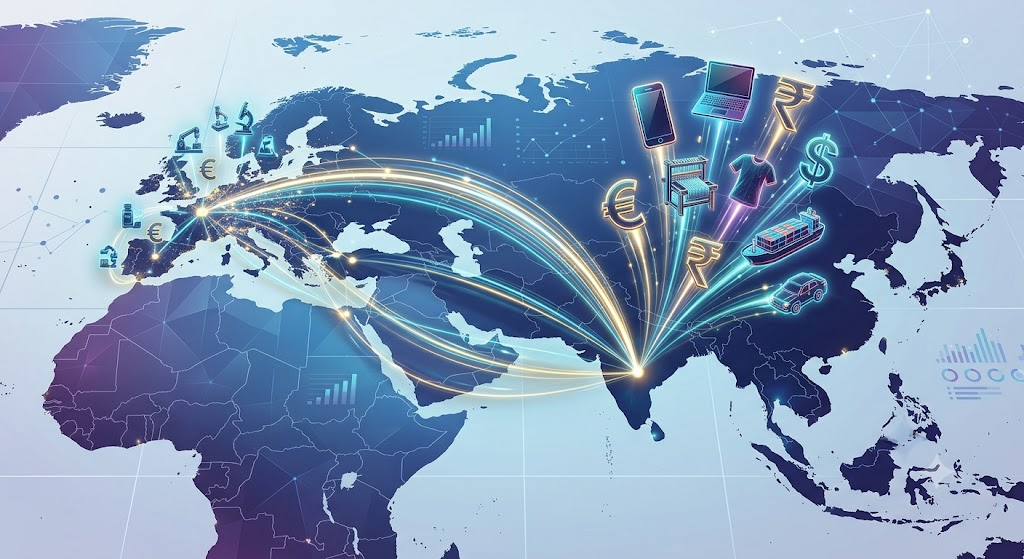

As of July 24, 2026, the global economic landscape is witnessing a definitive shift in capital flow and consumer focus. Recent reports, including analysis from Euractiv, indicate that India has emerged as one of the fastest-growing consumer markets for European enterprises. This transition marks a significant pivot in how Western corporations view the Indo-Pacific region, moving beyond seeing India merely as a back-office hub to recognizing it as a primary destination for finished goods and services.
The Pivot from Traditional Manufacturing Hubs
For decades, European investment in Asia was heavily concentrated in the Chinese market. However, as of mid-2026, the narrative has shifted. According to recent reports, European companies are increasingly favoring India over China. This trend is driven by a search for better returns and a desire to tap into a market that remains largely unsaturated.
Background: Historically, the 'China Plus One' strategy began as a way to diversify supply chains. However, by 2026, this has evolved into a 'Market Plus One' strategy, where European firms are not just manufacturing in India but are actively targeting the Indian domestic consumer. The volatility in other regional markets has made the relative stability and growth trajectory of the Indian economy an attractive alternative for long-term capital commitment.
Untapped Potential and High Returns
The allure of the Indian market lies in its demographic dividend and a rapidly expanding middle class. Reports on July 24, 2026, suggest that the "untapped market potential" in India is now the primary draw for European boardrooms. Unlike more mature markets in the West or the increasingly complex regulatory environment in East Asia, India offers a high-growth runway for sectors ranging from luxury goods to green technology.
Generally, European firms in the automotive, pharmaceutical, and consumer electronics sectors have seen the most significant gains. The promise of better returns is not merely theoretical; it is reflected in the increasing number of European subsidiaries expanding their footprints in Tier-2 and Tier-3 Indian cities. This geographic expansion indicates that the growth is not limited to metropolitan hubs but is becoming a pan-Indian phenomenon.
Strengthening Trade Ties and Future Outlook
The rise of India as a consumer powerhouse for Europe is also strengthening bilateral trade relations. The economic news today reflects a broader integration of Indian markets into the global supply and demand chain.
As we look toward the remainder of 2026, the focus will likely remain on how quickly European firms can adapt their products for the Indian consumer. The competition is stiff, but the rewards for those who successfully navigate the Indian landscape appear to be higher than in any other major emerging economy. This is no longer just about low-cost labor; it is about the purchasing power of over a billion people.