
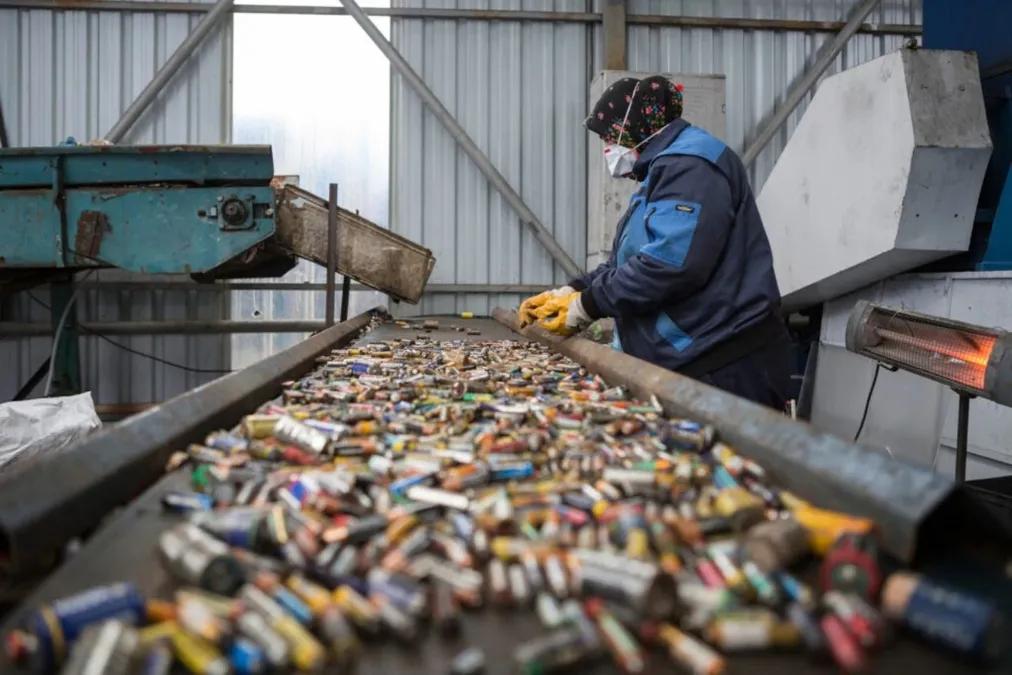

The Indian government has officially prohibited the export of unsorted battery waste and scrap, implementing the ban with immediate effect. According to reports, the regulatory intervention specifically targets unsorted lithium-ion battery waste, scrap, and black mass containing critical minerals.
The policy shift is designed to retain valuable materials within the country. The primary objective behind the ban on lithium-ion battery waste exports is to actively boost domestic recycling capabilities and secure resource recovery channels locally.
Targeting Critical Minerals and Black Mass
The restriction goes beyond general scrap, extending to vital intermediary materials. The prohibition covers battery waste including lithium-ion black mass and other residue containing critical minerals.
By halting the outflow of these high-value components, authorities are pivoting towards a closed-loop framework. This ensures that materials essential for clean energy transitions are processed domestically rather than leaking into international trade streams.
Implications for the Recycling Industry and Trade Flows
The immediate enforcement of this trade restriction reshapes the operational landscape for domestic stakeholders. While international academic literature has long examined how Extended Producer Responsibility (EPR) and trade controls impact global battery waste flows, India's latest mandate creates an immediate domestic imperative.
Domestic recyclers and waste management firms now face both an opportunity and a responsibility. With export avenues closed for unsorted materials and black mass, local processing plants must absorb the entirety of the recovered feedstock, accelerating the maturation of India's domestic circular economy infrastructure.