
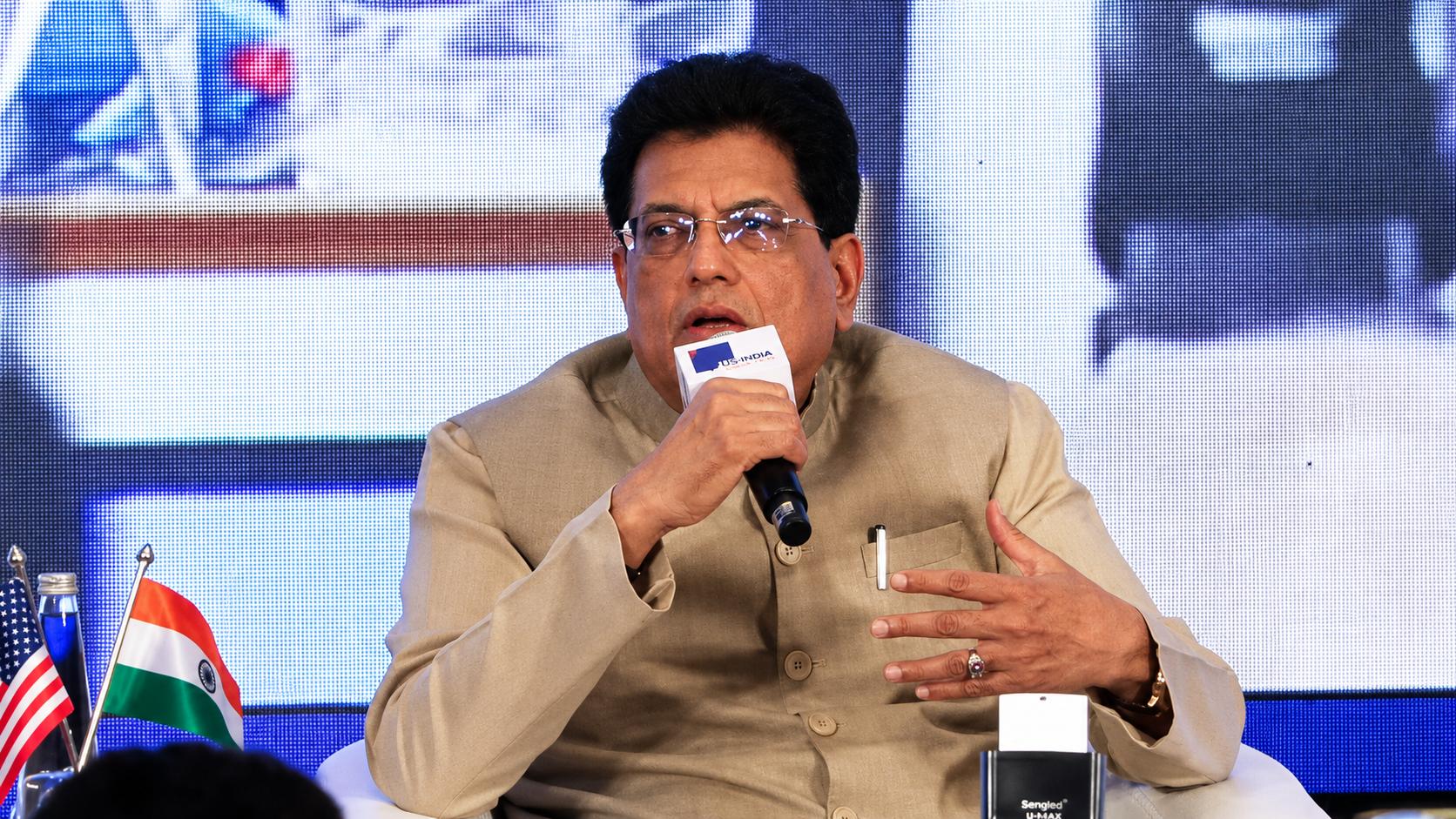

New Delhi: India and the United States are emerging as “natural partners” in an increasingly fragmented global economy, Union Commerce and Industry Minister Piyush Goyal said on Thursday (May 21), asserting that the bilateral relationship is being driven by mutual trust, economic complementarity, and a shared strategic vision for the future.
Addressing the Annual Leadership Summit of the American Chamber of Commerce in India in New Delhi, Goyal said commitments from American companies over the last six months alone are estimated to exceed $60 billion, including large-scale data centre investments by Amazon and Google.
Describing the India-US partnership as “the defining partnership of the 21st century”, Goyal said the two economies complement each other with “minimal competition”, laying the foundation for trusted and resilient global supply chains.
“America is looking for a trusted partner and India has consistently demonstrated respect for intellectual property rights while delivering high-quality output on time,” he said, underlining India’s growing attractiveness as a strategic investment destination amid global geopolitical and economic uncertainty.
The minister said India offers a unique combination of scale, talent, and market opportunity that remains unmatched globally. Rising incomes, expanding consumption, and a rapidly growing middle class are helping aggregate demand from 1.4 billion aspirational consumers, thereby amplifying the reach of American innovation, he added.
Goyal identified technology innovation, high-precision defence manufacturing, digital infrastructure, quantum computing, and medical devices as major pillars of India-US collaboration. “When complementarity is combined with mutual trust, it creates an unbeatable combination capable of building trusted and resilient supply chains for the future,” he said.
Highlighting the scale of India’s expanding digital economy, Goyal said the country currently hosts 2,117 Global Capability Centres (GCCs), employing nearly 2.35 million people directly and generating close to $98 billion in revenue.
He said the rapid expansion of GCCs is contributing significantly to India’s sustained economic momentum at a time when many advanced economies continue to grapple with sluggish growth.
The minister also stressed that India’s economic resilience has remained intact despite external shocks, including the Ukraine conflict and the West Asia crisis. He pointed out that India’s growth forecast had recently been upgraded from 6.4% to 6.5%, reflecting what he described as “India’s capability, decisive leadership, and growing confidence in engaging with the world as a reliable and favoured investment destination.”
On the manufacturing front, Goyal said the government is pursuing an area-based industrialisation strategy aimed at developing 100 new industrial parks across the country. The proposed model seeks to integrate industrial infrastructure with worker housing, recreation facilities, and social amenities to create comprehensive industrial ecosystems capable of supporting long-term manufacturing growth.
The minister also underscored the critical role of micro, small and medium enterprises (MSMEs) in strengthening global supply chains. He said the proposed Export Promotion Mission would support MSMEs in obtaining globally recognised certifications required to integrate into international production networks.
Goyal said, India is looking to deepen its long-term economic partnership with the United States through greater cooperation in technology, manufacturing, innovation and investment. The relationship between the two democracies is expected to expand significantly in the coming decades, supported by a combination of American capital and innovation and India’s skilled talent base and growing manufacturing capabilities, he added.
Amid rising global economic uncertainties and trade-related pressures, Goyal said the Centre is carefully assessing the international situation and exploring multiple strategies to safeguard the country’s macroeconomic stability. Various government departments are working in coordination to address concerns related to the current account deficit and external sector risks, he added.
The minister also expressed confidence in India’s ability to handle global disruptions, citing strong domestic demand, policy reforms, and an expanding industrial ecosystem as key strengths. Despite the challenging international environment, he maintained that India remains well-positioned to sustain growth and attract foreign investment.
At the same time, the government has ruled out any immediate move to impose restrictions on non-essential imports, signalling that India intends to maintain a balanced and open trade approach while closely monitoring global developments.