
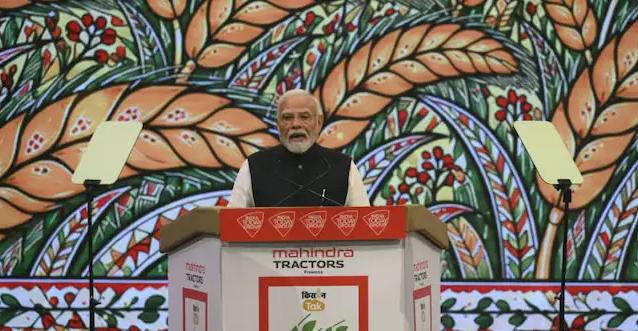

Prime Minister Narendra Modi has highlighted the immense financial pressure facing India's fuel economy, revealing that the government has been bearing a massive monthly burden of ₹14,000 crore. Speaking on the ongoing energy pressures, the administration underscored its active intervention to insulate consumers and agricultural producers from unprecedented spikes in international crude oil markets.
The West Asia Conflict and Crude Surges
The fiscal strain traces back to acute geopolitical tensions in West Asia, which sent shockwaves through global energy markets. According to reports, Prime Minister Modi noted that the threat of war pushed crude oil prices from $70 up to $122 per barrel in a matter of just a few weeks.
This rapid escalation placed immense upward pressure on domestic fuel pricing, threatening to trigger inflationary spirals across multiple sectors of the Indian economy.
Cushioning Consumers and Shielding Farmers
To combat the potential shock of soaring energy costs, the central government intervened directly in retail pricing structures. The administration absorbed ₹43 per litre out of a potential ₹50 diesel price hike, successfully capping the actual increase passed on to the public at just ₹7 per litre.
Government officials emphasized that this targeted fiscal cushion was primarily deployed to protect vulnerable sectors, most notably farmers, whose operational costs heavily rely on stable diesel pricing. By absorbing the remaining bulk of the hike, the state prevented crippling operational expenses from hitting the agricultural community.
Fiscal Sustainability and Policy Outlook
Absorbing a cumulative ₹14,000 crore every month underscores the heavy fiscal balancing act currently managed by New Delhi. While the intervention has successfully shielded retail consumers from the worst of the $122-per-barrel crude reality, questions remain regarding the long-term sustainability of such massive monthly outlays if global energy volatility persists.
Details on this aspect have not been reported yet, leaving analysts watching closely to see how future budgetary allocations adapt to ongoing geopolitical uncertainties in energy corridors.