
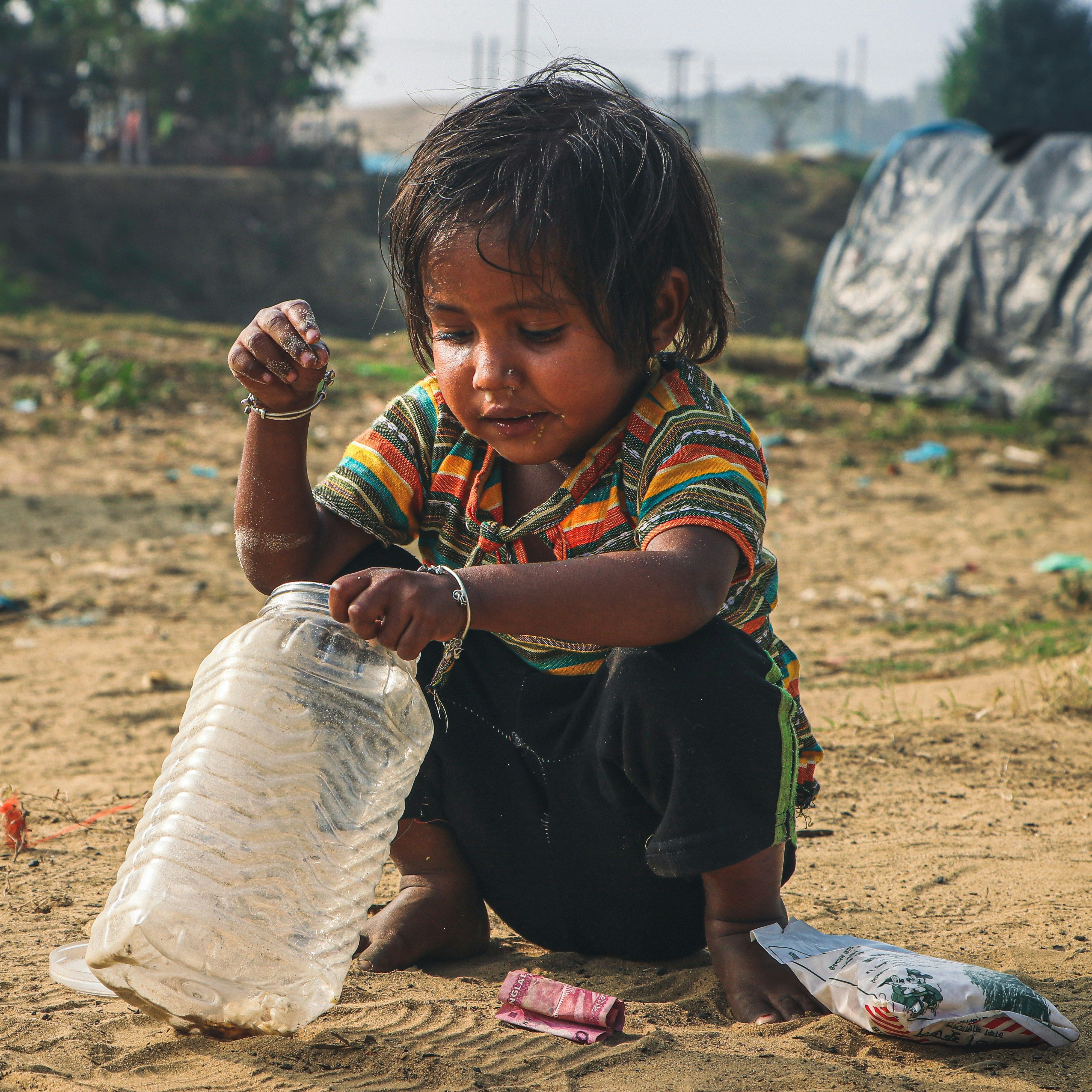

New Delhi: Rising food prices and declining farm incomes are placing mounting strain on the global food system, pushing hundreds of millions deeper into hunger and food insecurity. According to the latest estimates cited in a recent United Nations news report, up to 720 million people faced hunger last year, while billions more were unable to afford a healthy diet. The figures underscore a widening crisis that threatens progress toward the Sustainable Development Goals (SDGs), particularly the goal of ending hunger by 2030.
The UN News report notes that in 2024, an estimated 2.3 billion people experienced moderate or severe food insecurity, meaning they lacked regular access to safe and nutritious food. Chronic hunger has also worsened over the past decade, with 96 million more people affected compared to 2015. The data reflects the cumulative impact of climate change, conflict, economic slowdowns and persistent inequalities, all of which have disrupted food production and supply chains worldwide.
Against this troubling backdrop, senior United Nations officials convened a special meeting at UN Headquarters in New York to call for urgent investment and innovation to transform global agri-food systems. These systems encompass the entire food value chain — from farming and fisheries to processing, transportation, markets and consumption — effectively linking the field to the table.
UN Economic and Social Council President Lok Bahadur Thapa emphasized the central role of food systems in sustainable development. “Agri-food systems are at the heart of progress in our societies,” he said at the opening of the meeting, as reported by the United Nations. He described them as the thread connecting the environmental, social and economic pillars of sustainability, highlighting how food production and distribution shape not only nutrition outcomes but also economic opportunity and ecological balance.
The importance of agri-food systems to global livelihoods is immense. According to the UN report, they provide employment for more than 39% of the global workforce, and in Africa, they account for roughly 64% of jobs. Beyond job creation, food and farming systems influence rural development, public health, international trade and environmental resilience. However, they are also highly vulnerable to climate shocks, water scarcity, land degradation and volatile markets.
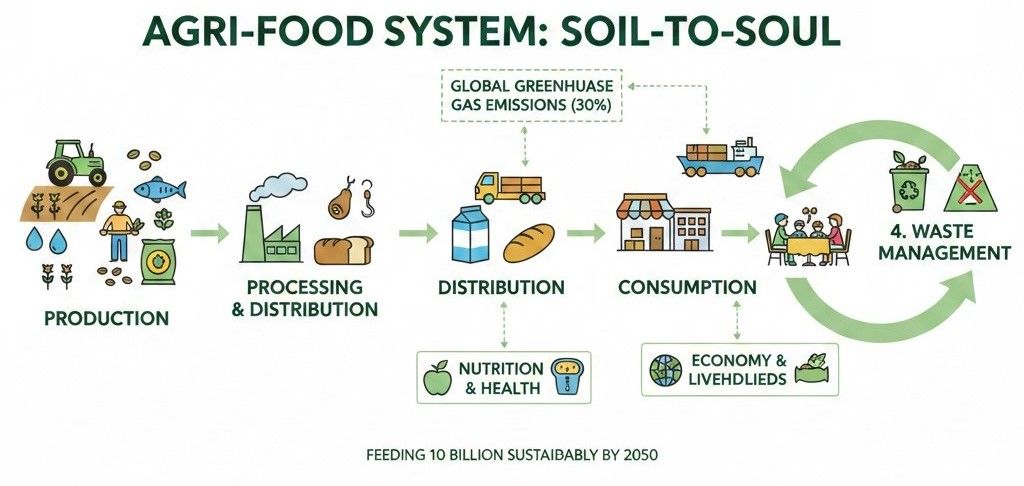
Transforming these systems could unlock enormous benefits. The UN report suggests that comprehensive reforms could generate between $5 trillion and $10 trillion annually in gains across health improvements, economic growth and environmental protection. Such gains would stem from more sustainable farming practices, reduced food loss and waste, improved supply chains and better access to nutritious diets.
Youth engagement was another focal point of the discussions. With the world’s youth population projected to rise by 7% by 2030, according to UN estimates, integrating young people into agri-food system reforms is seen as essential. Thapa noted that ensuring meaningful participation of youth would make transformations more inclusive, innovative and future-ready. Young entrepreneurs and digital innovators are increasingly shaping agricultural technology, climate-smart farming and food distribution models.
Deputy Secretary-General Amina Mohammed described the moment as pivotal. “Hunger remains at unacceptable levels. Fiscal space is shrinking, and pressures on agri-food systems are intensifying,” she said, according to the UN report. While 130 countries have developed national pathways for food system reform since the 2021 UN Food Systems Summit, she stressed that ambition must now translate into measurable results. Scaling proven solutions, aligning financial flows with national priorities and accelerating action in the most vulnerable regions are critical steps to ensure that no one is left behind.
Gender Gaps
Gender equality emerged as a key priority. Marking 2026 as the International Year of the Woman Farmer, the Deputy Secretary-General highlighted the indispensable role of women in agriculture. “Women farmers are essential to food security, nutrition and economic resilience worldwide,” she said, as reported by the UN.
Closing gender gaps in access to land, credit, technology and training could significantly boost productivity and household incomes. According to data from the Food and Agriculture Organization, narrowing the gender gap in agriculture could raise farm output in developing countries and reduce global hunger substantially.
Financing remains a major challenge. Many developing countries face shrinking fiscal space and rising debt burdens, limiting their ability to invest in agricultural transformation. UN officials urged stronger collaboration among governments, international financial institutions and the private sector to mobilize sustainable financing. Digital innovation was also highlighted as a powerful enabler. Advances in data systems, climate forecasting tools, precision agriculture and mobile-based market platforms can improve productivity, enhance transparency and build resilience against climate and market shocks.
The broader context of climate change adds urgency to these efforts. The Inter-governmental Panel on Climate Change has warned that rising temperatures and extreme weather events are already undermining food security, particularly in vulnerable regions. Without adaptation and mitigation measures, these pressures are expected to intensify.
Despite the scale of the crisis, UN leaders expressed cautious optimism. Amina Mohammed emphasized that coordinated action could turn agri-food systems into a powerful engine for progress across multiple SDGs. “We can boost productivity, create decent jobs, and strengthen resilience by translating ambition into action and coordination into results,” she said, according to the UN report.
As global leaders grapple with overlapping crises — from economic uncertainty to climate disruption — the transformation of agri-food systems has emerged as a defining challenge of our time. The UN’s call for investment, innovation and inclusion reflects a recognition that food systems are not only about feeding populations, but also about shaping a more equitable, resilient and sustainable future.
(Cover photo by Marwan Ahmed on Unsplash)