
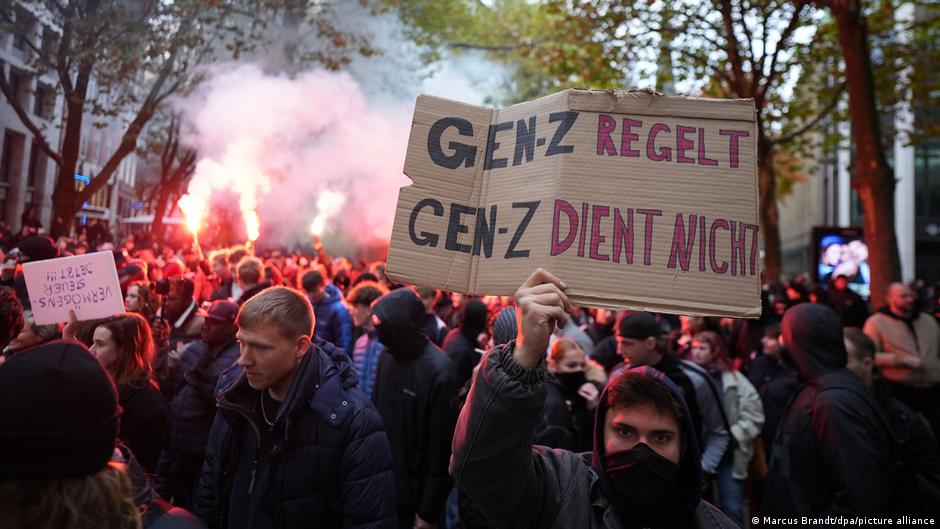

German authorities have vowed a severe crackdown following a wave of youth-led protests that deteriorated into widespread violence, rioting, and looting across major urban centers. The sudden escalation of civil unrest has sent shockwaves through Europe's political establishment, drawing immediate comparisons to recent disturbances in neighboring countries.
The Escalation in Berlin and Frankfurt
The unrest, widely identified as Gen Z-led demonstrations under banners such as "Gen Z Takes Charge," quickly spiraled out of control. According to recent reports, young demonstrators clashed directly with law enforcement in Berlin, while rioters targeted commercial districts in Frankfurt, looting stores and disrupting public order.
- Young demonstrators clashed with police in Berlin.
- Shops were looted extensively in Frankfurt.
- Observers noted an echo of last month's French riots.
Official Response and Blame
In the wake of the destruction, the German government has adopted a hardline stance. Authorities and official commentators have moved quickly to characterize the worst elements of the unrest. According to reports, officials blame "infiltrators" and a "small extremist minority" for hijacking the youth-led demonstrations and turning them violent.
Despite official assertions regarding outside agitators, the protests have also thrown a spotlight on domestic economic grievances. Some reports have linked the initial impetus of the mobilization to broader cost-of-living frustrations gripping the European continent, though the subsequent chaos overshadowed any cohesive policy message.
Broader European Implications
The events in Germany mark a concerning chapter for public order within the European Union. Historically, youth-led movements across the continent have leveraged digital organization to mobilize rapidly, yet maintaining peaceful discipline remains a persistent challenge. As German leadership prepares its promised crackdown, questions loom over how security forces will balance the protection of public safety with the management of volatile, decentralized youth movements.
The immediate priority for Berlin remains restoring order to its commercial hubs and deterring copycat disturbances. However, the intersection of youth activism, economic pressure, and extremist infiltration points to a volatile socio-political climate heading into the final stretch of 2026.