
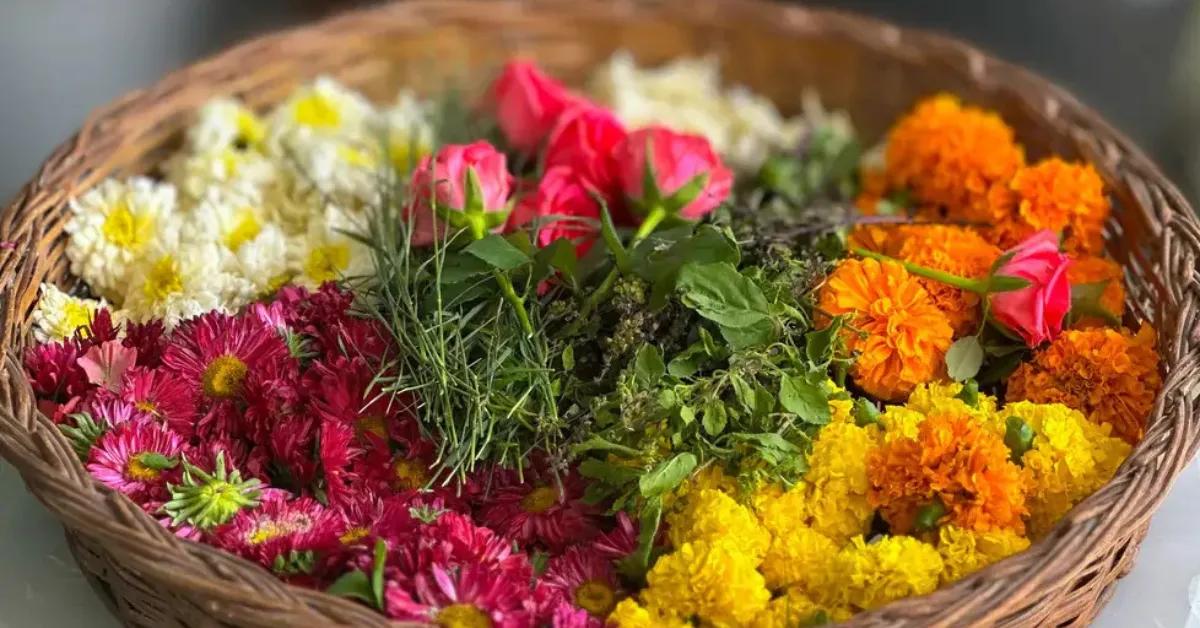

Every flower offered in a temple begins with a little intention. Someone chooses a marigold garland on their way to a place of worship. Someone carries a handful of roses, hoping to offer a prayer. Someone places fresh jasmine at the feet of a deity, believing that even the smallest offering can carry the weight of their devotion.
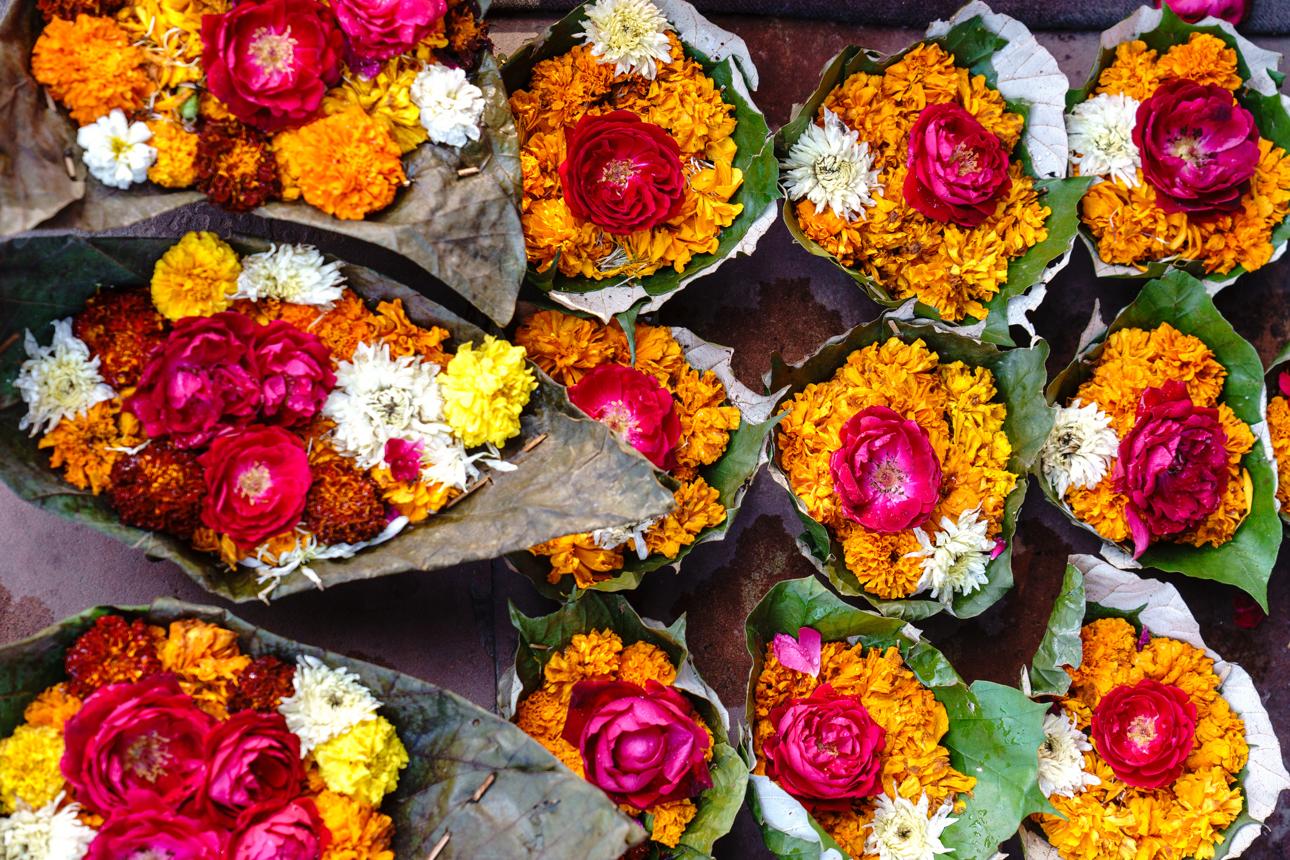
For a moment, these flowers become part of something deeply personal. They are no longer merely flowers. They become symbols of faith, gratitude, hope, and love.
But what happens when the ritual is over?
By the end of the day, the temples are cleaned, the offerings are gathered, and thousands of flowers begin another journey, one that often takes them far away from the places where they were offered. In many parts of India, these flowers end up in rivers or landfills, sometimes mixed with plastic threads, packaging, and other waste.
It is a curious contradiction. We offer flowers to the divine with reverence, yet their journey after the ritual is often an afterthought.
As India enters another festive season, perhaps it is time to think about this forgotten part of our celebrations. We can continue to enjoy our festivals, cherish our rituals, and preserve the traditions that connect us to generations before us. But we can also ask ourselves a simple question: can we celebrate in a way that is kinder to the environment?
Across India, a few entrepreneurs and community-led initiatives are attempting to answer that question. Among them is Phool, a Kanpur-based company that is finding an unexpected use for something most people would consider worthless: discarded temple flowers.
The Other Side of India's Floral Traditions
Flowers are an inseparable part of India's religious and cultural traditions. From daily temple offerings to grand celebrations such as Durga Puja, Ganesh Chaturthi, Diwali, and Chhath Puja, they accompany some of the country's most cherished rituals. Weddings, religious gatherings, and festive pandals add to this abundance.
But behind this colourful tradition lies a big problem that often gets ignored.
A widely cited research estimate suggests that around 8 million tonnes of floral waste are discarded into rivers and other water bodies in India every year. While this figure is not an annually verified government count, it offers an indication of the scale of the problem.
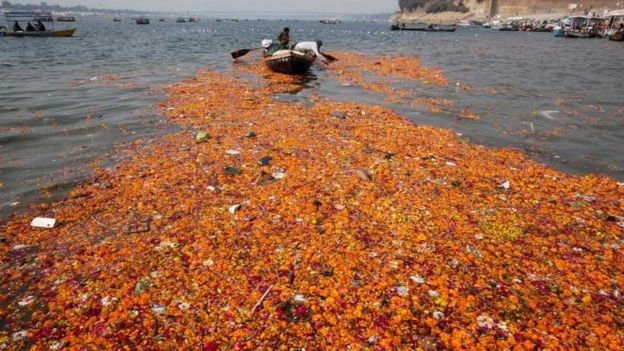
The disposal of flowers is not as harmless as it might appear. Although petals are biodegradable, large quantities of decomposing organic waste can affect water quality and contribute to methane emissions in landfill conditions. There is another problem that often goes unnoticed: flowers are rarely discarded alone. Garlands may contain synthetic threads, plastic decorations, and other materials that do not decompose naturally. Pesticide and chemical residues from flower cultivation can also enter the waste stream.
For many devotees, offering flowers to rivers is itself an age-old tradition. Yet, preserving the sanctity of these water bodies also requires us to think about what happens to the offerings once they enter the water.
The solution does not necessarily lie in changing the rituals. It lies in finding a more responsible way to manage this situation.
Phool: Giving Discarded Flowers a Second Life
The idea behind Phool began with a problem that had been visible for years but was rarely addressed. Flowers offered at temples were being collected and discarded in large quantities, often finding their way into the Ganges.
Instead of treating these offerings as ordinary waste, Phool saw the possibility of recovering something valuable from them.
The Kanpur-based company developed a process called flowercycling, through which discarded flowers are collected, processed, and converted into useful products.
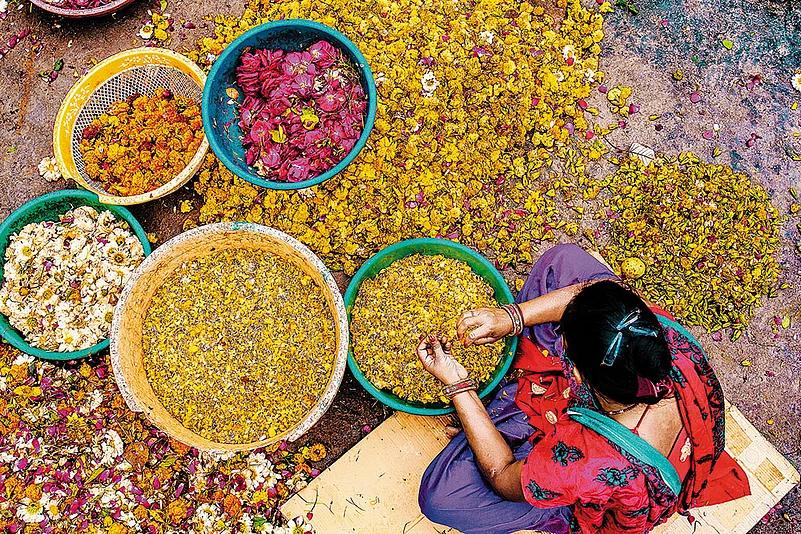
According to a Ministry of Housing and Urban Affairs feature published in 2024, Phool was collecting approximately 21 metric tonnes of floral waste every week, around 3 tonnes a day, across 5 prominent temple towns: Kanpur, Ayodhya, Varanasi, Bodh Gaya, and Badrinath.
Imagine the number of garlands, marigolds, roses, and other offerings that go into those daily collections.
The flowers are gathered from temples and transported to the company's processing facilities. But before they can become anything useful, they have to undergo a rather interesting transformation.
The first step is segregation. The collected flowers are separated from threads, plastic, and other unwanted materials that often accompany religious offerings. Once cleaned, the petals are dried, traditionally using sunlight, to remove their moisture. They are then ground into a fine powder.
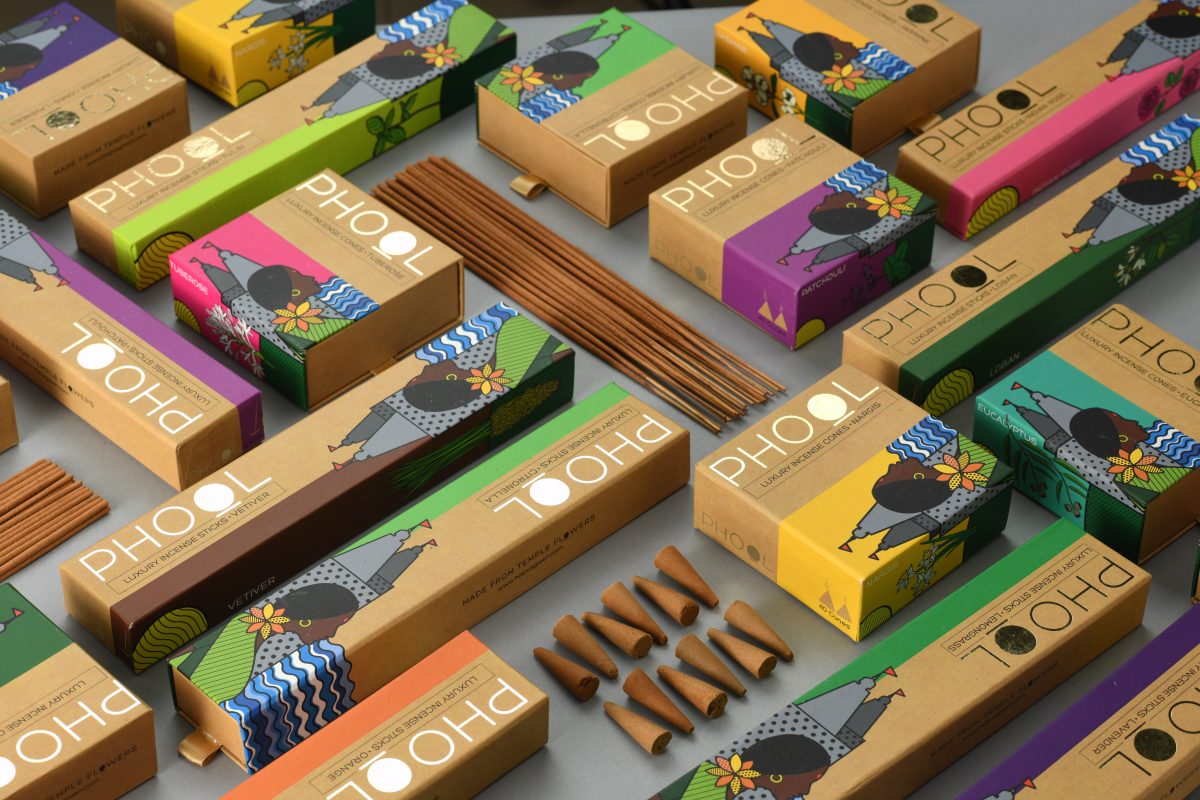
This powder becomes the primary ingredient for one of Phool's best-known products: charcoal-free incense sticks.
From Temple Offerings to Fragrant Incense
The manufacturing process is surprisingly fascinating.
Once the dried flowers have been ground into a fine powder, the material is mixed with water and natural essential oils to form a workable paste. This mixture is then shaped and hand-rolled into incense sticks, which are then dried and prepared for use.
The result is an aromatic product made using flowers that would otherwise have been discarded.
Unlike many conventional incense formulations that use charcoal, Phool's flagship incense is designed to be charcoal-free. It uses floral waste and essential oils to create fragrance without relying on charcoal as a base ingredient.
This is an interesting alternative at a time when consumers are becoming increasingly conscious of the ingredients in the products they bring into their homes. Conventional incense can release particulate matter and other pollutants when burned, so the choice of ingredients and the burning process both matter.
Phool has also expanded beyond its original incense products to include incense cones, bamboo-less incense, havan cups, essential oils, and aromatic candles.
There is something rather fitting about this transformation. Flowers that once filled temples with colour and fragrance are now being used to create products that bring fragrance into people's homes. Then there is another innovation that makes Phool's work even more interesting.
When Flowers Become an Alternative to Leather
One of Phool's most unusual developments is Fleather, a plant-based biomaterial created as an alternative to animal leather.
Interestingly, the discovery did not begin with a plan to manufacture leather. It emerged from an observation made during the company's floral-waste processing work.
While examining the leftover floral material from incense manufacturing, researchers noticed a fibrous layer forming on it. What initially appeared to be a by-product soon became the starting point for a new experiment.
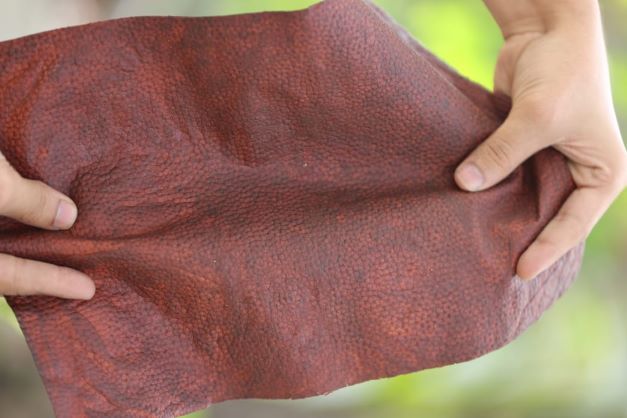
The material attracted attention from the fashion industry and was recognised by People for the Ethical Treatment of Animals (PETA) in 2020 as one of the notable innovations in the vegan world.
The company also developed Florafoam, a biodegradable packaging material intended as an alternative to conventional polystyrene foam, commonly known as Styrofoam.
Beyond Recycling: The Women Behind Phool
However, the story of Phool is not limited to its products or environmental ambitions. There is another important aspect to its work: the livelihoods it creates.
The company has reported employing more than 300 women from marginalised communities, many of whom previously worked as manual waste pickers. Such work is often associated with hazardous conditions, social stigma, and limited economic security.
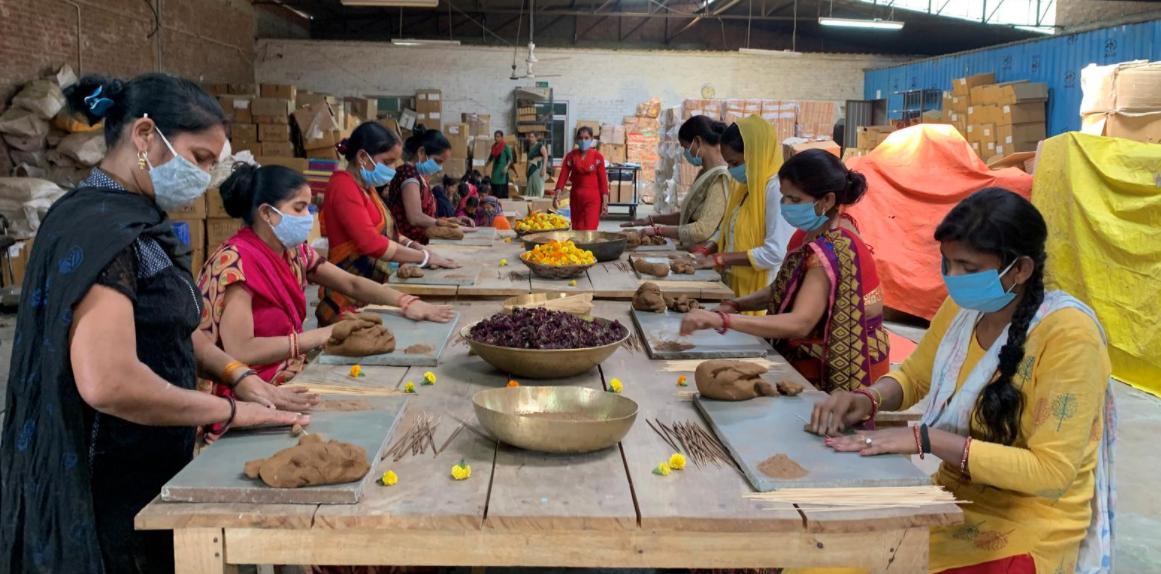
Phool's model offers these women an opportunity to move into more organised employment, learn new skills, and participate in the manufacturing process.
The company provides fixed salaries, health benefits, transportation, and provident fund facilities. Earlier accounts have also highlighted improvements in women's earnings and access to a safer working environment.
This makes the initiative particularly significant. It connects two issues that are often discussed separately: environmental waste management and women's economic empowerment.
A Movement Still Finding Its Way Across India
While Phool has become one of the more recognised names in India's floral-waste recycling space, such organised systems are not yet available everywhere.
Its reported collection network covers 5 prominent temple towns, rather than the entire country. Even within these locations, the existence of a collection network does not mean that every temple or every source of floral waste is covered.
This is an important distinction because the problem extends far beyond a handful of religious centres. India's metropolitan cities, smaller towns, wedding venues, flower markets, and temporary festival grounds generate large quantities of floral waste too.
Collection, transportation, segregation, processing facilities, and a consistent supply of raw material are all necessary to make these initiatives work on a larger scale.
However, Phool is not the only organisation exploring this possibility.
In Hyderabad, a startup called HolyWaste has introduced a process known as Florjuvination. The initiative works with temples, flower vendors, and market areas to collect discarded flowers and convert them into products such as soaps, incense sticks, scented cones, and fertilisers. A 2024 government feature reported that the organisation was collecting floral waste from 40 temples and other sources, processing approximately 1,000 kilograms every week.
Closer to the national capital, Delhi-based entrepreneur Poonam Sehrawat's initiative, Aaruhi, has also been working towards giving floral waste a new purpose. According to the same government feature, the venture collected waste from more than 15 temples in Delhi-NCR, processing around 1,000 kilograms monthly. It has also trained more than 3,000 women to make products from discarded flowers.
There are efforts beyond startups as well. At the Mahakaleshwar Temple in Ujjain, where an estimated 75,000 to 100,000 devotees visit daily, approximately five to six tonnes of floral and religious waste are generated each day.
To manage this, special Pushpanjali Econirmit vehicles collect the offerings and transport them to a processing facility. The flowers are then converted into products such as compost, briquettes, and biofuels. Women associated with the Shiv Arpan Self-Help Group have also been involved in manufacturing incense sticks and other eco-friendly products.
These examples show that floral-waste recycling can take different forms depending on the needs and resources of a particular place. Some initiatives focus on incense and aromatic products, others on composting, biofuels, packaging, or natural materials.
Can Our Festivals Become a Little Greener?
India's festivals are celebrations of abundance. We decorate our homes, light our lamps, prepare elaborate meals, and offer flowers to the divine. These rituals connect generations, preserve cultural traditions, and give communities a sense of belonging.
But perhaps there is room for another kind of celebration, one that considers what happens after the festivities end.
As Diwali approaches, flowers will once again find their way into prayer rooms, temple offerings, and festive decorations. Their fragrance will fill the air, and their petals will become part of countless moments of devotion.
But what happens to those flowers the next morning?
That question deserves as much attention as the rituals themselves.
The answer is simple. We do not have to give up the traditions we love, to make them more sustainable.
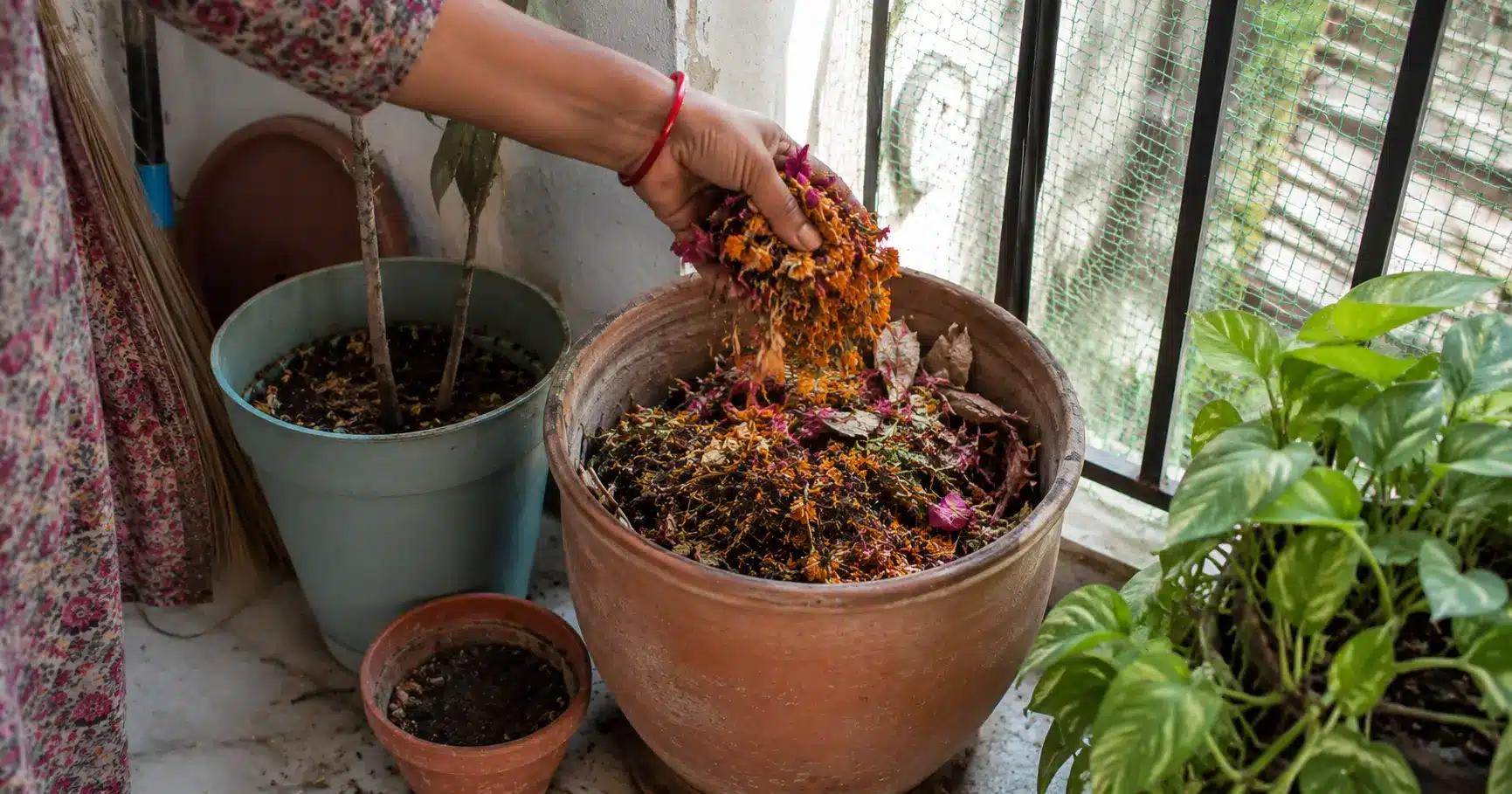
The least we can do is start at home. Once the celebrations are over, we can turn the floral waste into compost for our balcony or home gardens instead of throwing it away.
Our traditions have always taught us to respect nature. Perhaps finding a meaningful use for what remains after our rituals is simply another way of practising that respect.