
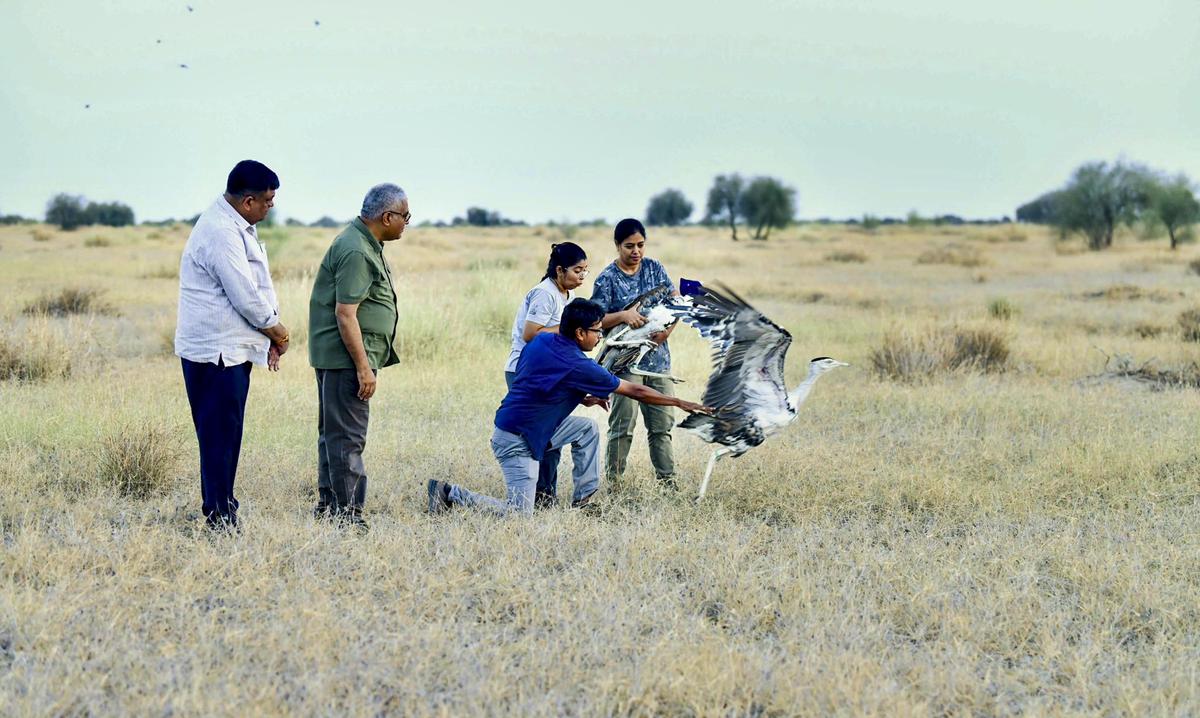

In a landmark moment for Indian wildlife conservation, two captive-bred Great Indian Bustards have been successfully released into the wild. The momentous release took place at the Desert National Park in Jaisalmer, Rajasthan.
A Historic Milestone After an Eight-Year Effort
The historic rewilding marks the culmination of an intensive conservation journey. According to reports, the release follows an eight-year conservation effort aimed at saving the critically endangered bird from the brink of extinction. Union Minister Bhupender Yadav, alongside forest officials, participated in the event, releasing two rare male Great Indian Bustards into their natural desert habitat.
Wildlife experts and conservationists have hailed the event as a major success for the species, which has faced steep population declines over recent decades.
Severe Threats to the Species
Despite the optimism surrounding this recent conservation push, the Great Indian Bustard continues to face immense survival challenges in the wild. According to reports, the species remains critically endangered, with estimates indicating that fewer than 150 birds are believed to remain in the wild.
The birds face severe ongoing threats, primarily driven by:
- Grassland habitat loss
- Fatal collisions with high-voltage power transmission lines
These environmental pressures have made captive-breeding and careful rewilding programs essential components of preventing the total extinction of the species.
Looking Ahead for Bustard Conservation
The successful release of the two male bustards in Jaisalmer establishes a precedent for future rewilding initiatives in India. While details on the long-term monitoring protocol of the newly released birds have not been reported yet, the initiative demonstrates a vital step forward in species recovery programs. Conservationists and authorities hope that continued habitat protection and breeding efforts will help stabilize and eventually grow the fragile wild population.