
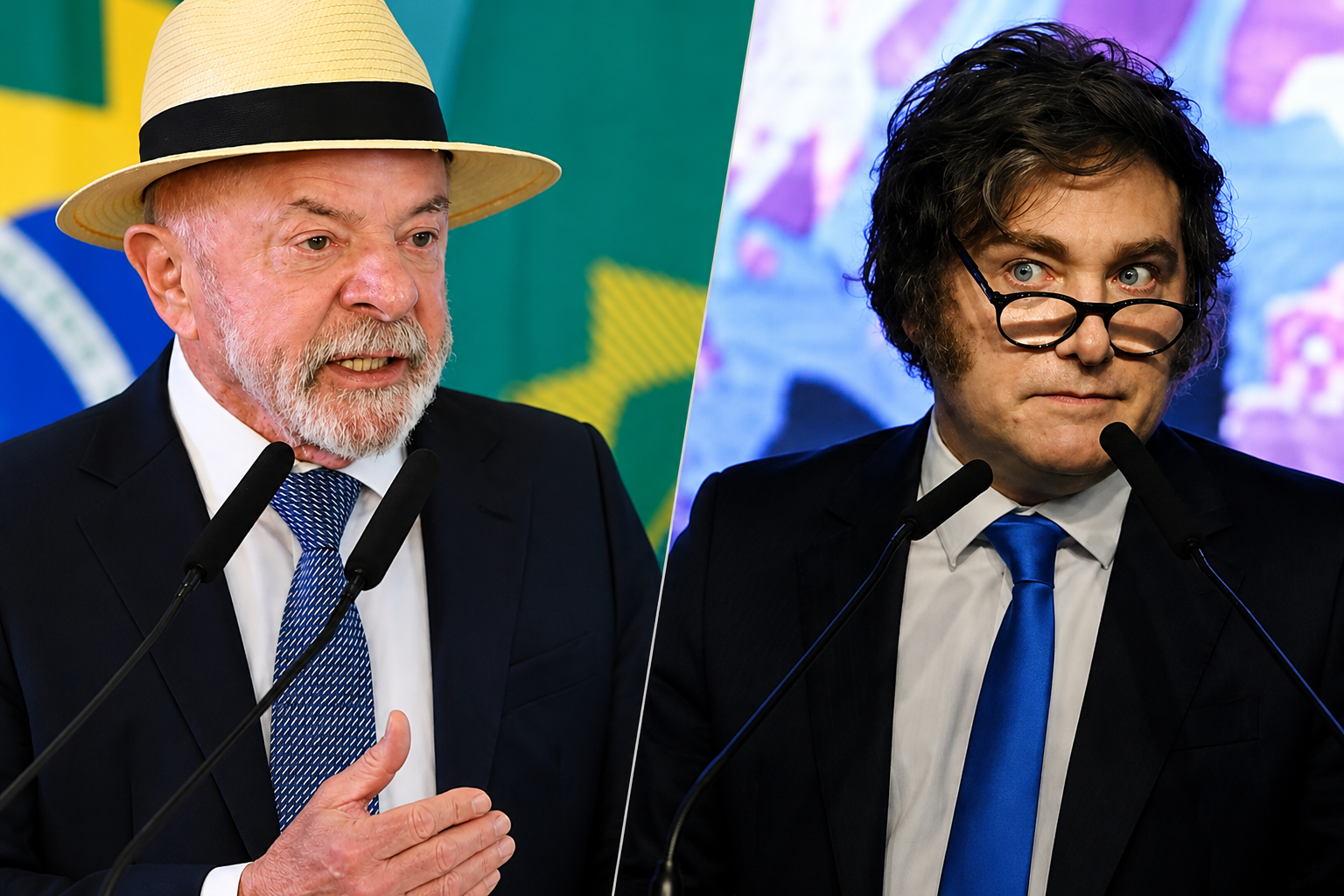

The diplomatic landscape of South America has shifted significantly today, August 5, 2026, as the Brazilian government officially downgraded its diplomatic relations with Argentina. This move, follows a series of inflammatory remarks and insults directed by Argentine President Javier Milei toward his Brazilian counterpart, President Luiz Inácio Lula da Silva.
The deterioration of ties between the continent's two largest economies marks a critical juncture for regional stability. While the neighbors have historically maintained a complex but functional partnership, the current friction represents one of the most severe diplomatic ruptures in recent years, moving beyond mere rhetoric into formal state-level repercussions.
A War of Words Triggers Formal Downgrade
The catalyst for this diplomatic escalation centers on recent public statements made by President Milei. According to reports the Brazilian government decided to act after Milei issued a series of "insults" and "remarks" targeting President Lula. While the specific nature of every comment has not been detailed in all reports, the diplomatic fallout was immediate.
The Brazilian administration viewed these insults as a breach of diplomatic decorum sufficient to warrant a formal reduction in the level of engagement between the two nations. This decision follows a period of increasing tension since Milei took office, during which the ideological divide between the two leaders has frequently spilled over into the public sphere.
Reduction to Chargé d'Affaires Level
The technical nature of the downgrade is significant. Brazil has reduced its diplomatic representation in Argentina to the level of Chargé d'Affaires. This is a formal step in international diplomacy that signifies a lack of a full ambassadorial presence, effectively lowering the priority and the direct line of communication between the two executive branches.
By operating at the level of a Chargé d'Affaires rather than a full Ambassador, Brazil is signaling that regular high-level bilateral cooperation is being suspended or deprioritized. This move serves as a formal protest against the Argentine administration’s recent conduct and suggests that a return to normalized relations will require significant mediation or a change in the current political discourse.
Economic Uncertainty and Regional Impact
The implications of this downgrade extend far beyond the halls of foreign ministries. The move has already cast a shadow of "trade uncertainty" over the region. Brazil and Argentina are primary trading partners within the Mercosur bloc, and a breakdown in diplomatic channels threatens to disrupt established economic agreements and supply chains.
Furthermore, the crisis may not be isolated to the Southern Cone. This conflict arises within a broader context of diplomatic friction, noting that Brazil is currently navigating a complex diplomatic landscape that includes tensions with both Argentina and the United States. The potential for a regional ripple effect is high, as other South American nations may be forced to navigate the fallout of this rift between the continent’s economic powerhouses.
With trade interests at stake and regional cooperation hanging in the balance, the international community continues to monitor whether this downgrade is a temporary measure or the beginning of a prolonged period of isolation between Brasilia and Buenos Aires.