
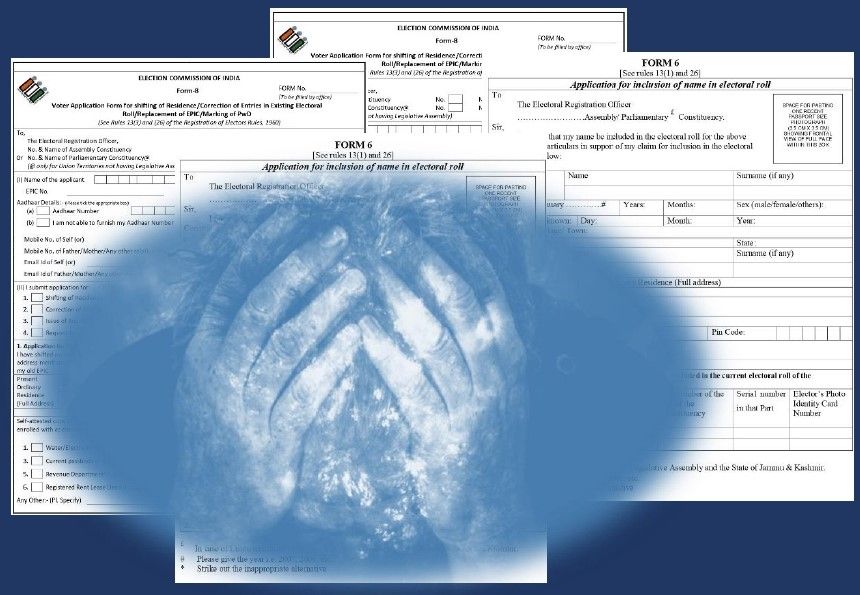
New Delhi: They signed up to verify names on a voter list, not to die for it. Yet across Bengal and Kerala, stories are emerging of booth level officers (BLOS) allegedly crumbling under the brutal pressure of the Special Intensive Revision (SIR). Some have reportedly collapsed during field duties, others have taken their own lives, and dozens face suspension, threats and FIRs. A voter roll clean-up that should have been a routine administrative exercise has turned into a high-stakes political battlefield, and the spark now threatens to explode into a major poll issue.
A straightforward revision of electoral rolls has now become a flashpoint capable of reshaping voter sentiment itself. In an era when every election is tightly contested and every constituency is politically charged, anything that affects voter inclusion immediately takes on outsized importance. The Election Commission’s decision to compress SIR deadlines — giving BLOs only weeks to verify thousands of voters across scattered and diverse communities — has had ripple effects beyond the administrative domain. It has put lives under strain, eroded institutional trust, and created fertile ground for political confrontation.
In West Bengal and Kerala, the electoral stakes have always been high. The political landscape is deeply polarised, grassroots activism is intense, and party cadres are highly organised. Against this backdrop, the SIR controversy has slipped quickly into mainstream political rhetoric. In public meetings, op-eds, televised debates, and now campaign messaging, opposition parties portray the exercise as nothing short of a project to alter electoral outcomes before the first vote is even cast. Whether the allegations are fully provable or not, they resonate because many BLOs themselves have begun speaking openly about the pressure, punitive directives, and unmanageable workloads they face.
Teachers’ unions, education workers’ organisations, and clerical associations — whose members make up the bulk of BLO personnel — have now joined the resistance. They argue that no administrative objective, no matter how important, justifies forcing officials into exhausting and unsafe work conditions. Reports have surfaced of BLOs being denied leave during family medical emergencies, being threatened with wage cuts, and being verbally harassed by supervisors tasked with enforcing deadlines. The message trickling down the chain is unmistakable: complete the revision at any cost. Unfortunately, it is BLOs who are paying that cost.
Deeply Sensitive & Risky
The core technical task of SIR is deceptively simple: delete the names of the deceased or permanently relocated, and add the names of newly eligible citizens. In principle, it is a cleansing mechanism that keeps election rolls accurate. In practice, it is complex, slow, and deeply sensitive. Every deletion carries the risk of an error. Every addition carries the risk of scrutiny. And every delay carries the risk of administrative reprimand. When the timeline is artificially shortened, the space for accuracy shrinks drastically. West Bengal and Kerala have both witnessed high rates of migration, constantly shifting workforces, and densely populated neighbourhoods. Factors that make door-to-door verification lengthy and labour-intensive.
The stakes rise even higher when political identity is interwoven with demographics. Opposition parties allege that the SIR process is being indirectly weaponised to restructure the electorate itself — adding supportive blocs while erasing communities traditionally leaning toward rivals. In West Bengal, this takes the form of accusations of “targeted deletions” in minority-dominated neighbourhoods and migrant-heavy urban areas. In Kerala, the spotlight falls on regions where youth turnout has historically benefited certain parties. The Election Commission has repeatedly denied partisan intent. However, the refusal to publish voter-level addition and deletion data prevents independent verification and feeds public suspicion.
The lack of granular transparency is arguably the single largest driver of the crisis. Without full access to names added and names removed, voters cannot defend their own inclusion, parties cannot track discrepancies, and civil society cannot audit the process. The gap between official assurances and public visibility widens further with every passing week, creating a perception that something is being hidden, even if that perception is not always rooted in fact. A democracy where citizens trust the system depends on information being visible, not withheld.
Imbalance of Political Strength
The controversy also highlights a major imbalance of political strength. Large parties with extensive grassroots machinery are able to deploy volunteers to ensure voters remain on rolls, assist in documentation, and mount legal challenges if necessary. Smaller parties lack these capabilities, and independent candidates have no organisational network at all. In effect, flawed SSR implementation hampers some political actors while shielding others. That asymmetry, if left unaddressed, could change the competitive nature of elections themselves, not by persuasion or campaigning, but through voter list engineering.
Meanwhile, ordinary citizens are being drawn into a process they never expected to confront. Many first realise something is wrong only when BLOs appear at their doorstep with questions about age, address, property documents, or family records. Elderly and low-income residents are particularly vulnerable, unable to promptly produce required documents, unsure of bureaucratic protocols, or unaware of deadlines altogether. A new anxiety has quietly entered the public sphere: Will my vote still exist?
Where voting was once treated as a natural right, SIR has made it feel precarious. The psychological shift is significant. When voters begin to question whether the system wants them included, the emotional bond between citizen and democracy weakens. Those anxieties multiply when news circulates of BLO suicides, mass suspensions, and wrongful deletions. Elections are as much emotional events as institutional ones. The SIR saga is tugging emotions in a dangerous direction.
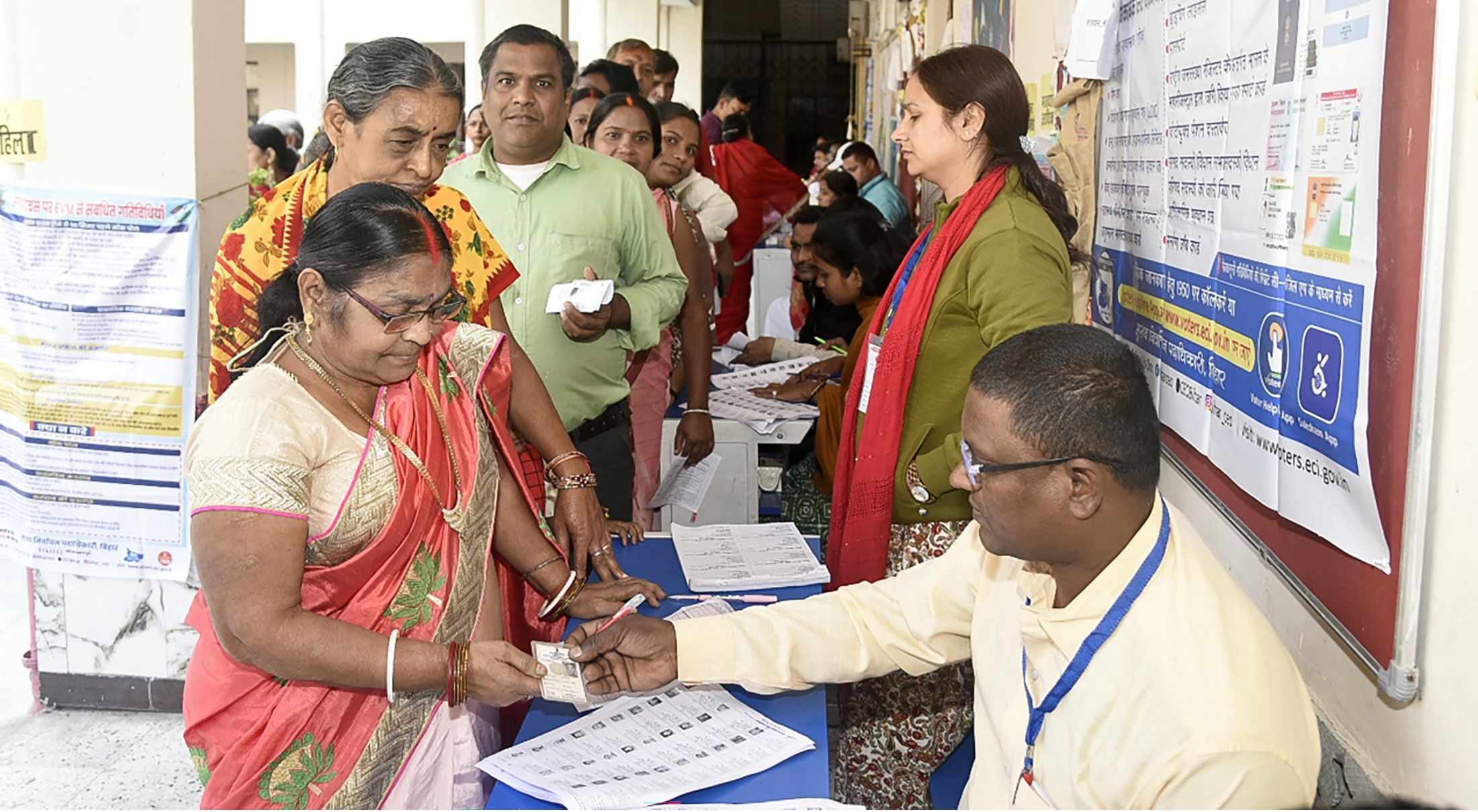
Bihar had 7.89 crore electors. During the voter list revision, roughly 65 lakh names were removed. Subsequently, another 3.66 lakh ineligible voters were deleted, while 21.53 lakh eligible electors were added.
In West Bengal, early indications suggest SIR could become a major campaign issue, especially if large numbers of voters find themselves missing from rolls during final lists. Kerala, with its tradition of labour-led mobilization, may see widespread public demonstrations by BLOs and education workers if punitive actions escalate. In both states, the emerging narrative is not merely bureaucratic. It is moral: a system that pressures public servants beyond endurance and risks disenfranchising citizens is a system in crisis.
Fixing the crisis requires more than extending deadlines. Transparency must become non-negotiable. Voter-level data must be published, objection processes must be simplified, and technology must be used without excluding those who are not digitally literate. BLOs need support, safety, and training… not threats. Above all, voter rights must be placed above administrative targets. Democracies fail not only when elections are rigged, but also when they are rushed.
The SIR will be remembered in one of two ways: As a moment when authorities course-corrected to protect the sanctity of the vote, or as a moment when institutional decisions spiralled into humanitarian and political backlash. With elections looming, West Bengal and Kerala may serve as the testing grounds for which path India chooses.