
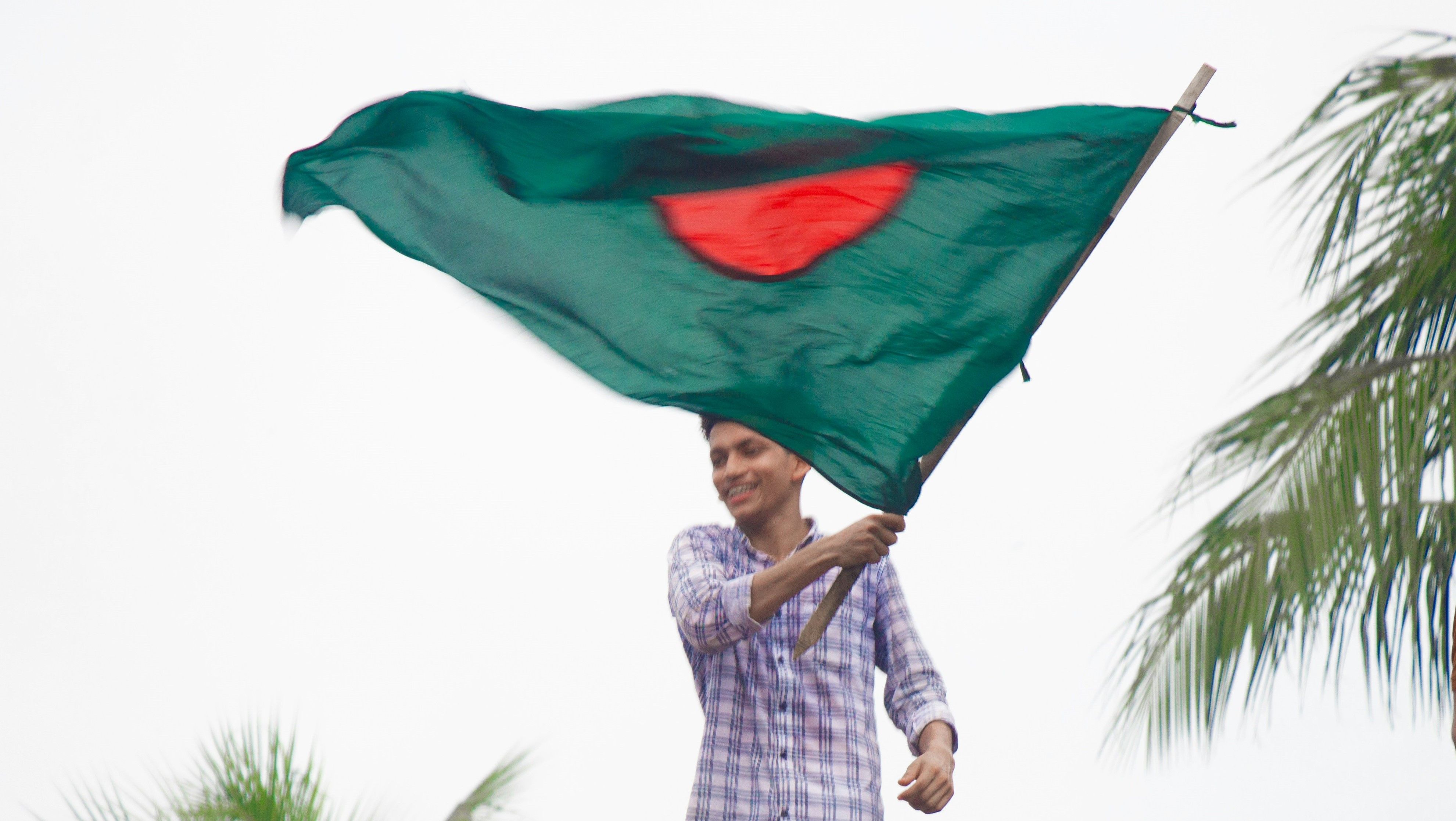

New Delhi: Bangladesh votes on Thursday in a high-stakes parliamentary election that will decide the composition of the 300-member Jatiya Sangsad (National Parliament) and shape the country’s political direction after last year’s mass uprising. The Awami League, led by ousted Prime Minister Sheikh Hasina, is not contesting, making this the first national vote in years without the party that has dominated Bangladeshi politics for over a decade.
The main contest is expected to be a tight, bipolar fight between the Bangladesh Nationalist Party (BNP)-led alliance and an 11-party bloc headed by Jamaat-e-Islami. The bloc also includes the National Citizen Party, formed by student leaders who led the protests that toppled Hasina.
Alongside the general election, voters will decide on a constitutional ‘July Charter’ referendum proposing a two-term limit for the Prime Minister, creation of an Upper House, and a stronger emphasis on Bangladeshi identity.
For India, the outcome carries significant strategic weight. New Delhi, somewhat wrong-footed by Hasina’s ouster, has since stepped up engagement with the BNP, calculating that a BNP-led government may offer the most viable path to stability.
Security cooperation will top India’s agenda — preventing northeastern insurgents from using Bangladeshi soil, checking Pakistani and Chinese influence, and ensuring protection of the Hindu minority. Trade transit, border issues, and the sensitive question of Hasina’s extradition could further test ties.
OVERVIEW OF THE POLLS
- Political Context
Bangladesh conducts national parliamentary elections to elect representatives to the Jatiya Sangsad (National Parliament), the country’s unicameral legislature. In recent years, these elections have gained exceptional significance due to major political developments, including mass public protests, leadership transitions, and institutional reforms.
The political climate has been shaped by widespread civic activism, including strong participation from student groups and youth movements. These events led to the formation of an interim administrative arrangement tasked with overseeing governance and ensuring the conduct of national elections. The electoral process is therefore viewed not merely as a routine democratic exercise, but as a defining moment in Bangladesh’s political evolution and democratic credibility.
- Parliament Structure
Bangladesh follows a parliamentary system of government with a single legislative chamber comprising 350 seats. Of these:
300 members are directly elected from individual constituencies under the first-past-the-post (FPTP) system, where the candidate receiving the highest number of votes wins the seat.
50 seats are reserved for women, allocated proportionally to political parties based on their performance in the 300 directly contested seats.
To form a government, a political party or coalition must secure at least 151 seats, which represents a simple majority. Once results are finalized, the President invites the leader of the majority party or coalition to form the government and assume the office of Prime Minister.
Voting takes place across thousands of polling centres nationwide, with the Election Commission responsible for overseeing voter registration, ballot management, and result declaration.
- Voter Demographics
Bangladesh has one of the largest electorates in the world, with over 100 million registered voters eligible to participate. All citizens aged 18 years and above have the right to vote.
A significant portion of the electorate consists of young voters, many of whom have become increasingly politically aware and active. Youth engagement, digital platforms, and social media have played a growing role in shaping political discussions and influencing public opinion.
Efforts have also been made to enhance inclusivity in the voting process, including mechanisms that allow participation from Bangladeshis residing abroad.
- Major Political Parties & Alliances
Bangladesh’s political landscape has traditionally been dominated by two major parties, though smaller parties and alliances also play meaningful roles.
The Bangladesh Nationalist Party (BNP) positions itself as a nationalist and centre-right political force, drawing support from rural communities, segments of the working class, and various urban groups. Its leadership has experienced political challenges and periods of restricted participation, yet it remains a central actor in national politics.
The Awami League, historically one of the most influential political organizations in the country, has governed for extended periods in the past. Its tenure has generated both strong support and significant criticism, particularly regarding governance standards and political freedoms. Its role and participation in recent elections have been subjects of intense national debate. This time, the party is banned from contesting the elections
Jamaat-e-Islami and allied groups represent a religiously oriented political ideology. After periods of restriction, the party has regained political visibility. Its policy platform emphasizes religion-influenced governance, which has sparked national conversations about secularism, minority rights, and gender equality.
In addition to these major parties, Bangladesh includes several smaller political organizations — such as factions of the Jatiya Party, left-leaning groups, labour-based parties, and agrarian movements — which sometimes operate independently and sometimes form alliances with larger blocs.
- Core Poll Issues
Economic Conditions:
Economic performance has been a dominant election issue. Although Bangladesh experienced strong growth in previous years, recent challenges such as inflation, employment pressures, and export-sector instability have influenced voter priorities. The garment industry, a backbone of the national economy, has faced both domestic and global economic pressures.
Democratic Governance and Institutional Integrity:
This election is widely perceived as a measure of the strength and credibility of Bangladesh’s democratic institutions. Public discussions focus on electoral transparency, fairness in political competition, the independence of institutions, and the effectiveness of the interim governance arrangement.
Civil Liberties and Social Policy:
Key debates involve women’s rights, minority protections, freedom of the press, and freedom of expression. Competing political visions range from secular governance frameworks to policies more closely aligned with religious principles.
Law, Order, and Political Stability:
Periods of political tension have led to security concerns in certain regions. Authorities have implemented security measures to maintain order during the electoral period, aiming to ensure peaceful voting conditions.
- Regional & International Significance
Bangladesh holds strategic importance in South Asia due to its geographic position, economic growth, and regional partnerships. The outcome of its national elections can influence diplomatic and trade relations with neighbouring countries such as India and China, as well as broader global partners.
International observers, foreign governments, and global policy institutions closely monitor Bangladesh’s elections, recognizing their potential impact on regional stability, economic cooperation, and geopolitical alignment.