
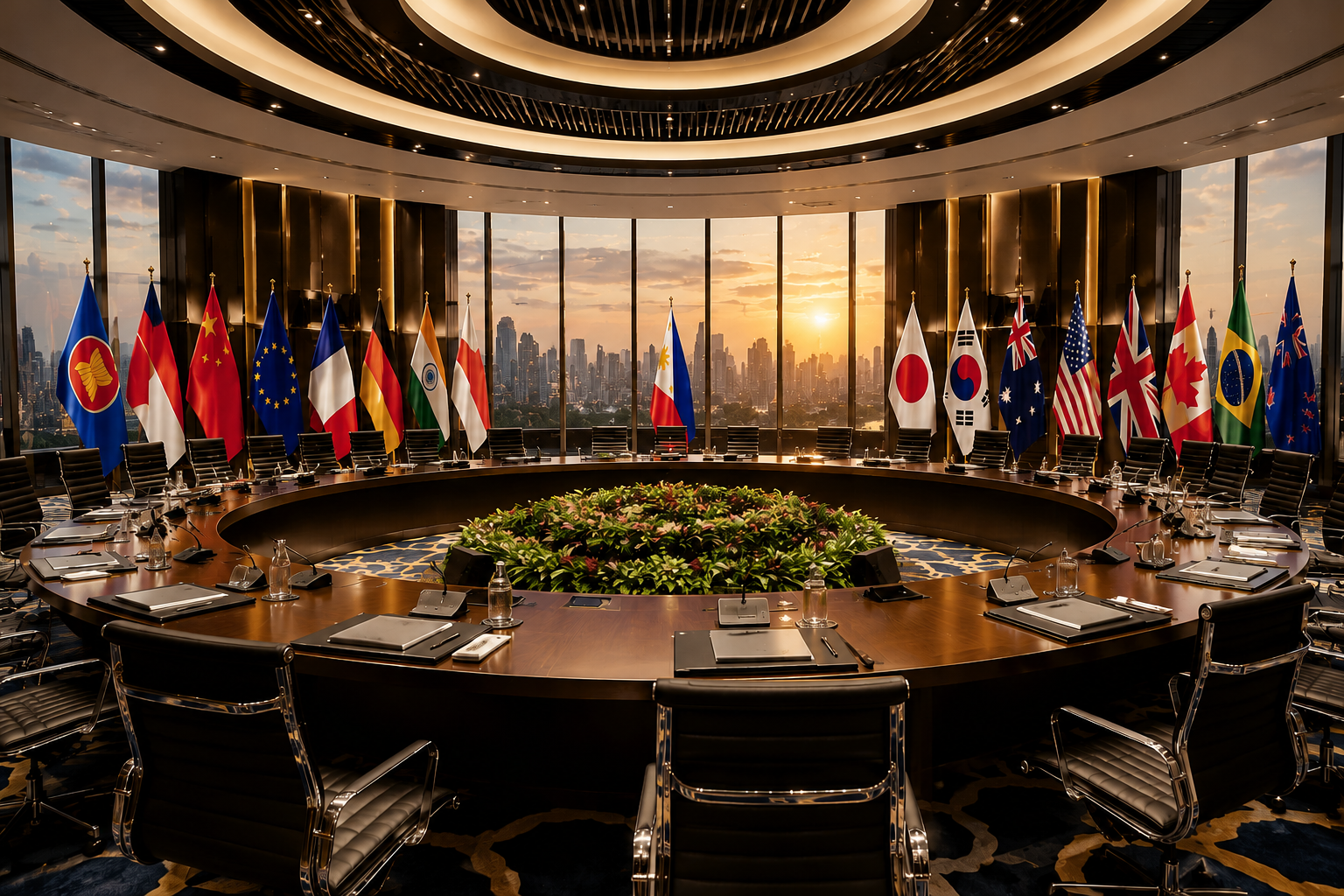

The Association of Southeast Asian Nations (ASEAN) Foreign Ministers’ meeting opened in Manila this week against a backdrop of escalating maritime disputes and a precarious global security environment. As of July 22, 2026, the summit has transitioned from a regional coordination exercise into a focal point for global power brokerage, as top diplomats from the United States and China arrive to address both local frictions and the spillover effects of instability in the Middle East.
According to reports, the meeting commenced with a call for regional unity. However, that unity is being tested by immediate security concerns in the West Philippine Sea and the shifting priorities of external partners who are increasingly distracted by conflicts elsewhere.
High-Level Diplomacy: The Rubio-Wang Yi Meeting
A primary focus of today’s proceedings is the scheduled dialogue between U.S. representatives and Chinese Foreign Minister Wang Yi. Marco Rubio is set to hold talks with Wang Yi as regional powers join the ASEAN ministerial gathering. This meeting is viewed as a critical attempt to manage the bilateral relationship at a time when Indo-Pacific risks are being on the rise.
The presence of both superpowers in Manila underscores the strategic importance of the ASEAN bloc. While the U.S. seeks to reassure its allies of its commitment to the region, China’s Wang Yi arrived in the capital following a meeting between the Philippine president and Chinese Ambassador Jing Quan, according to reports from July 21. These diplomatic maneuvers are occurring as the Quad Foreign Ministers also hold concurrent discussions regarding regional stability.
Security Partnerships and the South China Sea
Regional tensions have reached a fever pitch following recent maritime confrontations. The friction between China and the Philippines has intensified significantly after a recent clash in the South China Sea. In response to these developments, ASEAN ministers are once again pushing for progress on a South China Sea Code of Conduct (CoC), a long-delayed framework intended to prevent armed conflict in the disputed waters.
Amid these tensions, bilateral security arrangements are also deepening. Japan and the Philippines are strengthening their security partnership to counter regional threats. This move is part of a broader trend of ASEAN members seeking external security guarantees as the effectiveness of multilateral regional frameworks is put to the test.
Global Volatility and the Middle East Shadow
While maritime disputes dominate the local agenda, the summit is increasingly overshadowed by external crises. South Korea is moving to deepen its ties with ASEAN even as tensions in the Middle East continue to rise. The volatility in the Middle East has introduced a new layer of complexity to the summit, as ministers weigh the impact of global energy disruptions and shifting diplomatic focus on Southeast Asian interests.
As the Manila meetings conclude, the central challenge remains whether ASEAN can maintain its "centrality" in regional affairs. With the U.S. and China utilizing the summit as a venue for high-stakes negotiation and regional actors like Japan and South Korea recalibrating their roles, the push for a cohesive regional response to both the South China Sea and global instability remains a work in progress.