

New Delhi: Bangladesh’s national elections on February 12 are less a democratic milestone than the aftershock of a prolonged blood-smeared political rupture. What should have been a smooth and predictable transfer of power has instead become a referendum on state authority, legitimacy, and the country’s geopolitical direction.
Years of disputed elections, recurring street protests, and growing strain on state institutions had eroded public trust well before the present crisis in Bangladesh. The removal of Sheikh Hasina from the centre of power did not resolve these tensions; it merely exposed how dependent Bangladesh’s political equilibrium had become on a single axis of rule. The interim stewardship under Muhammad Yunus has been framed internationally as a corrective pause, but domestically and regionally it has intensified uncertainty rather than reduce it.
For India, this election carries consequences that go well beyond the normative concerns about democracy. New Delhi has long treated Bangladesh as one of its foreign policy successes in South Asia: a neighbour with whom borders were settled, insurgencies neutralized, and connectivity steadily expanded. That comfort has evaporated.
The political churn in Dhaka has forced India into an uncharacteristically reactive posture, watching from the sidelines as familiar interlocutors disappear and unfamiliar ones test the waters. The return of Jamaat-e-Islami to the political conversation, and its newfound effort to appear India-friendly, is a symptom of this flux rather than an aberration.
The central question surrounding this election is therefore not simply who will win, but what kind of political order will emerge afterward. Will Bangladesh return to a stable, India-compatible trajectory, or will it enter a prolonged phase of ideological bargaining and external balancing? The answer matters because the election is unfolding at a moment when South Asia’s strategic margins are narrowing, and ambiguity in Dhaka directly translates into anxiety in New Delhi.
Diplomatic Comfort Zone
India’s relationship with Bangladesh over the past decade rested on a simple, if uncomfortable, truth: predictability mattered more than pluralism. Under Sheikh Hasina, New Delhi enjoyed a level of strategic assurance unmatched since 1971. Counter-terrorism cooperation was robust, anti-India insurgent networks were dismantled, and the long-troubled Northeastern Corridor found reliable access through Bangladeshi territory. Disputes existed, particularly over water-sharing and trade imbalances, but they were managed within a framework of mutual political trust. For India, Dhaka under Hasina was a known quantity.
That diplomatic comfort zone collapsed with her exit. The Yunus-led interim arrangement may enjoy international approbation, particularly from Western capitals eager to see technocratic neutrality restored, but for India it represents a vacuum rather than a bridge. Yunus commands moral authority abroad, not political control at home. His government is designed to oversee a transition, not to enforce a strategic direction, and this distinction is critical. India’s concern is not with Yunus as an individual, but with the fragility of an interim structure that lacks deep institutional loyalty.
This fragility has forced New Delhi into a careful balancing act. Overt support risks accusations of interference, while excessive distance invites strategic drift. Meanwhile, other actors are less constrained. China continues to signal economic readiness without political conditionality, and Islamist groups see opportunity in a diluted centre. India’s long-standing habit of leader-centric diplomacy has suddenly become a liability, leaving it exposed in a political environment where alliances are fluid and ideological actors are resurgent.
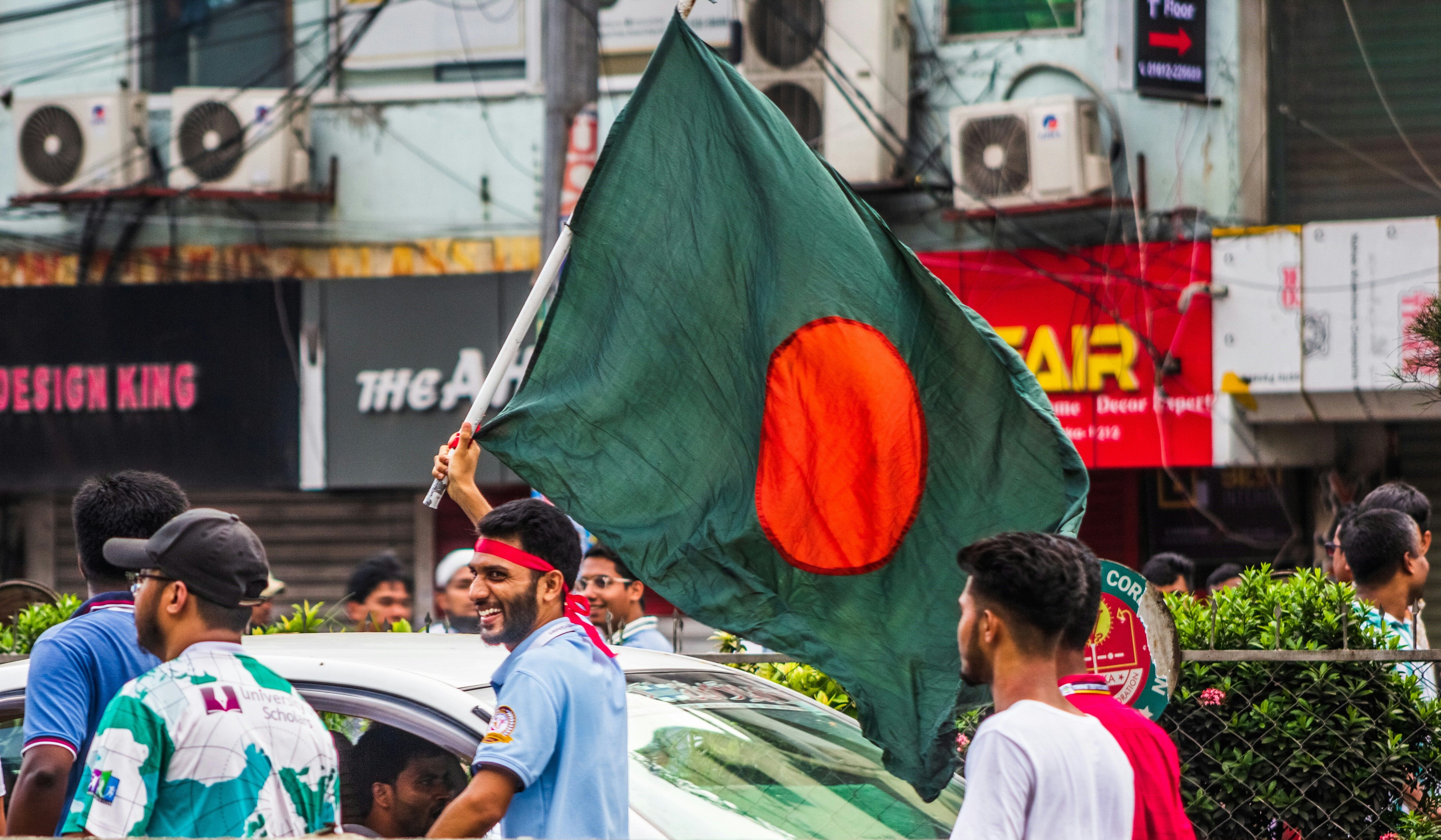
The road to these elections has only deepened these anxieties. Delays, procedural disputes, and street-level volatility have reinforced the impression of a polity struggling to regain coherence. From an Indian perspective, the fear is not that Bangladesh will turn overtly hostile, but that it will become indecisive — unable to resist internal pressures that undermine regional security commitments. Stability, not sentiment, remains India’s overriding priority, and the interim phase has delivered precious little of it.
Jamaat’s Recalibration
Perhaps the most striking development in this pre-election landscape is Jamaat-e-Islami’s attempt to rebrand itself as a responsible, regionally pragmatic actor. Long marginalized due to its 1971 legacy and subsequent bans, Jamaat now senses an opening created by the weakening of established parties and the absence of a dominant authority. Its outreach towards India, subtle but unmistakable, marks a departure from decades of ideological hostility.
This recalibration, however, is less a transformation than a tactical manoeuvre. Jamaat’s leadership understands that no government in Dhaka can function sustainably while antagonizing India. Its softened rhetoric on sovereignty, militancy, and bilateral engagement is designed to reassure New Delhi that a Jamaat-influenced political arrangement would not automatically translate into strategic confrontation. The message is clear: Jamaat wants legitimacy, and India is an unavoidable gatekeeper.
From an Indian standpoint, this outreach must be viewed with deep skepticism. Jamaat’s ideological foundations have not been dismantled; they have merely been repackaged. Its grassroots base retains a strong anti-India sentiment, shaped by decades of nationalist and religious messaging. The party’s current pragmatism is contingent, not principled, and tied to immediate political rehabilitation rather than long-term strategic alignment.
Engagement with Jamaat thus presents India with a dilemma. Ignoring it entirely risks pushing the group toward more overtly adversarial postures and external patrons. Engaging it uncritically risks legitimizing forces that have historically undermined Bangladesh’s secular fabric and regional security.
The prudent path lies somewhere in between: signalling openness to dialogue while maintaining firm red lines on extremism, cross-border militancy, and constitutional order. Jamaat’s courtship of India should be read as evidence of India’s enduring leverage, not as proof of ideological convergence.
What India Must Prepare For
Predicting the precise outcome of Bangladesh’s election is a fool’s errand, but outlining its strategic implications is not. The trajectory points toward a fragmented political settlement, with no single force positioned to secure decisive control. Possible scenarios include a BNP-led coalition reliant on smaller partners, a bloc augmented by the renewed organizational reach of Jamaat-e-Islami, or an extended period of institutional impasse that de facto prolongs interim governance arrangements. None of these scenarios offers India the clarity it once enjoyed.
A coalition government dependent on Islamist support would constrain Dhaka’s foreign policy flexibility, even if its leadership adopts conciliatory tones toward New Delhi. Domestic pressures could easily override diplomatic assurances, particularly on issues like border management and minority rights. A prolonged stalemate, meanwhile, would invite external influence and internal radicalization, eroding the institutional cooperation India relies upon to secure its eastern flank.
The greatest risk for India is not an unfriendly Bangladesh, but an unstable one. Strategic uncertainty in Dhaka complicates everything from counter-insurgency coordination to regional connectivity projects linking India’s northeast to Southeast Asia. It also weakens India’s broader argument that it can offer reliable, non-coercive leadership in South Asia.
The national elections, then, should serve as a wake-up call for Indian diplomacy. The era of over-reliance on individual leaders is over. New Delhi would have to invest in broader political engagement, cultivate institutional relationships beyond ruling parties, and articulate its red lines with greater clarity.
Bangladesh will remain a vital neighbour regardless of who governs it, but the nature of that relationship will depend on whether pragmatism or ideological opportunism prevails after the ballots are counted. For India, preparedness — not preference — will determine whether this turbulent moment becomes a strategic setback or a recalibrated beginning.