

New Delhi: India’s retail inflation accelerated to a 13-month high in April, driven by rising food, energy and services costs as the economic fallout of the West Asia conflict began feeding deeper into domestic prices, raising fresh concerns over the Reserve Bank of India’s inflation trajectory and policy outlook.
Provisional data released by the Ministry of Statistics and Programme Implementation on Tuesday (May 12) showed retail inflation, measured by the Consumer Price Index (CPI), rose to 3.48% in April from 3.40% in March. While the reading remained below the RBI’s medium-term inflation target of 4%, it signalled a steady hardening in price pressures across key consumption categories.
Incidentally, the April print marked the highest inflation reading since the government introduced the revised CPI series in January with 2024 as the ‘base year’. Retail inflation under the new series stood at a revised 2.74% in January, before rising to 3.21% in February and 3.40% in March. (The latest data cannot be directly compared with year-ago levels because of the rebasing of the index basket.)
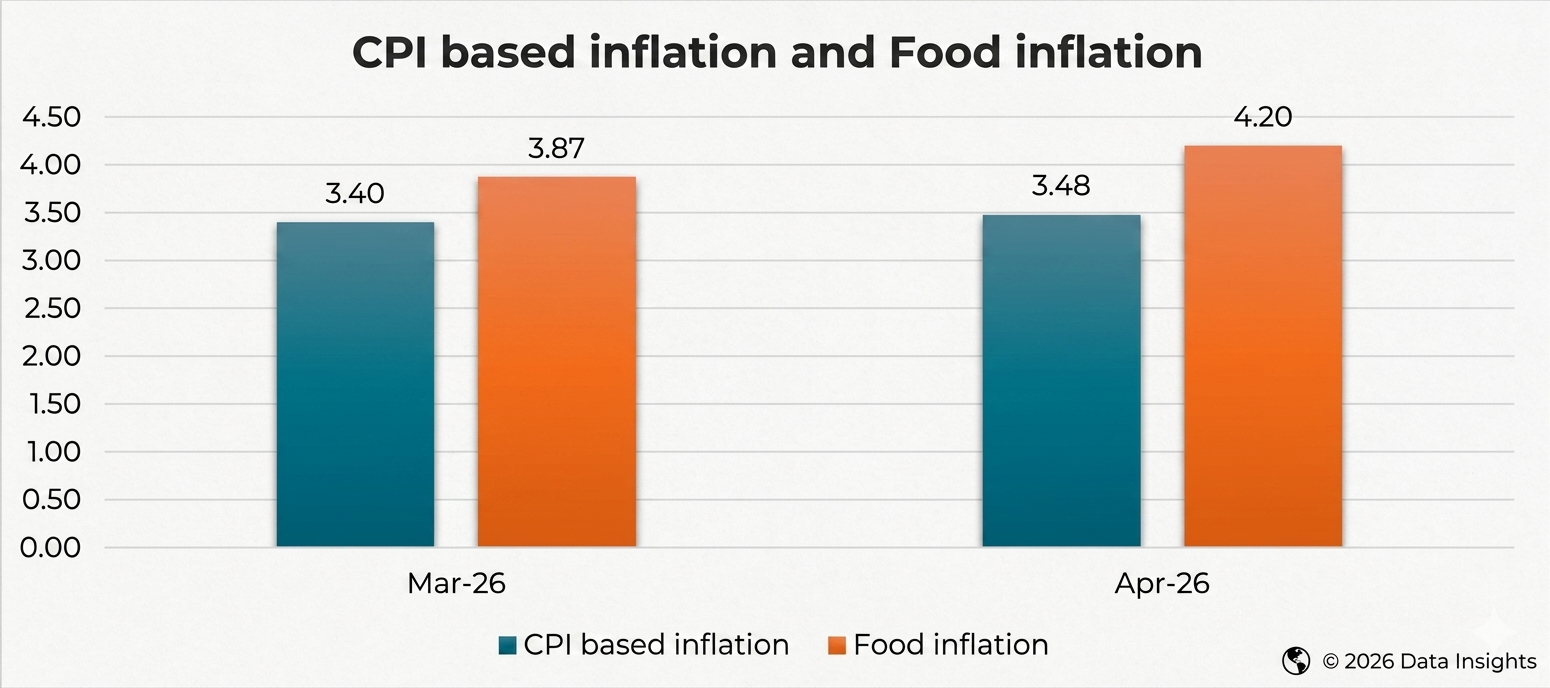
Food inflation, a major component of the CPI basket, rose to 4.20% in April from 3.87% in March, reflecting increasing pressure on household budgets amid firming prices of essential commodities. Inflation in housing also edged up to 2.15% in April from 2.11% earlier.
Onion, peas, motor cars and air-conditioners remained among items registering low inflation. Alongside vegetables such as tomato, cauliflower and coconut copra, the prices of silver, gold, diamond and platinum jewellery emerged among the strongest inflation drivers during the month.
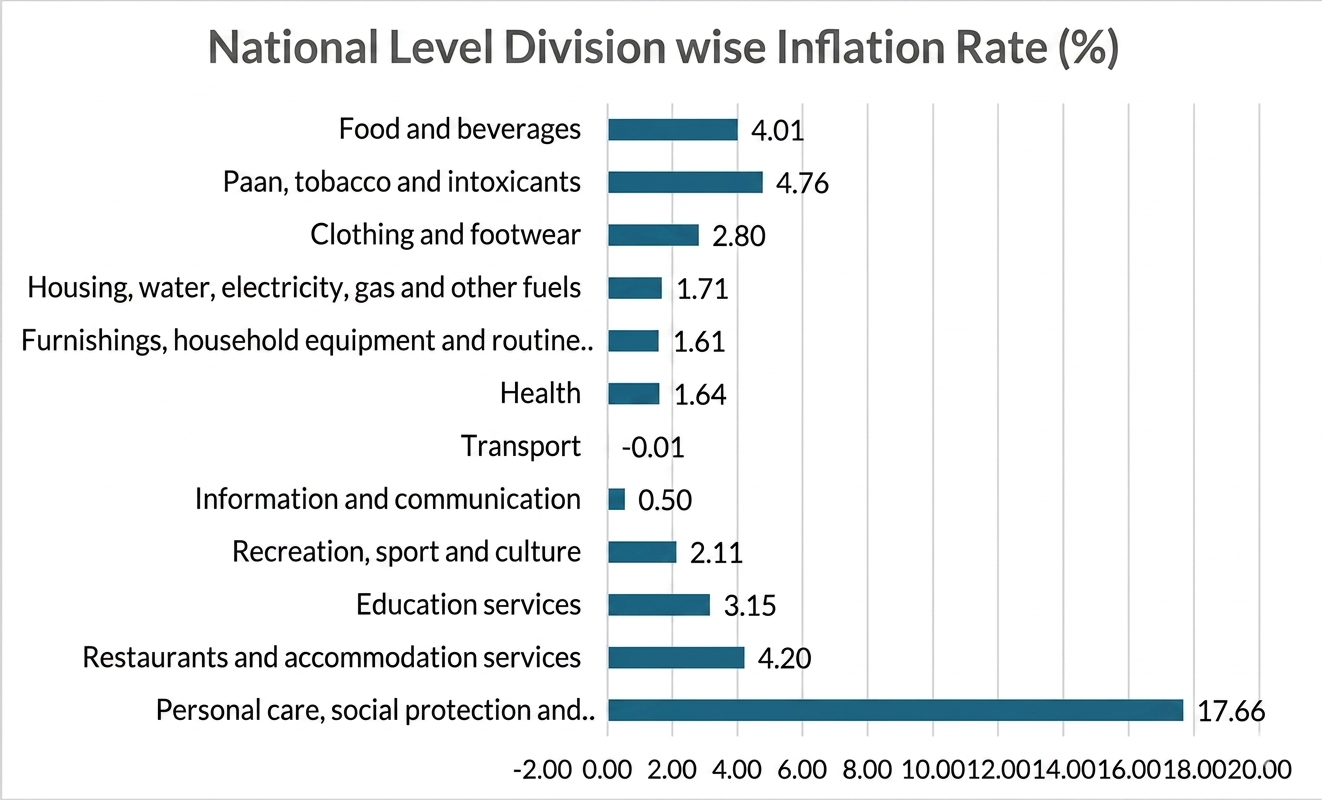
Personal care, social protection and miscellaneous goods and services recorded the sharpest inflationary impact among major groups at 17.66%, while inflation in transport services for goods rose to 7.60%, underscoring the impact of elevated fuel and logistics costs.
The inflationary trend comes against the backdrop of a sharp rise in global crude prices as geopolitical tensions in West Asia continue to disrupt energy markets. Brent crude has traded above $100 a barrel for much of the past two months, intensifying concerns over India’s import bill, current account deficit and broader macroeconomic stability.
The pressure is already visible in currency markets. The rupee weakened to a fresh record low against the US dollar earlier on Tuesday (May 12) amid mounting worries over rising energy imports and external-sector vulnerabilities.
Aditi Nayar, Chief Economist at credit rating agency Icra, says, “The sequential uptick in the YoY inflation print in April 2026 vis-a-vis March 2026 was largely driven by the F&B segment, even as core inflation remained steady between these months. The available data suggests that the YoY inflation rates have hardened across most food items during early-May 2026 vis-à-vis April 2026, amid erratic weather conditions and supply disruptions. ICRA expects the YoY inflation in the F&B segment to inch up further to ~4.5% in May 2026.”
The global energy shock is now transmitting into domestic industrial and household fuel prices. “The global energy price shock triggered transmission into commercial LPG cylinder prices and other industrial fuels. This, along with upward revisions in the prices of aviation turbine fuel and premium petrol and diesel prices, is likely to see a full pass-through to the CPI print for May, exerting upward pressure on various items, including LPG cylinders, piped natural gas airfares and restaurants,” she said.
“Overall, we expect the YoY CPI inflation to harden to ~4.1 % in May 2026 from 3.5% in April 2026, around the mid-point of the RBI Monetary Policy Committee’s medium term target range of 2-6%. As a result, we expect the MPC to remain on hold during the June 2026 policy review.”
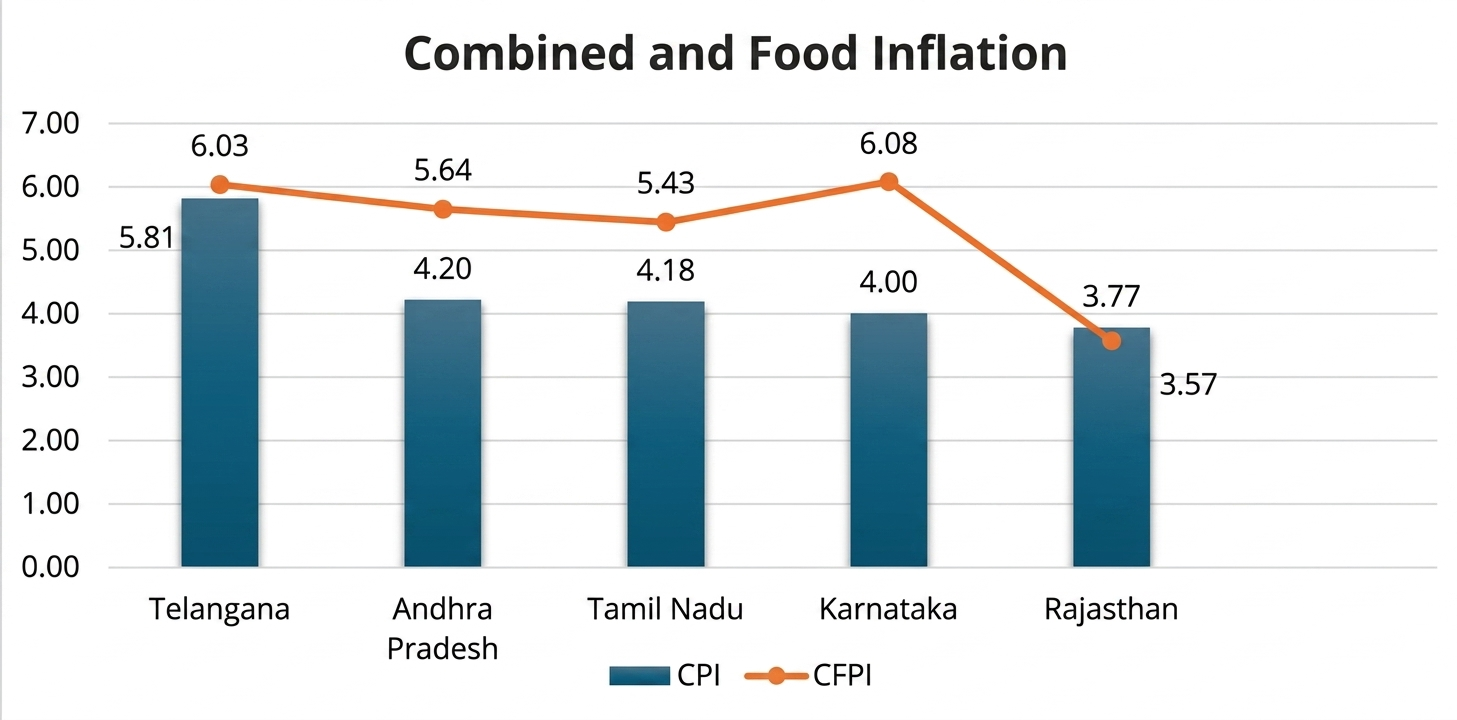
Regional disparities in inflation also widened in April. Inflation was highest across southern states including Andhra Pradesh, Telangana, Tamil Nadu and Karnataka, while Delhi, Mizoram and Chhattisgarh recorded the lowest inflation levels.
The broader inflation debate has also coincided with growing government focus on fuel conservation and external-sector management. Prime Minister Narendra Modi has urged citizens to conserve fuel, avoid unnecessary foreign travel and defer discretionary gold purchases amid heightened global uncertainty.
While the government has not directly linked those remarks to inflation risks, economists said sustained crude oil spikes combined with rupee weakness historically exert pressure on inflation, foreign exchange reserves and India’s overall import bill.