
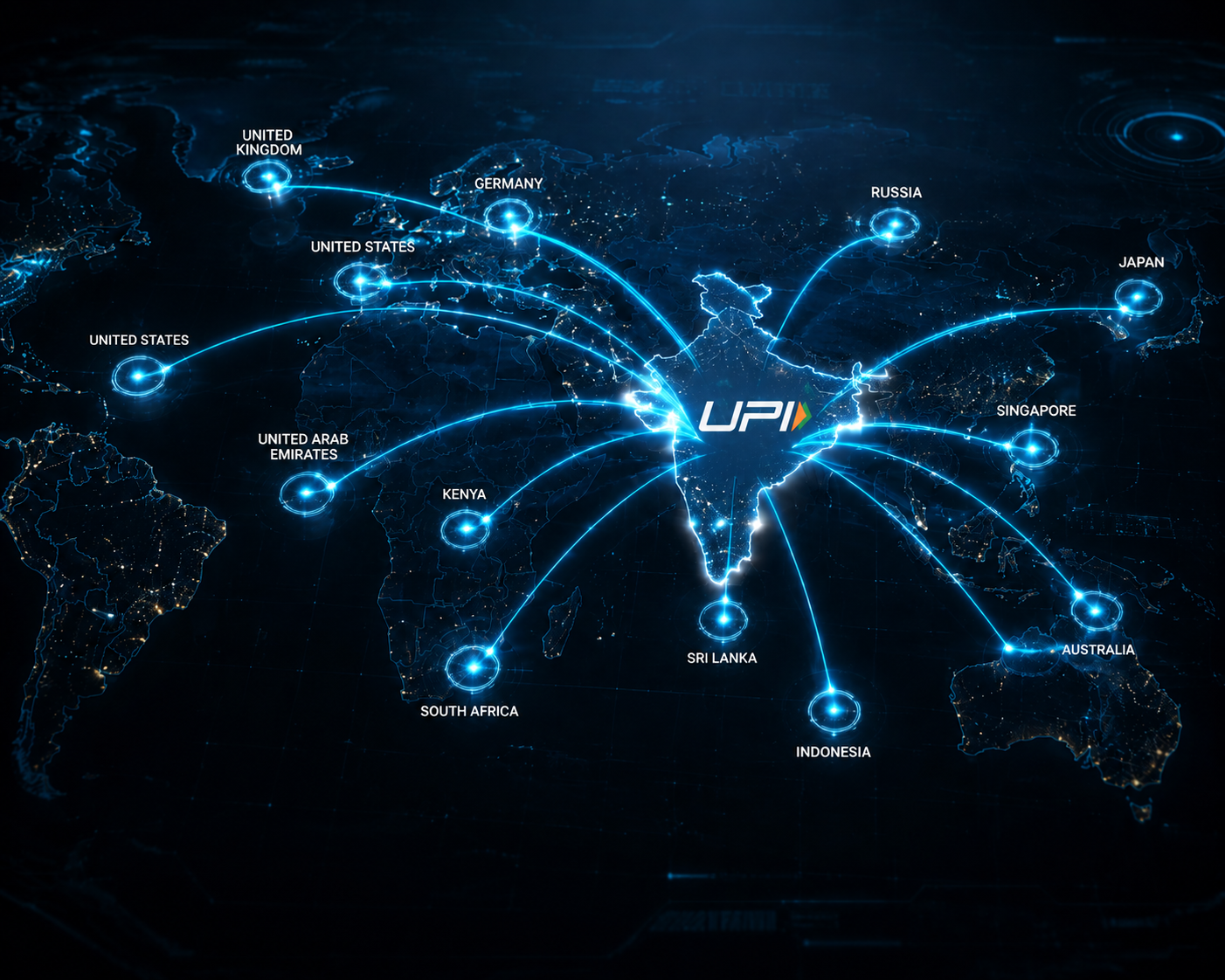

As of today, July 21, 2026, India’s Unified Payments Interface (UPI) has cemented its status as a cornerstone of the global digital economy. What began as a domestic experiment in real-time payments has now expanded its operational footprint to 12 countries, marking a pivotal moment in India’s fintech diplomacy. Recent data underscores a period of unprecedented growth, as the system transitions from a local utility to an international standard for seamless financial transactions.
Record Transaction Volumes and User Growth
The scale of UPI’s adoption is reflected in the staggering performance metrics of the recently concluded 2026 fiscal year. According to reports, UPI processed transactions totaling a massive ₹314 lakh crore in FY26.
This financial volume is supported by a rapidly widening user base, which has now reached approximately 55.5 crore users. This represents a record growth trajectory over the last five years. The sheer scale of these numbers indicates that UPI is no longer just a tool for micro-transactions but a robust infrastructure capable of handling the bulk of a nation's, and increasingly a region's, economic activity.
Expanding the Map: From Japan to Spain
The international expansion of UPI has been strategic, targeting both major Asian economies and European gateways. Earlier this year, in January 2026, UPI made its official debut in Japan. This move was seen as a significant step in integrating India's fintech prowess with one of the world's most advanced economies.
Currently, the focus has shifted toward Southern Europe. India is actively targeting integration with Spain’s Bizum platform. This partnership would allow Indian travelers in Spain to utilize UPI for their local payments, bypassing the complexities of traditional currency exchange and international credit card fees. This integration with Bizum represents a broader trend of UPI linking with existing national payment systems to facilitate cross-border interoperability.
The Future of Cross-Border Integration
The transformation of UPI into a global entity is more than just a technical achievement; it is a shift in how continents approach digital payments. UPI’s reach is now transforming digital payments across multiple continents, offering a low-cost, real-time alternative to established global financial networks.
As UPI continues to integrate with platforms like Bizum, the friction of international travel and commerce is expected to decrease significantly. With 12 countries already on board and more integrations in the pipeline, India's digital public infrastructure is increasingly becoming the connective tissue of the modern financial world.