


New Delhi: In the traditional narrative of economic inequality, the primary culprits are usually identified as automation, globalization, or the steady decline of manufacturing. Yet, a quieter, more structural force is increasingly dictating the size of the worker’s pay check: the power of the “few”.
When a handful of large firms dominate a local or sectoral market, the fundamental balance of bargaining power shifts. This phenomenon, known as ‘labour market concentration’, is no longer just a theoretical concern for academic economists; it is a lived reality that is driving wage disparity across the globe, with particularly sharp consequences for developing economies like India.
A recent comprehensive study by the International Labour Organization (ILO), titled Labour Market Concentration and Wage Inequality: A Cross-country Descriptive Analysis, provides a sobering look at this trend. By analyzing global survey data from 2006 to 2022 across more than 40 countries, the authors of the study reveal that higher labour market concentration is systematically associated with higher wage inequality. This isn’t just a matter of lower average earnings; it represents a widening chasm between the top and the bottom of the economic pyramid.
The core of the issue lies in ‘monopsony power’. A mirror image of a monopoly where, instead of a single seller, there are only a few buyers of labour. The report notes: “In its simplest definition, a labour market is considered concentrated when few firms have large market shares. The few large firms operating in the market have significant bargaining power over individuals in the labour market due to the scarcity of outside employment options.”
In such an environment, workers lose the ability to “vote with their feet”. If you cannot easily switch to a competitor, your current employer has little incentive to raise your wage in line with your productivity.
India Market
For our country, this analysis is particularly pertinent. While the ILO study uses broad cross-country data, the structural characteristics it identifies as “risk factors” for inequality are deeply embedded in the Indian labour market. The report finds that the association between concentration and inequality is significantly stronger in developing countries than in developed ones. In these contexts, high levels of informality and lower compliance with employment protection legislation exacerbate the negative effects.
In the Indian landscape, where a massive informal sector coexists with a highly concentrated formal sector in industries like telecommunications, airlines, and increasingly, digital platforms, the “outside options” for workers are often limited to precarious, low-paying informal jobs. This creates a “markdown” on wages.
The ILO’s findings suggest that concentration doesn’t hit everyone equally. The impact is most pronounced in the top half of the wage distribution, where the gap between high-earners (the 90th percentile) and the median (the 50th percentile) expands as markets become more concentrated. However, the most vulnerable are those at the very bottom. When market power is high, the ‘D9/D1’ ratio — the gap between the highest and lowest earners — stretches significantly.
The Antidote
So, what is the antidote to this concentration of power? The report is clear: institutions matter. The presence of trade unions, collective bargaining, and robust minimum wages acts as a vital “corrective” to market imbalances. The data shows that higher trade union density and collective bargaining coverage effectively mitigate the contribution of labour market concentration to wage inequality. These institutions provide a collective voice that individual workers, facing a dominant employer, simply do not possess.
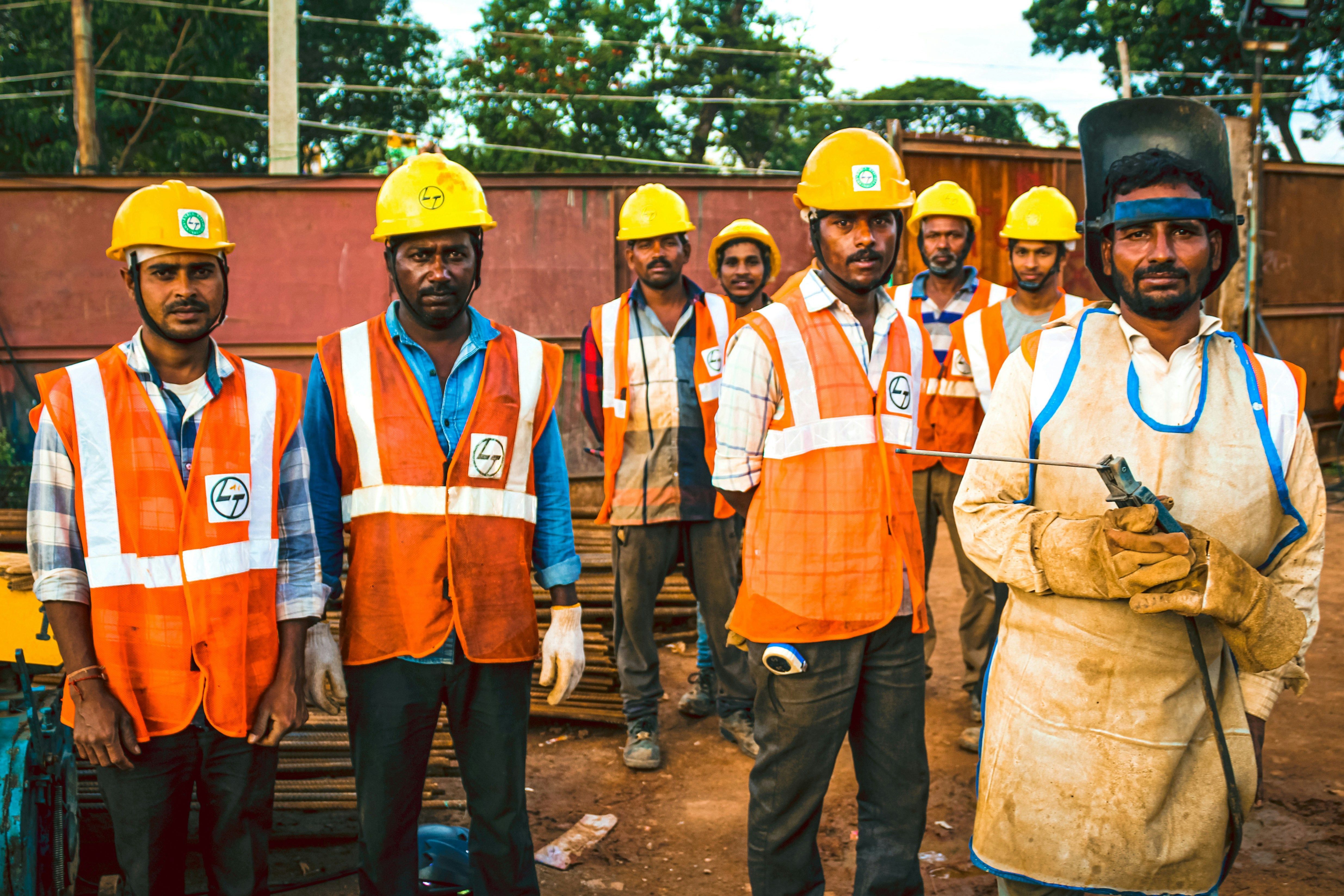
As India seeks to become a manufacturing and services hub, unchecked ‘national champions’ risk weakening labour competition, driving a lopsided recovery and rising wage inequality. (Photo by Shubham Verma on Unsplash)
In the Indian context, where trade union density has seen a shift and collective bargaining is often restricted to a shrinking “formal” elite, these findings are a call to action. The report highlights that “minimum wages attenuate the increase in wage inequalities generated by higher labour market concentration, mostly by reducing wage inequalities in the bottom half of the wage distribution”. For a country like India, which has moved toward a ‘National Floor Minimum Wage’, the effectiveness of this policy depends entirely on its Kaitz Index — the ratio of the minimum wage to the median wage. If the minimum wage is too low relative to what the average firm can pay, it fails to check the monopsony power of large employers.
Critics of intervention often argue that labour market “rigidities” like unions or high minimum wages distort the market. However, the ILO report flips this logic on its head. It suggests that these institutions actually address existing inefficiencies. Namely, the market power of firms. Without intervention, the “markdown” on wages remains, and the fruits of economic growth are captured by capital rather than shared with labour.
Wide Impact
The methodology of the study, utilizing the Herfindahl-Hirschman Index (HHI) to measure concentration, shows that while overall global concentration levels might seem low (an average HHI of 0.023), the impact is felt acutely at the sectoral and regional levels. In developing regions, including Asia and the Pacific, the HHI is often higher among registered enterprises, reflecting a formal sector where a few players hold the keys to “decent work”.
As India seeks to become a global manufacturing and services hub, the temptation to allow “national champions” to grow unchecked is strong. However, if this growth comes at the cost of labour market competition, the result will be a lopsided recovery where wage inequality continues to climb. The ILO warns that “if new firms cannot enter the market, this situation will not be resolved without some form of public intervention”.
Public intervention must be two-pronged. First, competition policy — traditionally focused on protecting consumers from high prices — must be expanded to protect workers from low wages. Mergers and acquisitions should be scrutinized not just for their impact on the “product market” but for their impact on the “labour market”. Second, we must revitalize the “social contract”. Strengthening the right to collective bargaining and ensuring that minimum wages are a living wage are not just social imperatives; they are economic necessities to counter the rising tide of monopsony.
The ILO report reminds us that the “invisible hand” of the market is often attached to a very visible arm of corporate power. In a world of concentrated markets, the path to a fairer developing world, including India, lies in rebalancing the scales, ensuring that the worker’s value is determined by their productivity, not by their lack of options. Without such a correction, the “markdown” on the Indian dream will only continue to grow, total wage growth will remain stunted, and the promise of 100% inclusive growth will remain an elusive goal.