
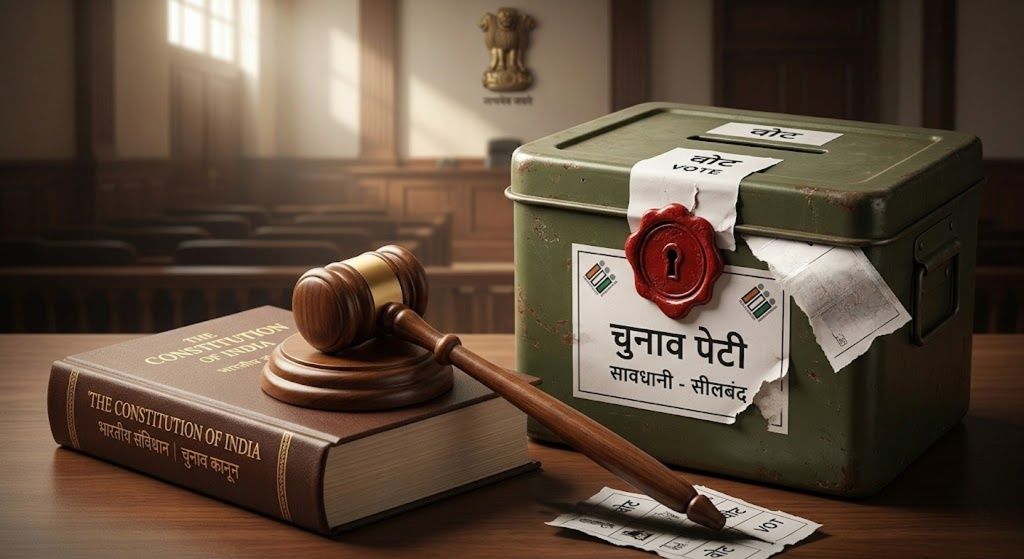

The Supreme Court of India has taken a decisive stance against the influence of unaccounted wealth in elections, declaring that black money corrupts democracy and distorts voter choice. In a major directive issued to curb financial malpractice during polls, the apex court has ordered that police investigations and First Information Report (FIR) probes into election-related black money and inducements must be completed within a strict one-year deadline.
Curbing Electoral Inducements and Cash Seizures
As part of the sweeping directives issued to safeguard the electoral process, the Supreme Court has mandated 24-hour reporting of election cash seizures. According to reports, this mechanism aims to ensure immediate transparency and accountability when enforcement agencies intercept illicit funds intended to influence voters.
The bench underscored that financial corruption severely compromises the core tenets of free and fair elections. By imposing stringent reporting timelines, the judiciary intends to plug loopholes that allow illicit money to alter political outcomes without swift detection.
Special Courts for Speedy Trials
To ensure that cases move rapidly through the judicial pipeline, the Supreme Court has also called upon High Courts to designate special courts. These dedicated benches are tasked with handling trials related to poll-related black money offences efficiently, preventing the prolonged delays that have historically hindered accountability in white-collar and electoral crimes.
Legal analysts note that combining a rigid one-year investigation window with fast-track judicial proceedings creates a formidable deterrent against political bribery and vote-buying schemes.