
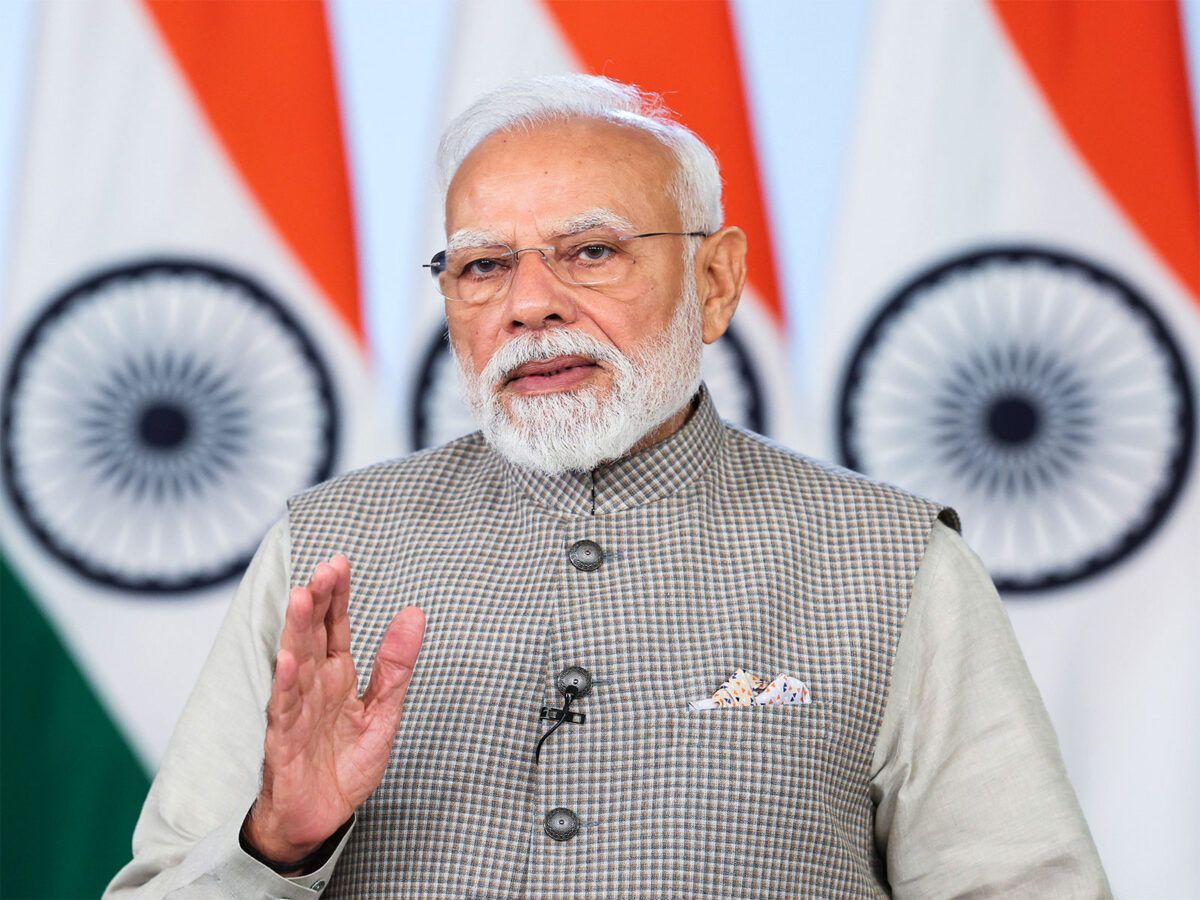

On August 2, 2026, Prime Minister Narendra Modi inaugurated a comprehensive 100-week nationwide anti-drug campaign, marking a significant escalation in the government's efforts to combat narcotics. Addressing the nation, the Prime Minister framed the initiative not merely as a law enforcement priority but as a foundational pillar for achieving the 'Viksit Bharat' (Developed India) vision by 2047.
The campaign specifically targets 'Gen Z,' whom the Prime Minister described as India’s Amrit Peedhi. The initiative seeks to mobilize the country's youth to lead the charge against substance abuse, transforming the governmental program into a grassroots 'people’s movement.'
A Strategic 100-Week Roadmap
The new campaign is structured as a 100-week intensive program designed to provide sustained pressure on drug trafficking networks while simultaneously focusing on prevention and rehabilitation. The objective is to turn the fight against substance abuse into a national mission that involves every sector of society.
The launch was mirrored across several states. In Raipur, Chhattisgarh, Governor Shri Ramen Deka and Chief Minister Vishnu Deo Sai joined the state-level program to signal local commitment to the federal initiative. This coordinated rollout suggests a multi-tier strategy involving state leadership to ensure the campaign's reach extends to the district and village levels.
Narcotics as a National Security Threat
A critical analytical shift in the Prime Minister's rhetoric involves the explicit linkage between the narcotics trade and national security. PM Modi highlighted that the drug supply chain is often intertwined with a "terror conspiracy." By framing substance abuse as a tool used by external actors to destabilize the nation, the administration is positioning the anti-drug campaign as a matter of national defense.
This perspective shifts the focus from the individual user to the broader geopolitical implications of the drug trade. The Prime Minister urged stronger coordination among various government agencies to dismantle these networks, emphasizing that a drug-free India is essential for maintaining the country's internal and external security.
Empowering the 'Amrit Peedhi'
The core of the 'Nasha Mukt Yuva' (Drug-Free Youth) campaign is the empowerment of India’s future workforce. The Prime Minister urged the youth to take ownership of this mission. The rhetoric suggests that the success of India’s economic and social goals is inextricably linked to the health and productivity of its younger generation.
By labeling the youth as the key to 'Viksit Bharat,' the government is attempting to instill a sense of civic duty among Gen Z. The campaign is expected to feature widespread educational initiatives and community-led programs to prevent the onset of addiction before it takes root in schools and universities. Details on the specific budgetary allocations for these programs have not been reported yet, but the 100-week timeline indicates a long-term commitment beyond a simple awareness drive.