
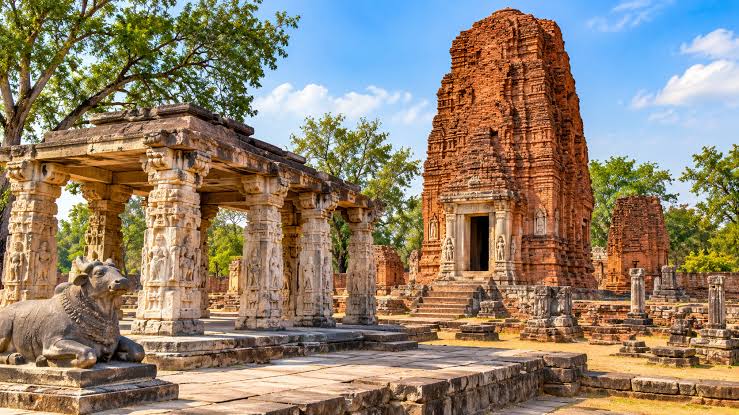

Think of a town where ancient Hindu temples stand alongside Buddhist monasteries, traces of markets tell stories of commerce, and a river connects the settlement to a wider world. Welcome to Sirpur, a quiet village along the eastern banks of the Mahanadi River in Chhattisgarh.
Situated around 78 kilometres from Raipur, Sirpur preserves evidence of centuries of religious, architectural and commercial activity, dating broadly from the fifth to the twelfth centuries CE. Now on UNESCO’s Tentative List of World Heritage Sites, its ruins offer a glimpse into ancient India’s vibrant past.
How Sirpur Became an Important Centre
Historically known as Shripur or Sripura, Sirpur developed as a capital of the Kosala kingdom under the Sharabhapuriya dynasty. It continued to grow under the Panduvamshi rulers, whose patronage contributed to its political, religious and architectural development.
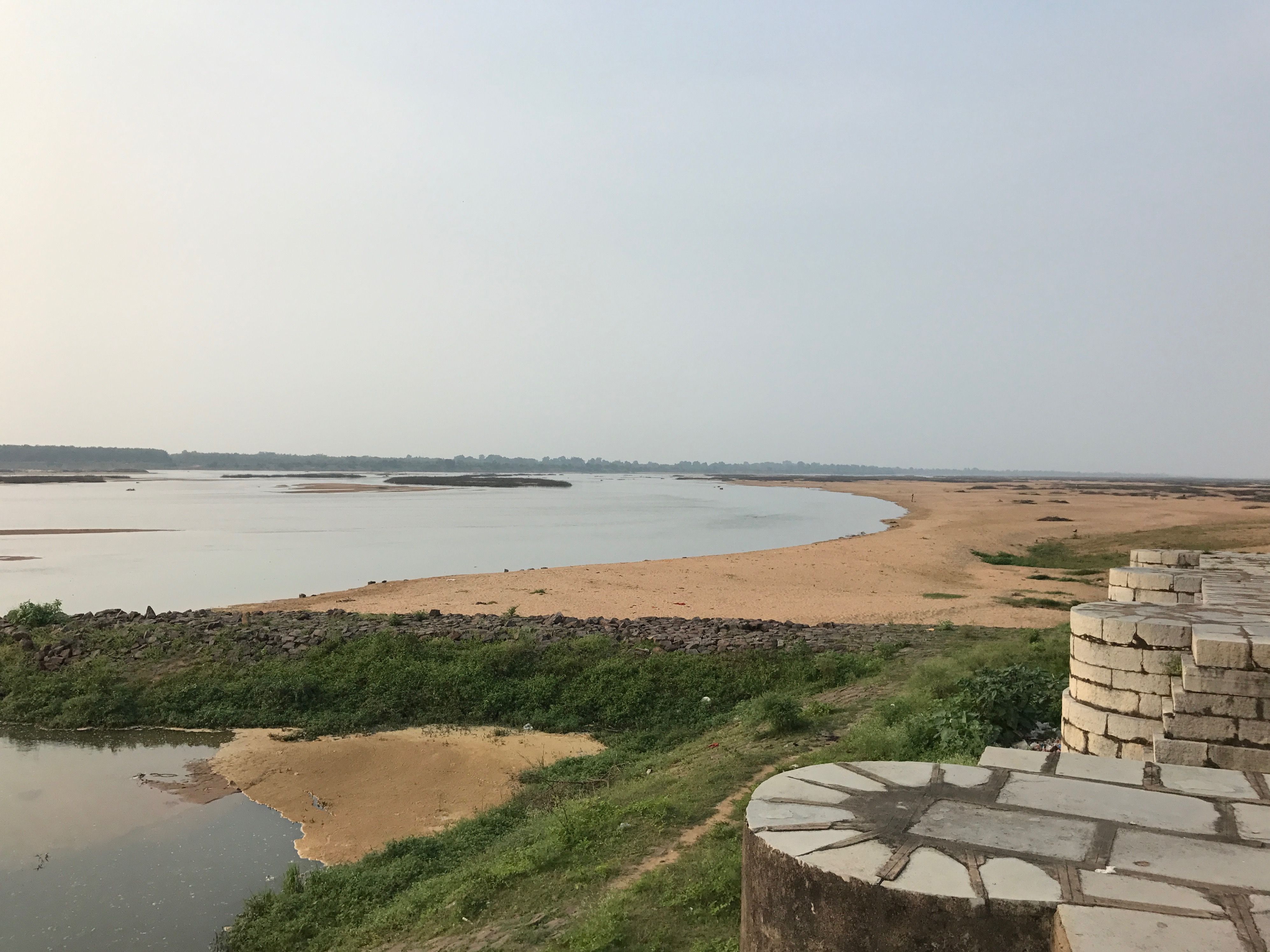
Its location along the Mahanadi River connected the settlement to wider networks of movement and commerce, making Sirpur more than a political centre.
The Mahanadi: A River That Connected Worlds
The Mahanadi served as an important trade route in eastern India. Archaeological remains associated with markets suggest that economic life was an important part of Sirpur’s development.
Archaeologists uncovered a sixth-century market complex, providing evidence that Sirpur was not merely a spiritual hub but also a commercial centre. Trade routes brought goods, people, ideas and cultural influences into contact, shaping the town’s history.
A Landscape Shaped by Different Faiths
Perhaps the most compelling aspect of Sirpur is the range of religious traditions represented in its archaeological remains.
The landscape includes Hindu temples dedicated to deities such as Shiva and Vishnu, alongside Buddhist monasteries and viharas. Archaeological evidence also reveals Jain influences, with statues and artefacts from different religious traditions found within the same landscape.
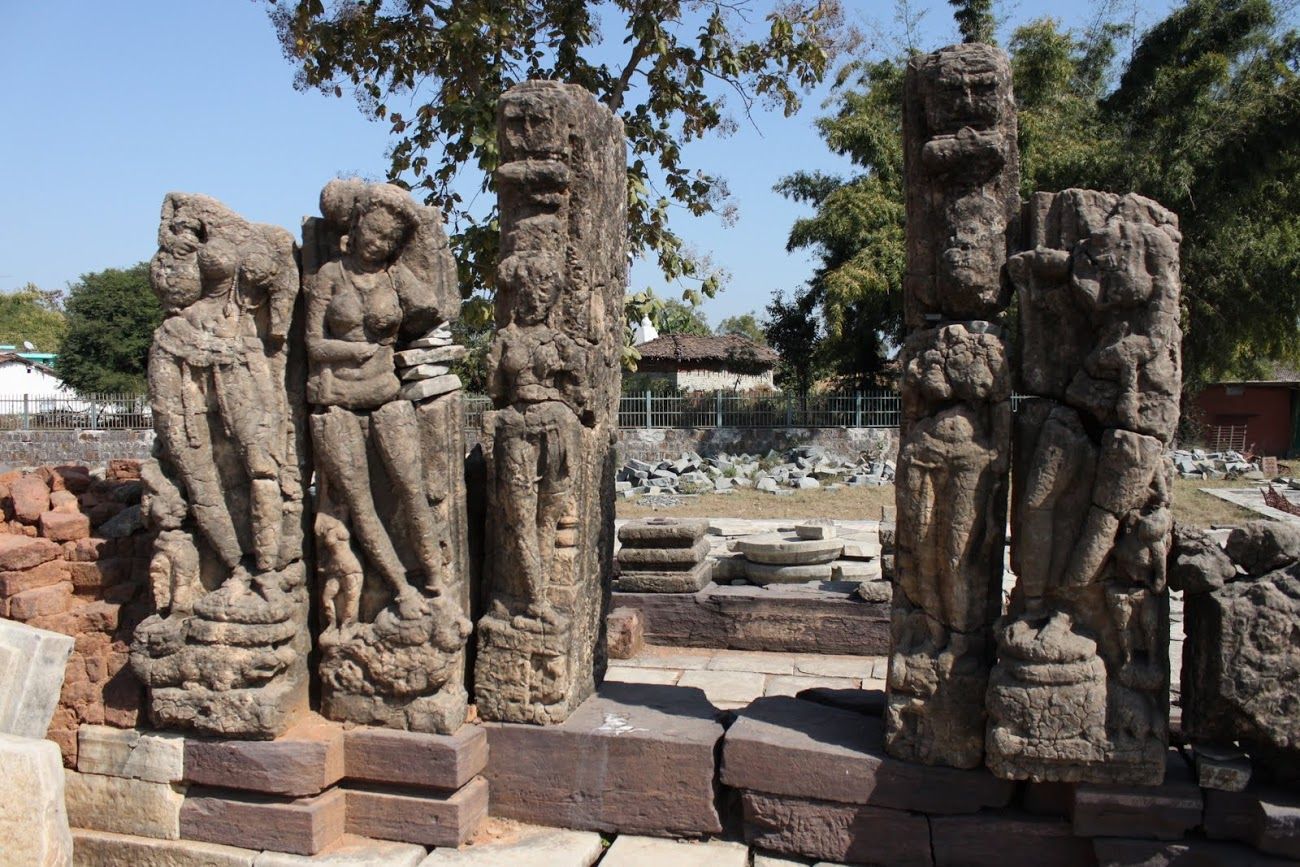
Sirpur is considered one of India’s largest discovered Buddhist archaeological sites, with its extensive monastic remains highlighting its importance as a centre of Buddhist activity. The excavated Swastika Vihara is particularly fascinating, as its layout resembles a swastika when viewed from above.
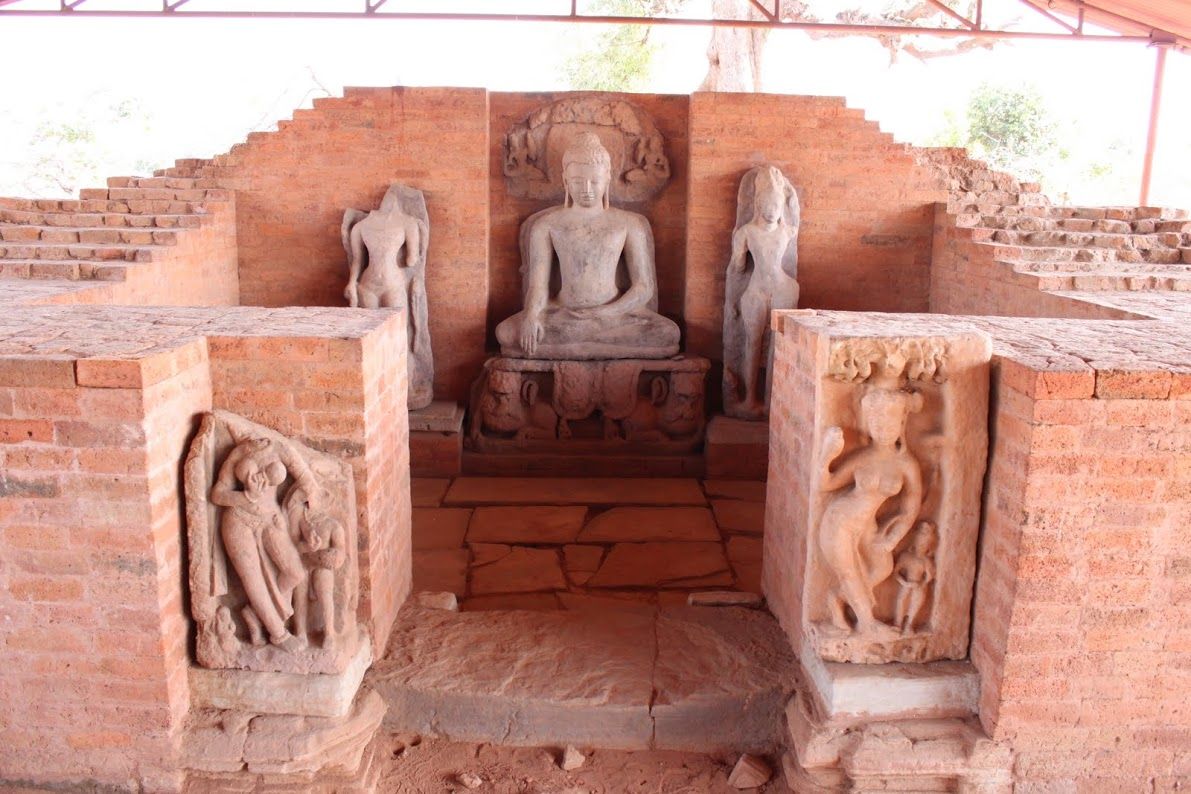
These remains demonstrate the presence of different religious traditions within the same historic settlement, offering a glimpse into the cultural interactions that shaped ancient India.
The Monuments That Keep Sirpur's History Alive
Among Sirpur’s surviving structures, the Lakshmana Temple stands out as one of India’s earliest and best-preserved brick temples. Built around 625–650 CE by Queen Vasata in memory of her husband, King Harshgupta, it is dedicated to Lord Vishnu and admired for its refined brickwork.
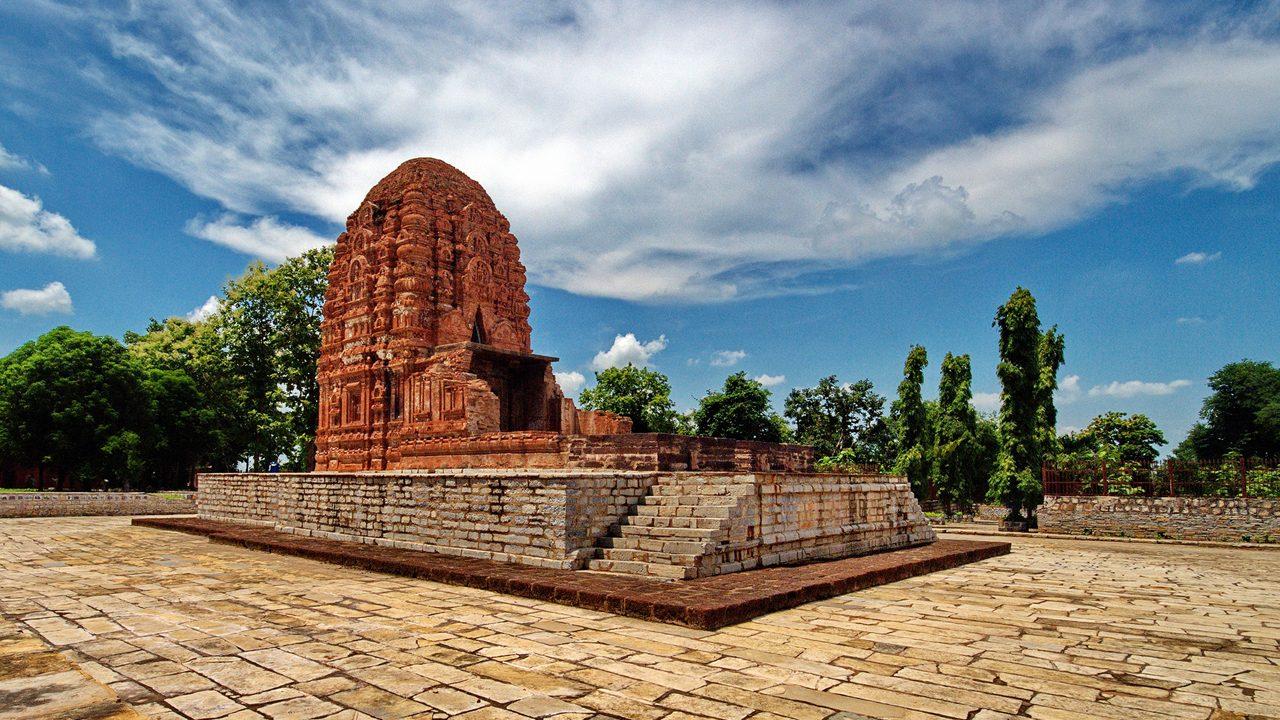
The Gandheshwar Temple, associated with Shiva, is another important monument. The Anandaprabhu Kuti Vihara and other Buddhist monastic remains reflect the town’s religious significance.
The Surang Tila temple complex is another architectural highlight. Built on a high terrace accessed by 37 steep steps, it creates a striking visual impression.
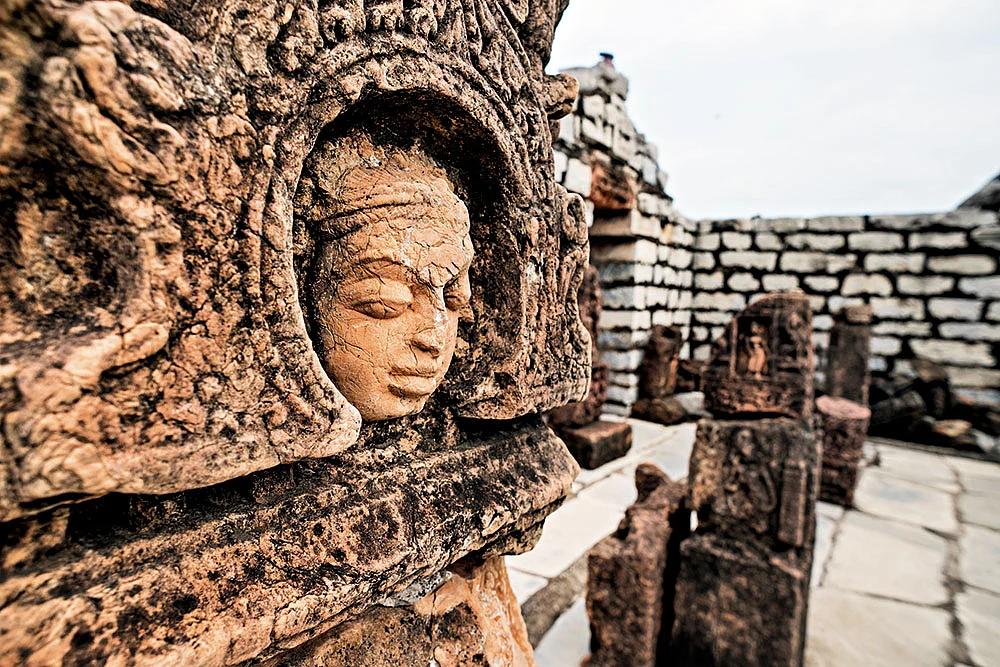
Excavations have also revealed intricate terracotta figurines, carved stone panels and sculptures representing different religious traditions. An ancient bathhouse, or snana-kund, offers insights into water management and everyday urban life.
Together, these structures reveal a settlement where architecture, faith, commerce and urban planning developed alongside one another.
An Unexpected Connection Between Ancient Geology and Architecture
Sirpur’s significance extends beyond its medieval history. The region lies within the Chhattisgarh Basin, whose geological formations include stromatolites. These layered structures, associated with microbial activity, preserve evidence of life dating back more than a billion years.
This geological heritage adds another dimension to the landscape’s historical and natural significance.
An Ancient Landscape in a Living Village
Sirpur is not simply an abandoned archaeological settlement. The wider landscape continues to accommodate contemporary life, with approximately 300 houses and around 1,500 residents in the village, according to UNESCO’s description.
The surrounding area is also home to Indigenous communities, including the Gond and Baiga. Barnawapara Wildlife Sanctuary adds to the region’s natural significance.
Preservation, therefore, involves more than protecting ancient buildings. It also requires recognising the communities, homes and natural surroundings that form part of the contemporary landscape.
What Does UNESCO's Tentative List Mean for Sirpur?
India currently has 45 UNESCO World Heritage Sites. Sirpur’s inclusion on the Tentative List makes it a potential candidate for future nomination, although this does not guarantee World Heritage status.
To become a World Heritage Site, Sirpur would need to demonstrate Outstanding Universal Value under UNESCO’s criteria. Its potential lies in the combination of extensive Buddhist monastic remains, Hindu and Jain heritage, early brick temple architecture, archaeological evidence of trade and urban life, and the interaction of different cultural traditions.
The Swastika Vihara, the Lakshmana Temple, the Surang Tila complex and the excavated market remains collectively help establish Sirpur’s importance. Further research, effective conservation, site management and protection of its archaeological landscape would strengthen its case for nomination.
Why Sirpur Deserves a Closer Look
It is easy to think of history as something that survives in monuments: a temple, a wall, a sculpture or a fragment of an ancient building. But Sirpur encourages us to look beyond individual structures.
Its real significance lies in how its religious institutions, commercial activity, architecture and natural surroundings come together to tell the story of an ancient Indian town. Whether or not it eventually earns UNESCO World Heritage status, Sirpur offers a valuable glimpse into the cultural and historical connections that shaped India’s past.