
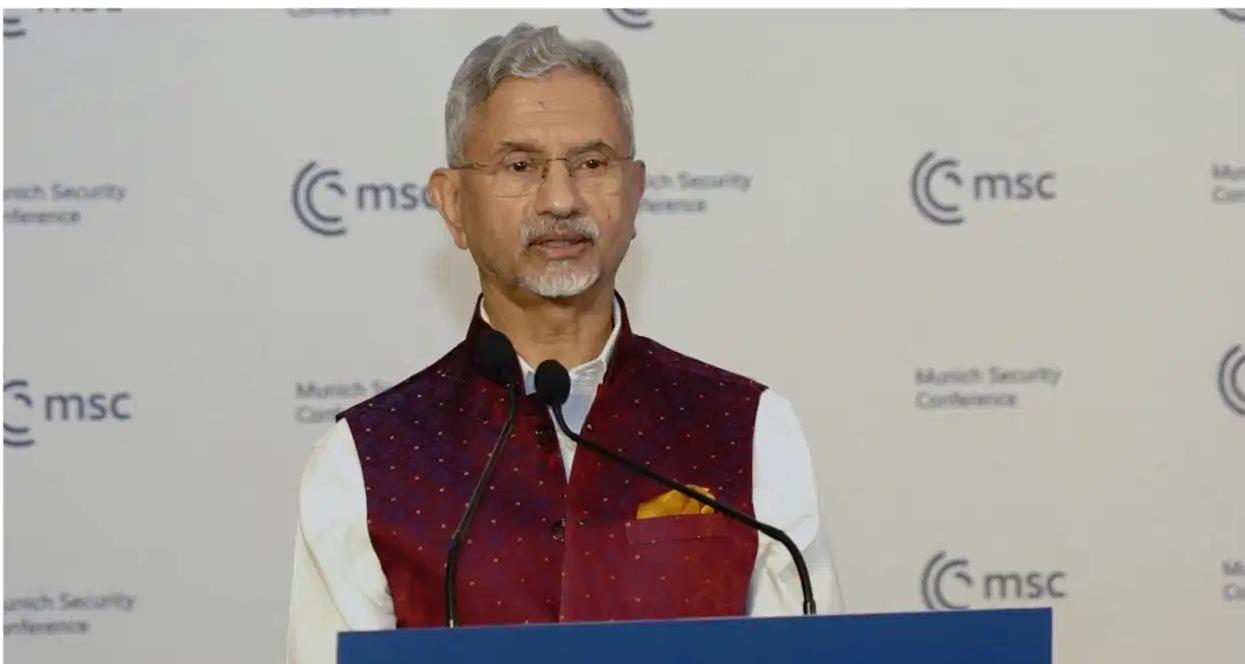

External Affairs Minister S. Jaishankar has pointed to profound transformations in international relations, noting that the United States is deliberately becoming a "lonelier power" amid a shifting global order. Speaking at recent diplomatic forums, India's top diplomat emphasized how evolving geopolitical realities require nations to re-evaluate traditional alliances and focus heavily on strategic autonomy and national resilience.
The Decline of Unipolarity and the Rise of Middle Powers
Recent diplomatic discussions have increasingly focused on the fragmentation of global hegemony. As previously observed by analysts and highlighted in broader geopolitical discourse, no single country today maintains overall global hegemony. Instead, the international system is transitioning toward a multipolar landscape defined by shifting US-China dynamics and regional volatility.
According to reports from diplomatic forums, Jaishankar underscored that middle powers must navigate these turbulent waters by reinforcing cooperation and avoiding dependency on traditional superpower structures. The conscious retreat of the United States into a more isolated posture has accelerated this multipolar reality, forcing nations across the Global South and Indo-Pacific to chart independent courses.
Strategic Autonomy and Diaspora Welfare
Addressing the Raisina diplomacy forum, Jaishankar placed a strong emphasis on the core tenets of India’s foreign policy, notably strategic autonomy and the welfare of its global diaspora. As per reports, these discussions highlight how New Delhi continues to champion self-reliance and multi-alignment. Rather than binding itself to a singular bloc, India's foreign policy framework actively monitors power transitions to safeguard its domestic interests and economic security.
This approach aligns with long-standing principles of the "Jaishankar Doctrine," which transitions India away from passive non-alignment toward proactive multi-alignment. In an era marked by resource weaponisation and heightened risk-taking among major players, maintaining diplomatic flexibility has become an operational necessity for rising economies.
Navigating a 'Tough World'
The shifting dynamics extend beyond traditional military security into economic and resource-driven competition. Observers note that the international community is witnessing the weaponisation of resources to achieve geopolitical goals, creating a notably tougher global environment.
As these structural shifts continue to unfold throughout 2026, the diplomatic calculus for emerging economies involves balancing competing major-power interests while strengthening regional partnerships. Jaishankar’s recent remarks serve as a clear acknowledgment that the old rules of international governance are giving way to a more competitive, decentralized global architecture.