
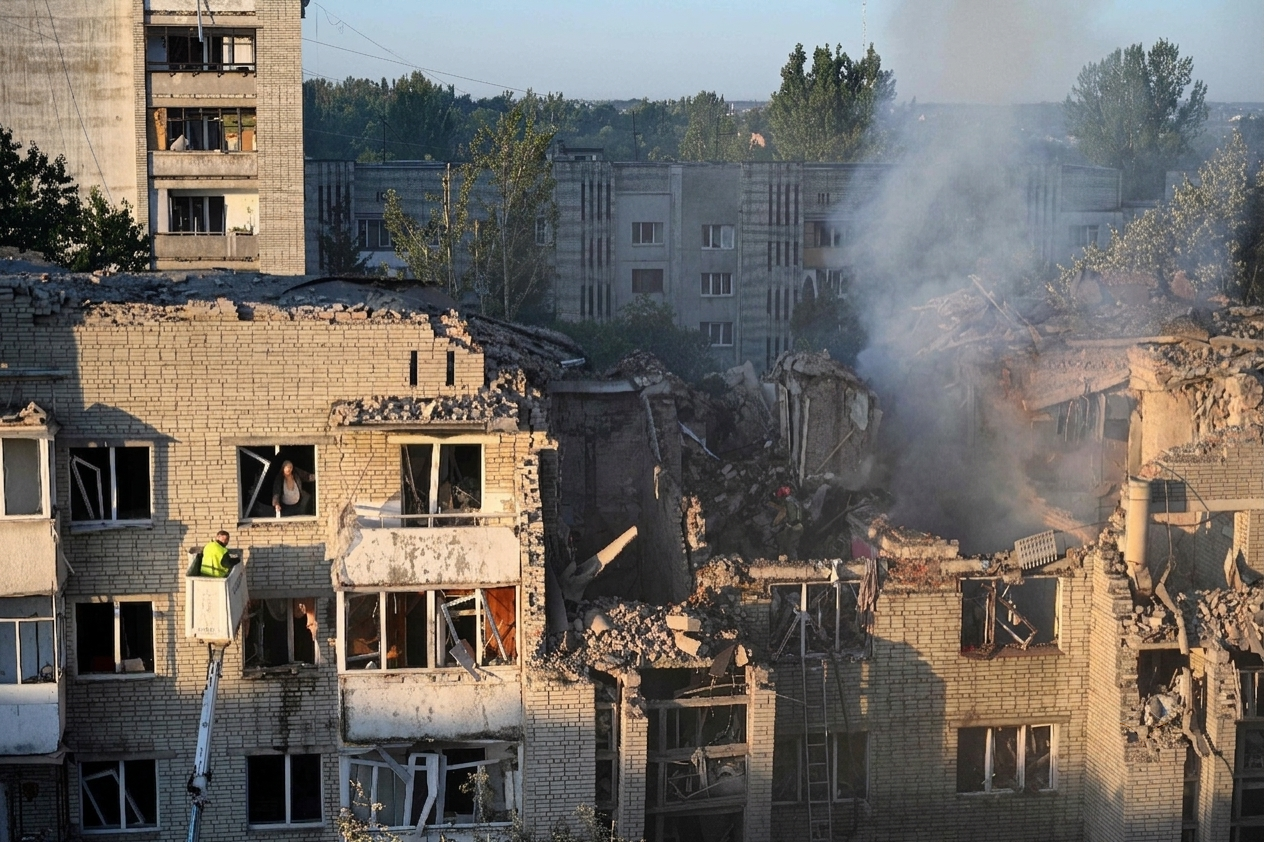

The security landscape of Eastern Europe faced a significant tremor yesterday as a Russian missile reportedly breached the airspace of a NATO member state. On July 30, 2026, amid a massive aerial offensive against Ukraine, a Russian cruise missile crashed inside the borders of Poland, sparking immediate diplomatic and military scrutiny.
The Incident on the Polish Border
According to reports, the projectile has been identified as a Russian Kh-101 cruise missile. The crash occurred near the Polish-Ukrainian border during a massive overnight attack targeting various installations across Ukraine. While Russia’s primary objectives remained within Ukrainian territory, the proximity of the strikes to the European Union's eastern frontier has once again resulted in a spillover event into sovereign Polish territory.
The incident took place during a period of intense kinetic activity. The missile's entry into Polish airspace followed a series of deadly strikes across Ukraine, which were part of a broader, lethal campaign that has escalated tensions throughout the region.
Official Investigations Underway
Polish authorities have launched a formal investigation to determine the nature of the breach. The projectile was initially tracked as an "unidentified object" during the height of the Russian missile barrage. The sudden appearance of the object necessitated an immediate response from Polish defense systems, though the missile ultimately crashed without being intercepted.
Reports say, an investigation is currently underway to ascertain whether the crash was the result of a technical failure, a navigational error, or a consequence of Ukrainian air defense measures attempting to neutralize the threat before it crossed the border. The cruise missile's impact has led to an immediate security review by Polish officials to prevent future incursions.
NATO Security and the Risk of Escalation
This incident has placed NATO on high alert, as it represents a direct physical violation of the alliance's territorial integrity. While details on the specific military response from the alliance have not been reported yet, the presence of a sophisticated Kh-101 missile on Polish soil underscores the persistent risk of a wider escalation in the Russia–Ukraine conflict.
As of today, July 31, 2026, the situation remains fluid. The international community is awaiting the final results of the Polish investigation to determine the appropriate diplomatic or military response. For now, the crash serves as a stark reminder that as long as the bombardment of Ukraine continues at this scale, the risk to neighboring sovereign nations remains a critical and active threat to global stability.