
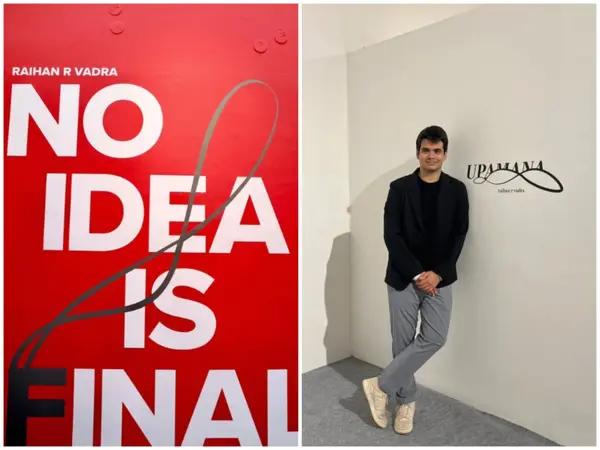

An art exhibition in New Delhi has quickly transformed into a political lightning rod after management at Bikaner House removed 74 photographs documenting youth protests from a showcase featuring Raihan Vadra, son of Congress leader Priyanka Gandhi Vadra. The exhibition, titled No Idea Is Final, initially planned to display 105 photos, but the sweeping removal has triggered swift accusations of censorship from the family and broader political circles.
The Bikaner House Controversy
The flashpoint centers on 74 images depicting protest scenes that were taken down following intervention by the venue's management. According to reports, the removal was justified on the grounds of policy violations regarding political content within the exhibition space.
The incident immediately drew sharp pushback. Raihan Vadra publicly alleged censorship, declaring that he would "not take down Indian Flag" elements and asserting that his documentation of protests was a legitimate artistic expression.
Political Backlash and Allegations of Censorship
The controversy quickly escalated beyond the gallery walls. Congress MP Priyanka Gandhi Vadra backed her son’s stance, while Robert Vadra and various Congress figures strongly criticized the management of Bikaner House for pulling down the Delhi protest photos. Critics have framed the action as an overreach and an act of suppression against visual storytelling addressing civil demonstrations.
Despite the controversy, venue authorities maintained that the remaining artworks in the collection would continue to be displayed to the public.
Moving Forward and Alternative Venues
Facing truncated walls in the capital, Raihan Vadra indicated plans to showcase the complete, unedited collection elsewhere. The disruption has already opened doors for external presentation; notably, Satheesan offered a venue in Kerala to host the full exhibition following the dramatic fallout in Delhi.
As debates over public gallery policies and the boundaries of political art continue to unfold, the incident highlights the ongoing tensions surrounding free expression and institutional guidelines in cultural spaces.