


New Delhi: Amid a deepening supply crunch in liquefied petroleum gas (LPG), the Centre is accelerating a nationwide push toward piped natural gas (PNG), positioning it as a long-term structural solution to India’s cooking fuel vulnerabilities. The move comes as geopolitical tensions in West Asia, due to the Iran-Israel war, continue to disrupt global energy supply chains, exposing India’s heavy dependence on imported LPG and prompting a strategic rethink within the government.
Senior officials in the Ministry of Petroleum and Natural Gas have directed all ministries and public sector entities to urgently assess their potential demand for PNG and transition wherever infrastructure permits. Government offices, residential colonies, and institutional kitchens are being encouraged to migrate to piped gas systems, while city gas distribution (CGD) networks are being rapidly expanded to meet anticipated demand.
The policy shift reflects a broader energy security concern. India imports roughly 60% of its LPG requirement, leaving it exposed to price volatility and supply disruptions. In contrast, natural gas, while still partly imported, benefits from more diversified sourcing, including domestic production and long-term LNG contracts, alongside a steadily expanding pipeline grid. Officials argue that scaling up PNG can reduce marginal dependence on LPG imports while ensuring a more continuous and predictable supply, particularly for commercial and institutional users.
India’s CGD footprint has expanded sharply over the past decade under the licensing rounds conducted by the Petroleum and Natural Gas Regulatory Board. As of 2026, CGD authorizations cover more than 300 geographical areas, spanning over 70% of the population and nearly 90% of the country’s districts. PNG connections have crossed 1.3 crore households, while total CGD consumers, including CNG users, exceed 12 crore. However, actual pipeline penetration remains uneven, with dense coverage concentrated in metros and tier-1 cities, while large parts of eastern and northeastern India lag behind considerably.
Sanctioned expansion projects under recent CGD bidding rounds are at various stages of execution. Work has already commenced in more than 200 geographical areas awarded in the 9th, 10th and 11th CGD rounds, where companies are laying trunk and last-mile pipelines, setting up pressure regulating stations, and building city gate stations. These projects are expected to add millions of new PNG connections over the next 3-5 years. At the same time, a smaller set of licensed areas, particularly those in difficult terrains or with weaker demand visibility, are yet to see meaningful on-ground progress, largely due to financing, land access, and demand aggregation challenges.
The government has already begun prioritising domestic households in LPG allocation, effectively ring-fencing supply for cooking needs. Commercial establishments such as restaurants, hotels, and canteens, which account for nearly 15-20% of LPG consumption in urban clusters, are being nudged toward PNG as a more reliable and scalable alternative. Industry data suggests that in cities with mature networks, PNG adoption among commercial users has reduced supply disruptions by over 30% compared to cylinder-based systems.
To support this transition, the Petroleum and Natural Gas Regulatory Board has instructed CGD companies to compress timelines for new connections and improve service delivery metrics. Parallelly, the Petroleum and Explosives Safety Organisation has mandated that approvals related to city gas infrastructure be cleared within 10 days, a move aimed at cutting procedural delays that have historically slowed network rollout.
The CGD ecosystem today is dominated by a mix of public and private players. Established operators such as Indraprastha Gas Ltd, Mahanagar Gas Ltd, Gujarat Gas, Adani Total Gas and Torrent Gas collectively account for a significant share of PNG and CNG supply across major urban centres. Public sector firms such as GAIL also play a critical role as pipeline operators and gas suppliers. Meanwhile, newer entrants and consortiums, including regional infrastructure firms and energy conglomerates, are seeking to enter or expand within the CGD space, attracted by rising urban demand and policy support.
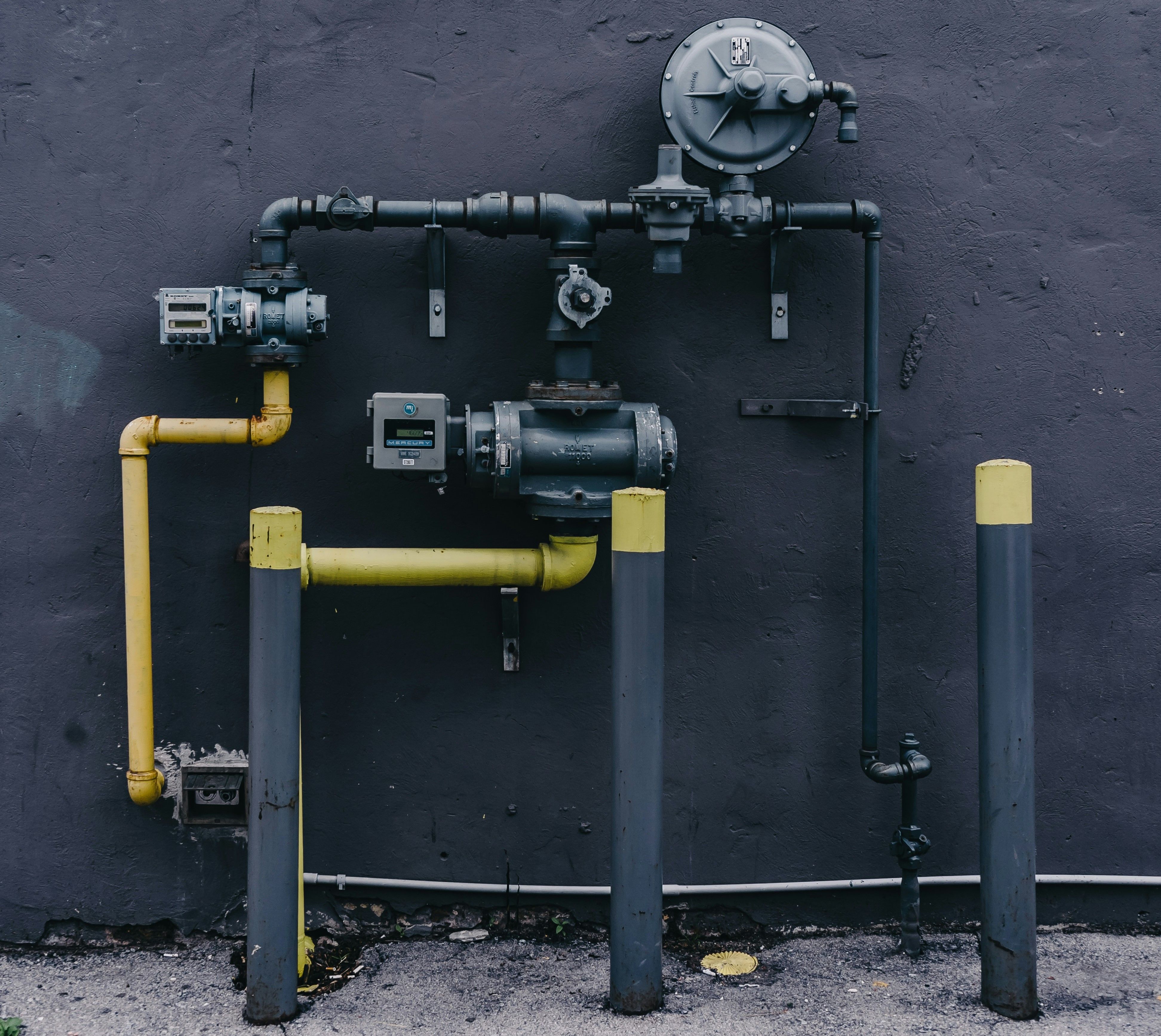
PNG, backed by expanding infrastructure, rising private sector participation, and policy momentum, is increasingly being seen as a cornerstone of a more resilient and future-ready energy system. (Photo by Scott Webb on Unsplash)
Cost Consideration
However, the cost of PNG network expansion remains substantial. Industry estimates suggest that developing CGD infrastructure can cost between ₹4-6 crore per km in dense urban areas due to excavation, reinstatement, and right-of-way expenses, while costs in semi-urban regions may be lower but offset by weaker demand density. A typical city-wide rollout can require investments ranging from ₹1,000 crore to over ₹5,000 crore depending on size and terrain. These high upfront capital costs mean that companies often face long gestation periods before achieving profitability.
Several constraints continue to hinder faster expansion. Right-of-way permissions from local authorities remain one of the biggest bottlenecks, often leading to delays and cost overruns. Fragmented urban governance structures, especially in large cities, complicate coordination for pipeline laying. In addition, limited domestic gas availability and exposure to volatile LNG prices affect supply economics, while low initial consumer awareness in smaller towns slows demand build-up. Safety compliance requirements, though necessary, also add to timelines and costs.
To incentivise the shift, CGD companies are offering reduced connection charges, instalment-based payments, and simplified documentation. States and Union Territories have been urged to streamline approvals and align local regulations to facilitate pipeline deployment. The government is also exploring policy measures to improve domestic gas allocation for CGD networks, ensuring price stability for PNG consumers.
At the consumer level, authorities have sought to allay concerns over LPG availability. Panic buying, which had briefly surged amid supply fears, has eased, with no widespread shortages reported at the distributor level. Officials continue to emphasize that domestic LPG supply remains stable and urge consumers to avoid hoarding or unnecessary bookings. Digital refill systems and home delivery mechanisms are being reinforced to maintain orderly distribution.
In parallel, policymakers are promoting a diversified approach to household energy use. Alongside PNG, consumers are being encouraged to adopt electric and induction cooking solutions where feasible, aligning with broader energy efficiency and sustainability goals. Experts note that such diversification reduces pressure on any single fuel source while supporting India’s transition toward cleaner energy.
The current crisis has underscored a fundamental challenge in India’s energy landscape: balancing affordability, accessibility, and security. While LPG has played a transformative role in expanding clean cooking access, particularly through welfare schemes, its import dependence remains a structural vulnerability. PNG, backed by expanding infrastructure, rising private sector participation, and policy momentum, is increasingly being seen not merely as an alternative but as a cornerstone of a more resilient and future-ready energy system.
As global uncertainties persist, the government’s strategy signals a clear shift — away from reactive supply management toward proactive fuel diversification — with piped natural gas emerging as a central pillar in India’s response to the LPG crunch.